 Save
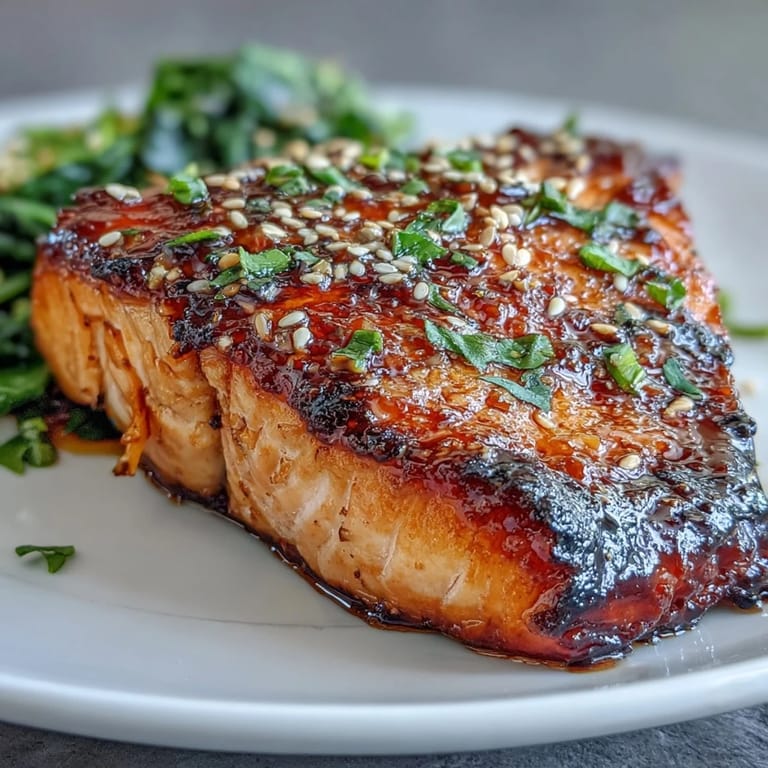
Save There's something about the way miso paste transforms salmon that caught me off guard the first time I properly tasted it, not as a restaurant dish but standing in my own kitchen on a Tuesday evening. The umami depth hits different when you've mixed it yourself, watching the glossy glaze cling to the fillet like it's meant to be there. That night, I threw together spinach that was about to wilt anyway, sliced some ginger because it smelled incredible, and somehow ended up with something that felt intentional rather than thrown together. This recipe has been my go-to ever since when I want to feel like I'm cooking something special without actually fussing.
I made this for my sister when she mentioned being tired of the same dinner rotation, and watching her eyes light up when she tasted that miso glaze was worth every minute. She asked if I'd been secretly taking cooking classes, which made me laugh because honestly, I'd just been brave enough to trust an instinct. Now she makes it herself, which somehow feels like the highest compliment.
Ingredients
- Salmon fillets (4, about 150 g each): Look for fillets that are bright in color and smell like the ocean, not fishy—that's always your first indicator of freshness, and it genuinely changes the final dish.
- White miso paste (2 tbsp): This is the backbone of everything, bringing umami and a subtle sweetness that no other ingredient can replicate, so don't skip it for another type of miso.
- Mirin (1 tbsp): If you can't find it, dry sherry works in a pinch, though mirin has this delicate sweetness that feels more authentic to the whole thing.
- Low-sodium soy sauce (1 tbsp for glaze, 1 tbsp for spinach): Using low-sodium lets you taste the actual sauce rather than just salt, and you maintain control over seasoning.
- Honey or maple syrup (1 tbsp): Adds shine and caramelization—maple syrup leans a touch earthier, honey more floral, so pick based on your mood.
- Sesame oil (1 tsp for glaze, plus more for spinach if you prefer): A little goes a long way, and it brings this warm, toasted note that ties everything together.
- Fresh ginger (1 tsp grated for glaze, 1 tbsp julienned for spinach): Freshly grated tastes impossibly brighter than ground, and julienning it for the spinach creates little pockets of sharp, clean flavor.
- Fresh baby spinach (400 g): The calcium content is real, but honestly, it's just the perfect vehicle for absorbing all that ginger-garlic-soy goodness.
- Olive oil or sesame oil (2 tbsp for spinach): Olive oil is more neutral, sesame oil more aromatic—choose based on whether you want the spinach to fade into the background or sing alongside the salmon.
- Shallot (1 large, thinly sliced): Shallots are milder and sweeter than onions, and they soften into almost nothing while still adding this sophisticated depth.
- Garlic cloves (2, minced): Fresh garlic is non-negotiable here; the paste version just won't give you that bite and fragrance.
- Black pepper and lemon wedges: Fresh pepper grinds literally right before serving, and lemon is your final brightness, cutting through the richness beautifully.
Tired of Takeout? 🥡
Get 10 meals you can make faster than delivery arrives. Seriously.
One email. No spam. Unsubscribe anytime.
Instructions
- Get your oven ready and prep your workspace:
- Preheat to 200°C (400°F) and line a baking tray with parchment paper so your salmon releases easily and cleanup is a dream. Having everything ready before you start means you're not scrambling once things get hot.
- Mix your miso glaze into something glossy:
- Whisk together the miso paste, mirin, soy sauce, honey, sesame oil, and grated ginger in a small bowl until it's smooth and cohesive, like a thick, fragrant sauce. You'll know it's ready when there are no lumps of miso floating around and everything looks unified.
- Dry your salmon and coat it generously:
- Pat each fillet dry with paper towels so the glaze actually sticks instead of sliding off, then brush each one with that miso mixture until it's absolutely covered on the top and sides. The parchment paper prevents sticking, so you can be generous without worrying.
- Let the oven do the work:
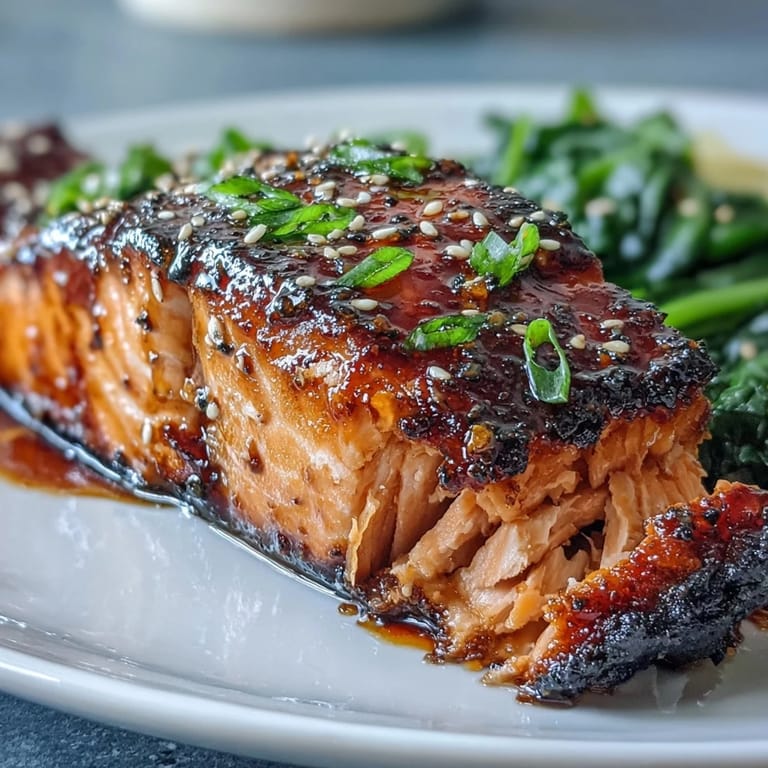
- Bake for 10 to 12 minutes, watching for that moment when the edges turn opaque and the glaze darkens slightly around the edges—it should be just cooked through and caramelized on top. Overcooking salmon dries it out, so erring on the side of slightly underdone is smarter than the reverse.
- While salmon bakes, build the spinach bed:
- Heat olive or sesame oil in a large skillet over medium heat, then add your shallot, garlic, and julienned ginger, stirring for about 1 to 2 minutes until the whole kitchen smells incredible and everything softens slightly. You're not browning anything aggressively; you're just waking up the aromatics.
- Wilt the spinach down in stages:
- Add your spinach in handfuls, stirring as each batch softens before adding more—this prevents the skillet from becoming a crowded mess of steam and ensures even cooking. Once it's all wilted and any excess moisture has evaporated, season with soy sauce and freshly ground black pepper.
- Plate and finish:
- Divide the spinach among four plates, top each portion with a miso-glazed salmon fillet, and serve with lemon wedges for squeezing at the table. The lemon is crucial; it's your final brightness and prevents the whole dish from feeling heavy.
 Save
Save What strikes me most about this dish is how it transformed a weeknight into something that felt like caring, like I'd put thought into feeding someone rather than just filling a plate. The combination of that umami glaze and the sharp ginger in the spinach created this moment where everything tasted intentional and considered, even though I'd barely spent thirty minutes in the kitchen.
Why This Combination Actually Works
Miso and salmon are like they were introduced at a party and immediately became best friends—the umami in miso amplifies the natural richness of the fish, while the ginger and soy sauce keep everything from becoming too heavy or one-note. The spinach acts as this green, calcium-rich anchor that balances the richness without any fussing, and the shallot and garlic add layers of flavor without drowning anything out. It's the kind of dish that tastes like multiple things happening at once, but it's actually just four or five ingredients working in harmony.
Timing and Temperature Matter More Than You'd Think
Salmon cooks faster than most people expect, especially when you're already glazing it with something sweet that caramelizes quickly at high heat. I learned this the hard way my second time making this, when I stepped away to answer a text and came back to slightly overcooked edges, and since then I've stayed nearby during those final minutes, watching the glaze darken to that perfect mahogany color. The spinach, conversely, benefits from being added to a hot skillet at the last possible moment—it wilts down so quickly that you barely have time to reach for the soy sauce.
Variations and Little Tweaks That Change Everything
This recipe is flexible enough to accommodate what you have in your pantry while remaining fundamentally true to itself, which is why I keep making it. I've swapped the honey for maple syrup when I was out, used red miso when white wasn't available (it's deeper and slightly spicier, so adjust quantities slightly), and even added a touch of rice vinegar when I felt like the glaze needed brightness. The spinach bed welcomes other greens too—I've used bok choy, kale, or even regular spinach when baby spinach was sold out, just adjusting cooking time slightly depending on thickness.
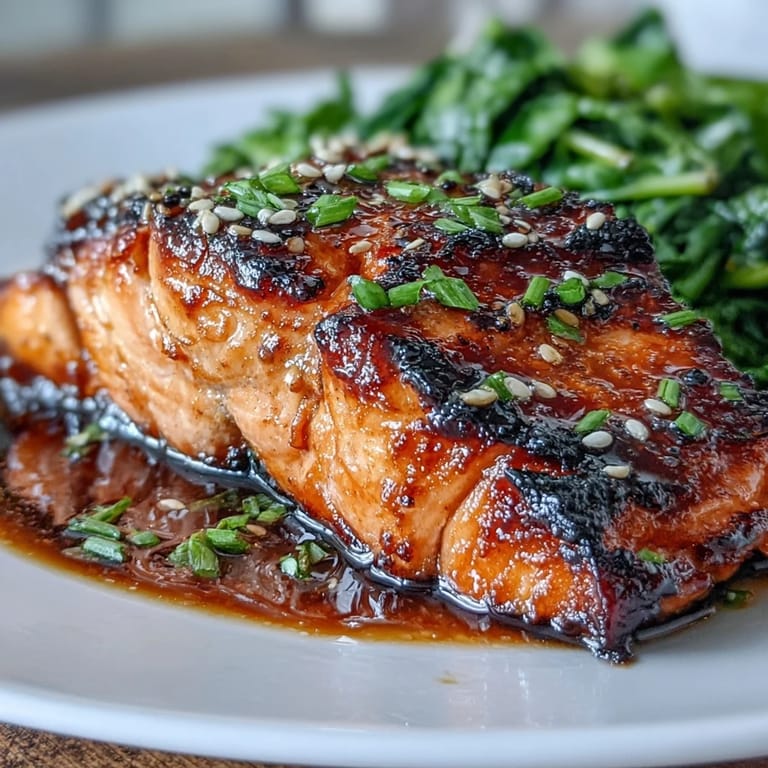
- Toasted sesame seeds sprinkled on top before serving add crunch and deepen the sesame flavor throughout.
- Sliced scallions or fresh cilantro bring brightness and a hint of onion sharpness that cuts through the umami beautifully.
- Serve alongside steamed rice or quinoa if you want something more substantial, or keep it as-is if you're eating lighter.
 Save
Save This recipe lives in that sweet spot where it feels elegant enough to serve guests but honest enough to make on a random Tuesday when you just want something that tastes intentional. It's become the dish I return to when I want to remember why I actually enjoy cooking.
Recipe Questions & Answers
- → What type of miso works best for this dish?
White miso paste (shiro miso) is ideal for this glaze. It has a milder, sweeter flavor that complements salmon beautifully without overpowering the delicate fish. Red miso can be used for a stronger, more intense flavor if preferred.
- → Can I prepare the glaze in advance?
Absolutely. The miso glaze can be whisked together and stored in an airtight container in the refrigerator for up to one week. Bring it to room temperature before using, as it will thicken when cold.
- → How do I know when the salmon is perfectly cooked?
The salmon is done when it flakes easily with a fork and the internal temperature reaches 145°F (63°C). The glaze should be lightly caramelized and golden. Avoid overcooking, as the fish will continue cooking slightly after leaving the oven.
- → What sides pair well with this salmon?
Steamed jasmine rice or fluffy quinoa are perfect for soaking up the savory miso glaze. You could also serve it with roasted vegetables, pickled cucumbers, or a light cucumber salad to balance the rich flavors.
- → Is this dish suitable for meal prep?
Yes, both components reheat well. Store the salmon and spinach separately in airtight containers for up to 3 days. Reheat gently in the microwave or at 350°F (175°C) until warmed through to maintain the fish's texture.
- → Can I use frozen salmon fillets?
Frozen salmon works perfectly for this preparation. Thaw overnight in the refrigerator before cooking, then pat thoroughly dry to ensure the glaze adheres properly and the fish caramelizes well in the oven.