 Save
Save My kitchen smelled like a lemon grove the afternoon I first attempted this cake, after stumbling upon a dusty bottle of Limoncello at a family gathering. The liqueur caught my eye—something about its golden hue promised brightness, and I wondered what would happen if I baked with it instead of just sipping it slowly. That first loaf emerged from the oven with a tender crumb and such a vibrant citrus perfume that my roommate demanded a slice before it had even cooled. What started as curious improvisation became the cake I now make whenever I want to feel like spring arrived early.
I'll never forget bringing this to a potluck in March when everyone else had brought heavy winter desserts—chocolate, caramel, all dark and dense. The moment people tasted it, I watched their faces light up, shoulders relaxing as if they'd been holding their breath through winter. One friend actually closed her eyes, and when she opened them, she just said, 'This is what I didn't know I needed.' That's when I realized this cake does something more than taste good—it shifts the whole room's mood.
Ingredients
- All-purpose flour (2 ½ cups): The foundation that keeps the crumb tender; sifting isn't strictly necessary, but it prevents dense pockets.
- Baking powder (2 tsp): Just enough lift to keep this pound cake from feeling too heavy, without making it fluffy like a regular cake.
- Salt (½ tsp): A quiet ingredient that makes the lemon brightness sing rather than fade into sweetness.
- Unsalted butter (1 cup): Room temperature is non-negotiable here—cold butter won't cream properly and you'll spend forever trying.
- Granulated sugar (2 cups): This amount creates that delicate sweetness that doesn't overpower the citrus notes.
- Large eggs (4), room temperature: Cold eggs won't incorporate smoothly into the butter mixture, and you'll end up with a slightly grainy texture.
- Fresh lemon zest (1 tbsp): Grate this right before adding; it loses its oils and fragrance surprisingly fast once exposed to air.
- Fresh lemon juice (¼ cup): Never use bottled—the difference is immediate and matters more in a delicate cake like this.
- Limoncello liqueur (⅓ cup): This is where the magic lives; it adds complexity that makes people ask for the recipe.
- Pure vanilla extract (1 tsp): A supporting note that rounds out the citrus without being noticeable.
- Whole milk, room temperature (½ cup): The alternating method with dry ingredients keeps the batter from becoming tough.
- Powdered sugar (1 ½ cups): For the glaze; sifting removes lumps that will make the finish look streaky.
- Lemon juice for glaze (2–3 tbsp): Adjust based on how thick or thin you want the glaze to be.
- Lemon zest for glaze (1 tsp): A final touch that catches the light and tells people this cake is intentional.
Tired of Takeout? 🥡
Get 10 meals you can make faster than delivery arrives. Seriously.
One email. No spam. Unsubscribe anytime.
Instructions
- Set the stage:
- Preheat your oven to 350°F and prepare a 10-cup Bundt pan with butter and flour, making sure to coat every crevice. A loaf pan works too, though the Bundt creates that beautiful presentation that makes the cake feel like an occasion.
- Combine your dry base:
- Whisk flour, baking powder, and salt in a medium bowl and set it aside—this takes just a minute, but it ensures even distribution. Think of it as the scaffolding for everything else.
- Cream butter and sugar:
- In a large bowl with an electric mixer, beat the softened butter and sugar together for 3–4 minutes until it looks light, pale, and fluffy. This step aerate the batter, which creates the tender crumb you're after; rushing it makes a denser cake.
- Add eggs one at a time:
- Drop in each egg individually, beating well after each addition before moving to the next. This might feel slow, but each egg needs a moment to fully incorporate and add structure.
- Mix in the citrus and spirit:
- Add the lemon zest, fresh lemon juice, Limoncello, and vanilla extract, stirring until everything is blended. The mixture might look slightly curdled—that's normal and nothing to worry about.
- Alternate wet and dry layers:
- Add about a third of the flour mixture, mix briefly, then add about half the milk, then another third of flour, then the rest of the milk, finishing with the final flour. This alternating pattern prevents overmixing and keeps the cake tender—stop stirring as soon as you don't see streaks of flour anymore.
- Fill and smooth:
- Pour the batter into your prepared pan and smooth the top with a spatula or the back of a spoon. Don't overthink it; a few gentle swipes are all you need.
- Bake with patience:
- Bake for 50–55 minutes, checking around the 50-minute mark with a toothpick inserted into the center—it should come out clean or with just a few moist crumbs. Every oven runs differently, so trust the toothpick more than the timer.
- Cool gradually:
- Let the cake rest in the pan for 15 minutes before turning it out onto a wire rack to cool completely. Turning it out too early risks crumbs and tears; waiting too long makes it harder to release.
- Make the glaze:
- Whisk together sifted powdered sugar, lemon juice, optional Limoncello, and zest until the mixture is smooth and pourable. If it's too thick, add lemon juice a teaspoon at a time; if too thin, add more powdered sugar gradually.
- Finish and set:
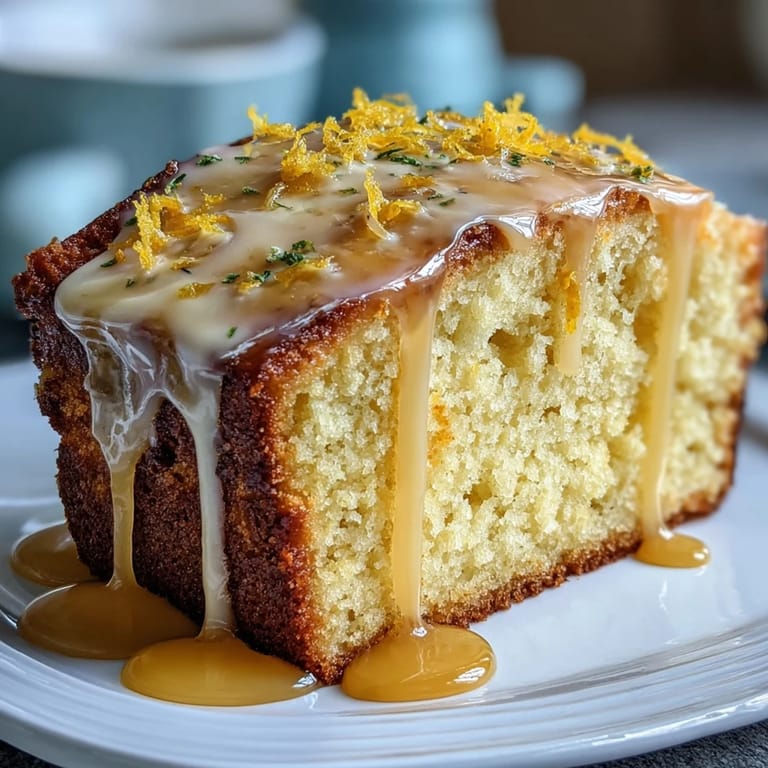
- Drizzle the glaze over the cooled cake in a loose, informal pattern and let it set for at least 30 minutes before slicing. The glaze hardens slightly as it sits, creating a subtle sheen and preventing it from running everywhere.
 Save
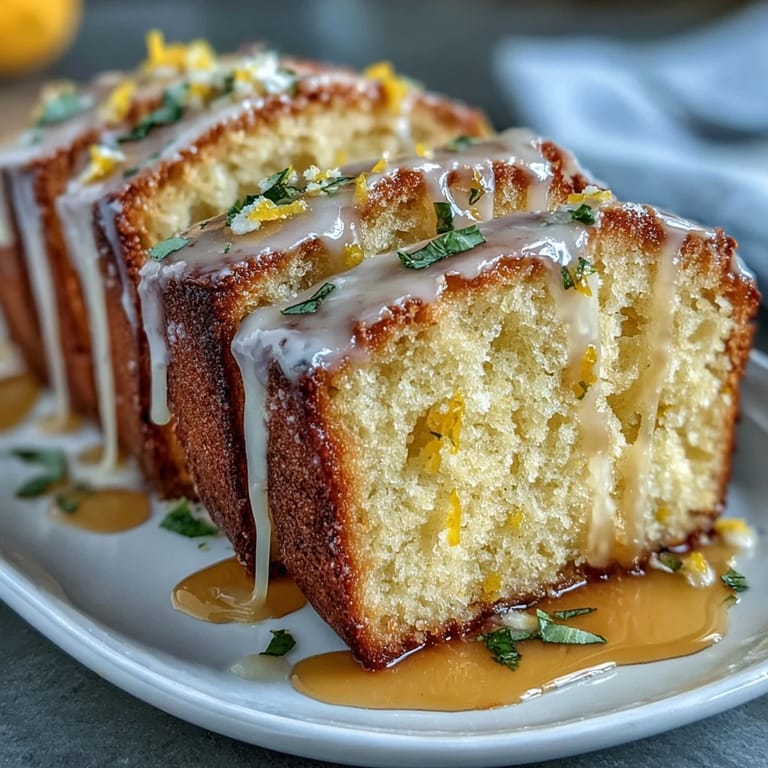
Save There's a moment halfway through cooling when the cake smells its absolute best, right when it's warm enough to release fragrance but cool enough to hold together. I've started sitting with the finished cake during this quiet window, sometimes with tea, sometimes just listening to the house settle around it. It feels like the cake and I are both catching our breath together.
Why Fresh Lemon Matters More Than You'd Think
Bottled lemon juice tastes flat compared to fresh, and in a cake this delicate, flatness echoes through every bite. The first time I rushed and used what was already in my fridge, I ended up with a cake that tasted more like sugar than citrus. Now I make sure to buy lemons specifically for this, and I zest them right before using so nothing escapes into the air before it reaches the batter. The five minutes it takes to hand-squeeze lemon is worth the difference.
Room Temperature Really Changes Everything
It sounds fussy to worry about whether eggs and milk are room temperature, but texture depends on it more than most home bakers realize. Cold eggs won't emulsify smoothly into the butter mixture, and the cake ends up tighter and less tender than it should be. I used to ignore this instruction until a baking friend pointed out that I was adding ingredients that were essentially the same temperature as the bowl they were going into—and suddenly my results shifted. Now I pull eggs and milk from the fridge about 30 minutes before I start baking, and it makes a noticeable difference.
Variations and Small Touches That Work
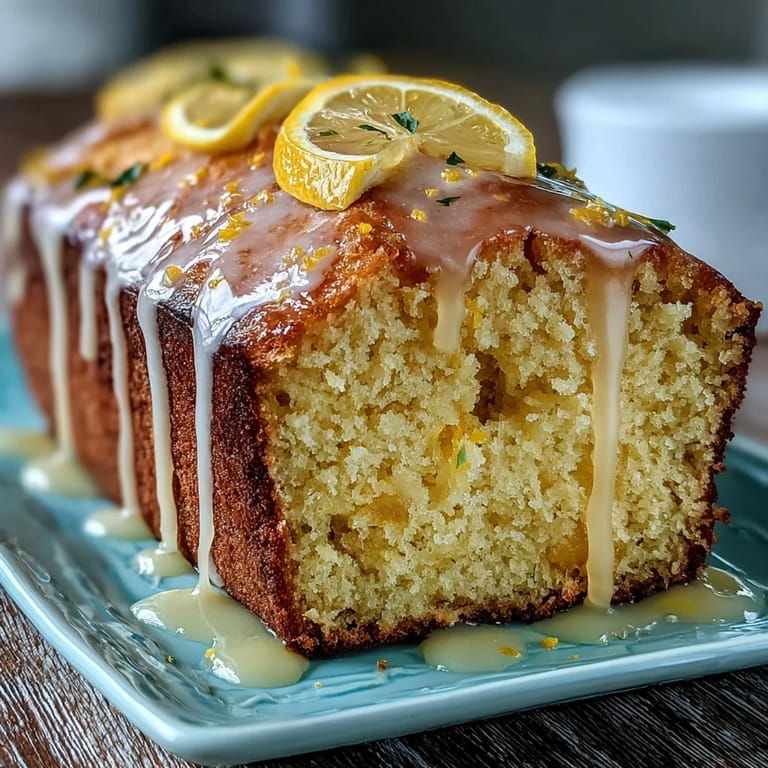
Once you master the base recipe, small changes keep it fresh without losing what makes it special. A non-alcoholic version works beautifully if you swap the Limoncello for extra lemon juice and add a touch of honey for depth. Garnishing with candied lemon slices makes it look like a restaurant dessert, though thin fresh lemon slices work just as well if you're short on time. Serving it with fresh berries or whipped cream feels more elegant than it is, and it's my go-to move when I want to turn a simple cake into something that feels like celebration.
- Candied lemon peel adds a professional touch without requiring any special technique beyond patience.
- A light dusting of lemon zest on top right after glazing creates visual appeal and a subtle flavor boost.
- Wrap leftovers tightly at room temperature—this cake actually improves on day two as the flavors settle.
 Save
Save This cake has become my answer when I want to make someone smile or mark a small moment as special. There's something about bringing a slice of spring into a room that shifts everything, even if just for a few minutes.
Recipe Questions & Answers
- → How does Limoncello affect the flavor?
Limoncello adds a sweet, citrusy brightness that complements the lemon zest and juice, deepening the cake's aroma and taste.
- → Can I make this without alcohol?
Yes, you can substitute Limoncello with extra fresh lemon juice to keep the citrus brightness without alcohol.
- → What type of pan is best for baking?
A 10-cup Bundt or loaf pan works well to ensure even baking and beautiful shape.
- → How to achieve a moist texture in this cake?
Using softened butter, careful mixing, and alternating flour with milk helps maintain a moist, tender crumb.
- → How is the lemon glaze prepared?
The glaze is made by whisking powdered sugar with fresh lemon juice, zest, and optionally Limoncello, until smooth and pourable.