 Save
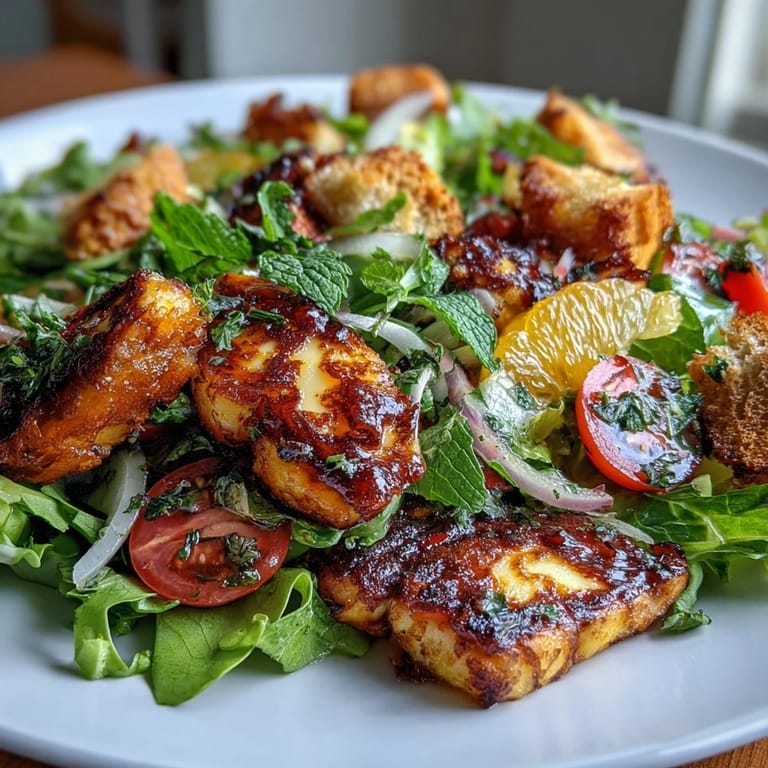
Save There's something about blood oranges that makes you feel like you're cooking with jewels. I discovered this salad entirely by accident one winter afternoon when I had a handful of them sitting on my counter alongside a block of halloumi I'd picked up on a whim. The moment the warm, golden cheese hit the crisp greens and that tart citrus juice began pooling at the bottom of the bowl, I understood why this combination has been beloved across the Levant for generations. It's the kind of dish that tastes far more impressive than the modest effort it requires.
I made this for my neighbor Elena on a particularly grey Tuesday when she'd mentioned missing the Mediterranean markets near her childhood home. Watching her face as she took that first bite—the way her eyes closed for just a second—reminded me that food isn't really about following instructions perfectly. It's about creating moments where someone feels transported, even if it's just for the length of a salad course.
Ingredients
- Halloumi cheese, 200 g sliced: This squeaky, high-melting-point cheese is the backbone of this salad; frying it creates a golden crust while keeping the inside creamy and tender.
- Blood oranges, 2 peeled and sliced: Their jewel-toned juice and subtle bitterness elevate this far beyond regular citrus, though regular oranges work in a pinch.
- Mixed salad greens, 200 g: Use a combination of romaine for crunch, arugula for peppery bite, and fresh herbs like parsley and mint for authentic Levantine character.
- Cucumber, 1/2 sliced: Keeps everything crisp and cool, providing textural contrast to the warm cheese.
- Cherry tomatoes, 200 g halved: Their natural sweetness balances the tangy dressing beautifully.
- Radishes, 4 thinly sliced: Don't skip these; their peppery crunch is what makes fattoush feel alive on your palate.
- Red onion, 1 small thinly sliced: Raw red onion adds sharp bite; if you find it too intense, soak the slices in ice water for 10 minutes first.
- Sourdough bread, 2 thick slices cut into cubes: Day-old bread works best as it's drier and crisps up more efficiently.
- Olive oil, 3 tbsp extra virgin for dressing: Quality matters here since it's uncooked; choose one you genuinely enjoy tasting.
- Fresh lemon juice, 1 tbsp: Freshly squeezed makes an enormous difference in brightness.
- Red wine vinegar, 1 tbsp: This adds depth that straight lemon juice alone cannot achieve.
- Ground sumac, 1 tsp: The secret ingredient that makes people ask what you did differently; it's lemony, slightly astringent, and absolutely essential to authentic fattoush.
- Pomegranate molasses, 1 tsp: This tart, complex ingredient is worth seeking out in Middle Eastern markets or online.
- Olive oil for frying, 1 tbsp: Use a regular olive oil here, not your expensive extra virgin, since you're heating it.
Tired of Takeout? 🥡
Get 10 meals you can make faster than delivery arrives. Seriously.
One email. No spam. Unsubscribe anytime.
Instructions
- Make your croutons golden:
- Preheat your oven to 180°C and toss those sourdough cubes with 2 tablespoons of olive oil and a pinch of sea salt until each piece glistens slightly. Spread them on a baking sheet in a single layer and let them toast for 8 to 10 minutes, stirring once halfway through, until they've turned a deep golden brown and feel completely crisp when you break one open.
- Whisk your dressing into existence:
- In a small bowl, combine the extra virgin olive oil, fresh lemon juice, red wine vinegar, sumac, pomegranate molasses, salt, and pepper, whisking until everything emulsifies into a cohesive vinaigrette. Taste it and adjust the balance to your preference—this is your moment to own the flavors.
- Give the halloumi its golden sear:
- Place your nonstick skillet over medium heat with the tablespoon of olive oil and wait until it shimmers slightly. Add your halloumi slices in a single layer and let them sit undisturbed for 1 to 2 minutes until the bottom develops a beautiful golden-brown crust, then flip each piece and repeat on the other side; they should feel warm and slightly squeaky when you bite into them.
- Assemble your salad bowl:
- In a large salad bowl, combine all your raw greens, cucumber, cherry tomatoes, radish slices, and red onion, creating a colorful base. This is where you're building the foundation of your salad, so take a moment to distribute everything evenly.
- Bring it all together:
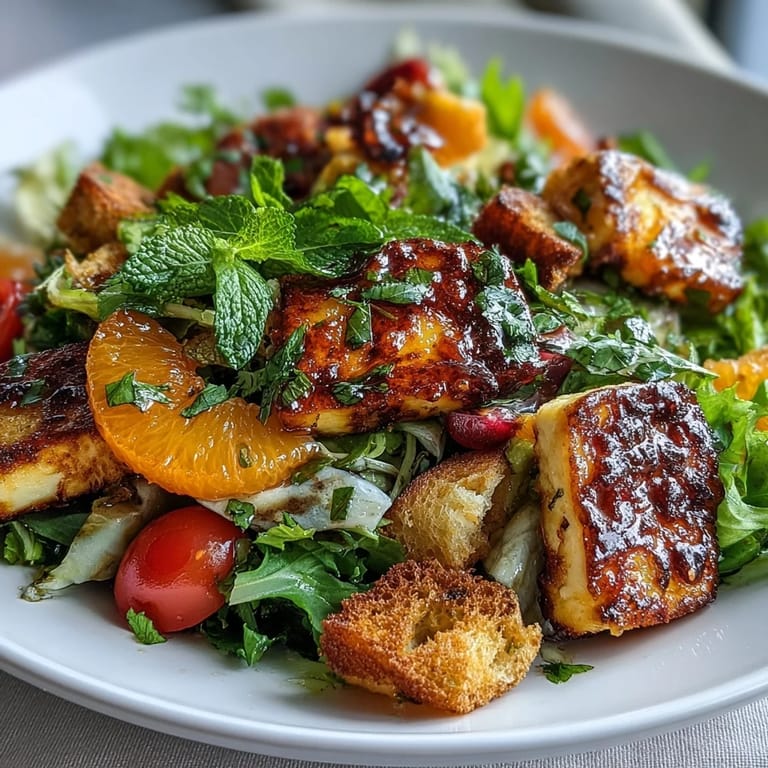
- Add the warm halloumi slices, blood orange rounds, and crispy croutons to your greens, then drizzle the dressing over everything and toss gently but thoroughly until each leaf is lightly coated. Serve immediately while the halloumi is still warm and the croutons haven't begun to soften.
 Save
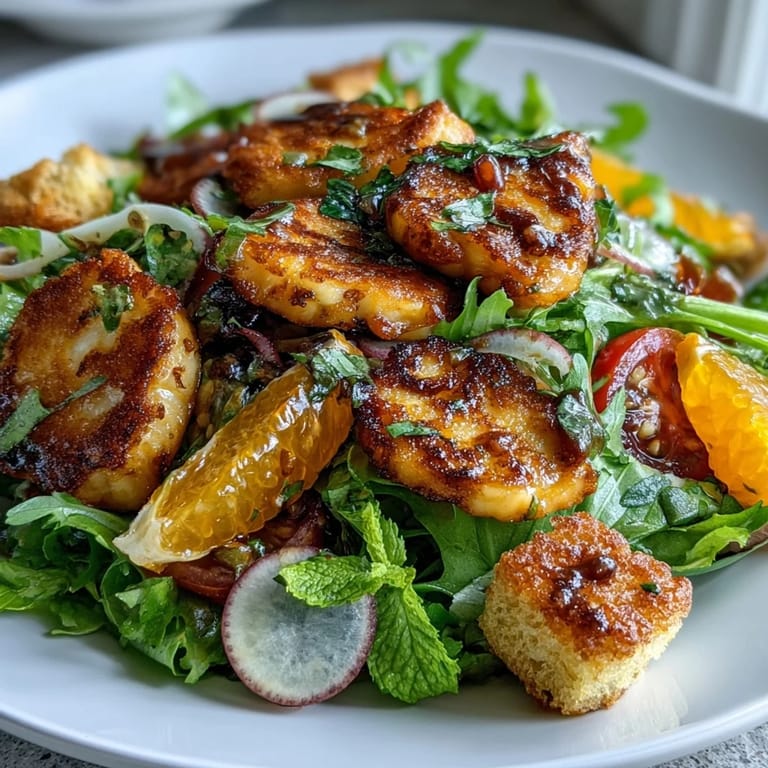
Save My partner returned home one evening while I was plating this salad, and instead of doing his usual grocery unloading, he just leaned against the counter watching. He said the colors reminded him of stained glass, and suddenly I realized that I'd been so focused on the technical components that I'd almost missed the simple beauty of what I was creating. That's when food transforms from a recipe into something worth remembering.
The Story Behind Fattoush
Fattoush is a Levantine salad that emerged from practical ingenuity rather than fancy culinary ambition—it was a way to use up stale bread by frying or toasting it and tossing it with whatever vegetables and herbs were on hand. The addition of halloumi and blood oranges is my own interpretation, drawing from the Cypriot and Mediterranean traditions that have always understood the beauty of salty cheese against bright citrus. What started as humble peasant food has become a celebration of seasonal abundance.
Why Sumac Is Your Secret Weapon
The first time I tasted sumac in a proper Middle Eastern kitchen, I was convinced I'd stumbled onto culinary magic. It has this bright, lemony quality without any of the pucker of actual lemon, and it brings an almost floral complexity that makes people pause and ask what your secret ingredient is. Using sumac instead of relying solely on citrus acid completely transforms the character of the dressing from straightforward tangy to sophisticated and layered.
Make It Your Own
This salad thrives on personalization and seasonal variation because its structure is forgiving enough to handle swaps without losing its essential character. Think of it as a framework rather than a prescription—the core of warm halloumi against bright dressing and crisp elements remains constant, but everything else can shift with what's in your market or what you're craving.
- Add pitted Kalamata or green olives for briny intensity, or toss in toasted pine nuts or pistachios for nutty richness and extra texture.
- In winter months when blood oranges aren't available, pomelo provides similar tartness with its own distinct flavor, or simply use regular oranges and adjust the vinegar slightly upward.
- For a vegan version, replace the halloumi with grilled tofu or vegan feta, and the salad loses nothing of its soul—just becomes a different expression of the same idea.
 Save
Save This salad feels like the culinary equivalent of those rare moments when everything in life aligns just right. Make it when you want to feel transported without leaving your kitchen.
Recipe Questions & Answers
- → What makes fattoush unique?
Fattoush is a Levantine bread salad that traditionally uses fried or toasted pita as a crunchy element. This version upgrades with sourdough croutons and adds halloumi for extra protein and richness.
- → Can I prepare this ahead?
Make the dressing and croutons up to 2 days ahead. Assemble just before serving to keep greens crisp and halloumi warm. Store components separately in airtight containers.
- → What substitutes work for blood oranges?
Regular navel oranges or Cara Cara oranges work beautifully. Even grapefruit or segmented tangerines can provide that citrus element if blood oranges aren't in season.
- → How do I keep halloumi from getting rubbery?
Fry halloumi quickly over medium-high heat just until golden—about 1-2 minutes per side. Overcooking makes it tough. Serve immediately while still warm and slightly softened.
- → Is this suitable for meal prep?
The dressing and croutons meal prep perfectly. Keep halloumi separate and reheat in a dry pan before serving. Greens stay fresh for 2-3 days when stored without dressing.
- → What's the purpose of sumac in this dish?
Sumac adds a tangy, lemony flavor with beautiful deep red color. It's a staple Middle Eastern spice that provides brightness without added acidity, complementing the sweet oranges perfectly.