 Save
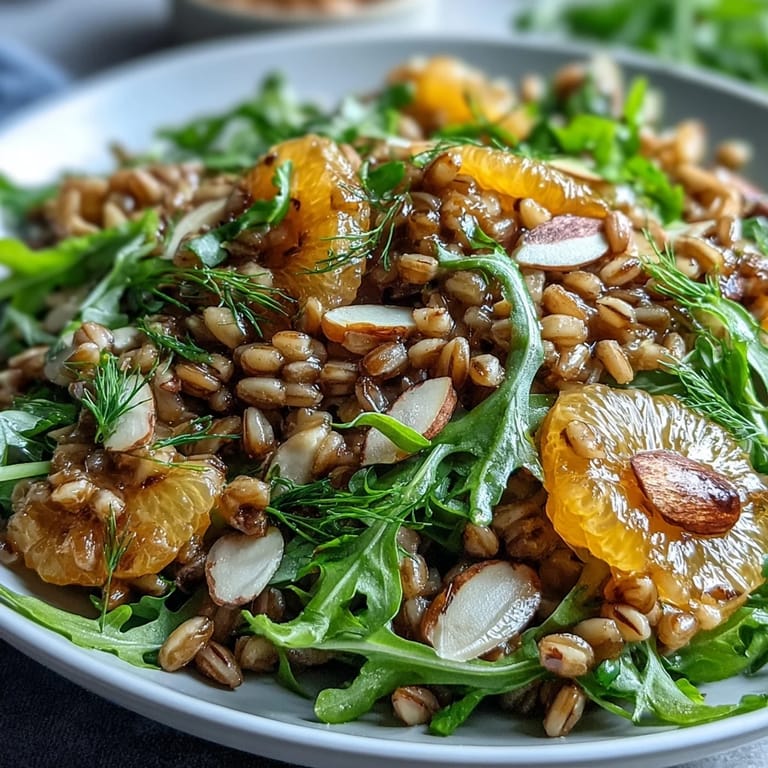
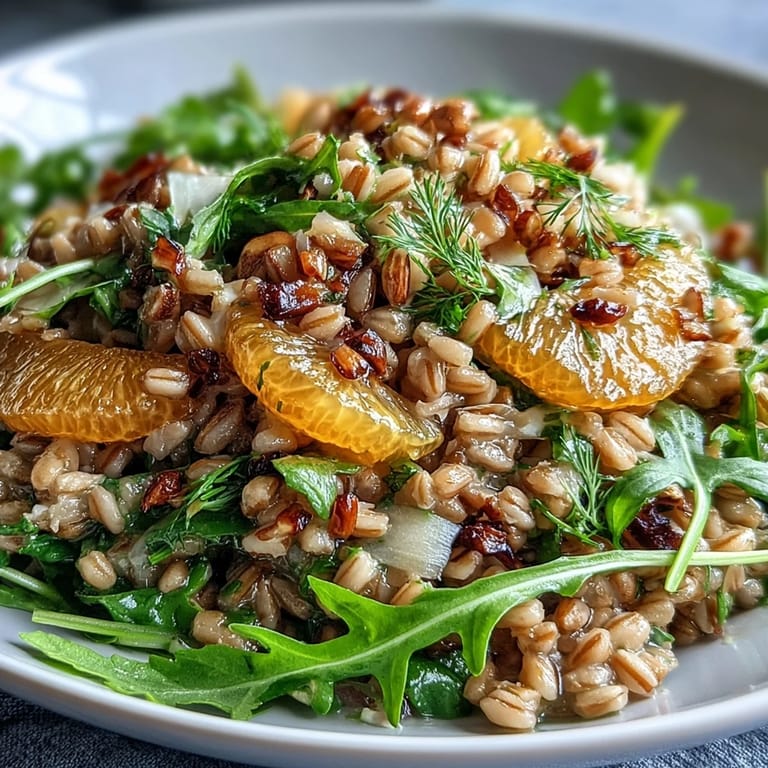
Save There's something about a bowl of farro that makes you slow down, and I discovered this particular combination on a bright afternoon when my farmer's market bag was overflowing with fennel and blood oranges. The scent of toasted almonds filled my kitchen, and I found myself layering flavors almost without thinking, watching how the citrus brightened everything it touched. What started as improvisation became the kind of salad I now make whenever I want to feel both nourished and a little bit fancy without any real fuss.
I made this for a potluck last spring and watched people go back for seconds, which never happens with salads. Someone asked if it was complicated, and I loved being able to say no—that the magic was really just in choosing good ingredients and letting them be themselves. That's when I realized this wasn't just a recipe I liked; it was something I'd be making for years.
Ingredients
- Whole grain farro: The hearty grain that holds up beautifully to dressing without turning mushy; it has this satisfying chewiness that makes the salad feel substantial.
- Water and kosher salt: Good water and proper salting during cooking is what gives farro its best texture—don't skip this step.
- Fennel bulb: Slice it thin so it becomes almost delicate, and those feathery fronds are pure garnish magic.
- Fresh oranges: Segment them yourself rather than buying pre-cut; the juice and brightness are worth the two extra minutes.
- Arugula or baby spinach: The greens stay fresh and peppery when you toss them in just before serving.
- Fresh parsley: A small handful brings color and a fresh note that ties everything together.
- Sliced almonds: Toasting them yourself transforms them from ordinary to something that smells absolutely incredible.
- Extra-virgin olive oil: Use the good stuff here because it's a real player in the dressing, not hidden in cooking.
- Orange juice and lemon juice: Both freshly squeezed make a real difference; bottled juice tastes flat by comparison.
- Honey or maple syrup: Just enough to balance the acidity and bring warmth to the dressing.
- Dijon mustard: This is your secret weapon for emulsification and depth of flavor.
- Sea salt and black pepper: Taste as you dress; these are your final adjustments for a perfect balance.
Tired of Takeout? 🥡
Get 10 meals you can make faster than delivery arrives. Seriously.
One email. No spam. Unsubscribe anytime.
Instructions
- Prepare and cook the farro:
- Rinse the farro under cold water first—this washes away any debris. Combine it with 3 cups of water and 1/2 teaspoon of kosher salt in a medium saucepan, bring everything to a boil, then lower the heat, cover, and let it simmer gently for 25 to 30 minutes until the grains are tender but still have a little bite to them. Drain any excess water and spread it on a plate to cool faster; warm farro doesn't play nicely with a cold vinaigrette.
- Toast the almonds:
- While the farro is cooking, put your sliced almonds in a dry skillet over medium heat and stir them constantly for 2 to 3 minutes until they turn golden and smell absolutely wonderful. This only takes a few minutes but makes a huge difference—watch them carefully because they can go from perfect to burnt faster than you'd expect.
- Assemble the base:
- Once the farro is cool, transfer it to a large bowl and add your thinly sliced fennel, orange segments, arugula or spinach, and chopped parsley. The greens should go in just before you dress so they stay bright and crisp.
- Make the dressing:
- In a small bowl or jar, whisk together the olive oil, orange juice, lemon juice, honey, Dijon mustard, salt, and pepper until everything is emulsified and smooth. Taste it on a piece of fennel if you can—this is your chance to adjust the seasoning before it hits the whole salad.
- Bring it together:
- Pour the dressing over the salad and toss gently so everything gets coated evenly without bruising the greens. Scatter the toasted almonds on top, add those reserved fennel fronds for a final flourish, and serve right away or chill it until you're ready to eat.
 Save
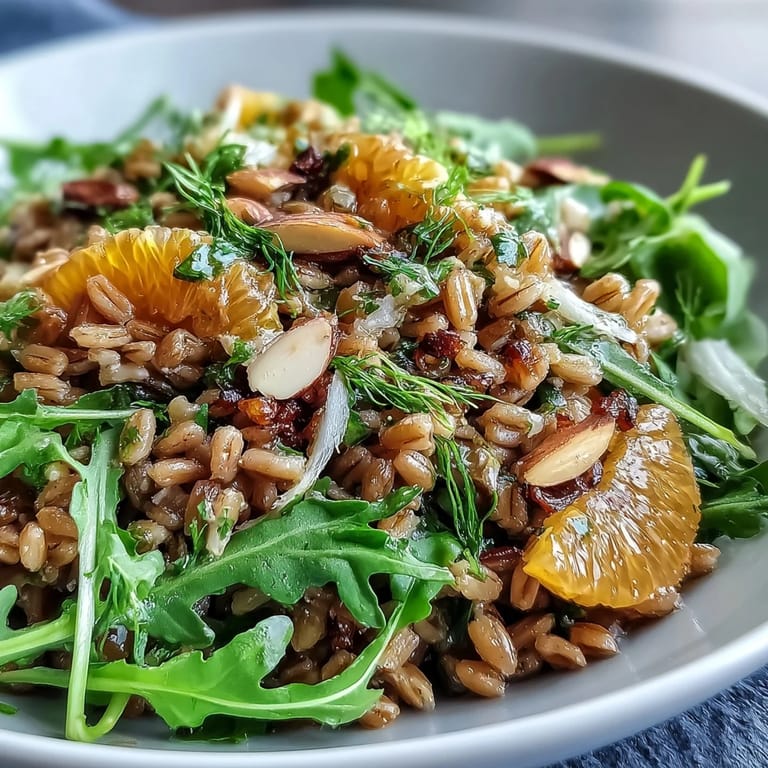
Save What I love most about this salad is how it somehow feels like an indulgence while being completely healthy, and how it sparked a tradition of bringing it to dinners where I'd watch people discover it. It's become my answer to "what should I bring?" because it's beautiful, it feeds a crowd, and it makes me feel confident in my cooking choices.
The Magic of Toasting
There's a real difference between raw almonds and toasted almonds, and learning to toast my own nuts changed my cooking life. The moment they hit the dry pan, the oils wake up and the whole kitchen smells like something you can't quite buy anywhere. It's a small step that people often skip, but it's the thing that makes people pause and ask what makes this salad taste so good.
Why This Works as a Grain Salad
Farro is heartier than most salad ingredients, which means it can actually stand up to a proper vinaigrette without falling apart. I've made this with quinoa and barley too, and they work, but farro has a texture and nuttiness that feels like it was meant for this flavor combination. The chewiness of the grain is what makes you feel satisfied eating this for lunch instead of reaching for something else an hour later.
Variations and Flexibility
Once you understand how this salad works, you can adapt it based on what's in your kitchen or what the season offers. I've made it with blood oranges in winter, with grapefruit in late spring, and I've added grilled chicken or chickpeas when I want extra protein. The core of citrus, grain, and toasted nuts stays strong no matter what you add to it.
- Try blood oranges or grapefruit for a different citrus character and a little more complexity.
- Add grilled chicken, roasted chickpeas, or crumbled feta if you want to turn this into a more substantial main course.
- Substitute barley or quinoa if you prefer, though the cooking time and texture will shift slightly.
 Save
Save This salad taught me that the simplest dishes often come from just picking beautiful ingredients and knowing when to get out of their way. It's become one of those recipes I reach for when I want to feel like I'm taking care of myself and the people I'm feeding.
Recipe Questions & Answers
- → Can I make this ahead of time?
Absolutely. The dressed salad keeps well in the refrigerator for up to 2 days. The flavors actually meld together beautifully overnight. Add the toasted almonds just before serving to maintain their crunch.
- → What's the best way to slice fennel?
Trim the fronds and stalks, then cut the bulb in half lengthwise. Remove the tough core, then thinly slice each half crosswise. A mandoline works perfectly for paper-thin slices, or use a sharp knife for slightly thicker cuts.
- → Can I use pearled farro instead of whole grain?
Yes. Pearled farro cooks faster—about 15–20 minutes—since the outer bran layer has been removed. The texture will be slightly softer and less chewy, but still delicious in this preparation.
- → How do I segment oranges properly?
Slice off the top and bottom of the orange, then follow the curve of the fruit to remove the peel and white pith. Hold the orange over a bowl and cut between the membranes to release the perfect segments. Catch any juice for the dressing.
- → What other grains work as substitutes?
Barley offers a similar chewy texture, while quinoa provides a lighter, quicker-cooking alternative. For a gluten-free option, try brown rice sorghum or buckwheat groats, adjusting cooking times accordingly.