 Save
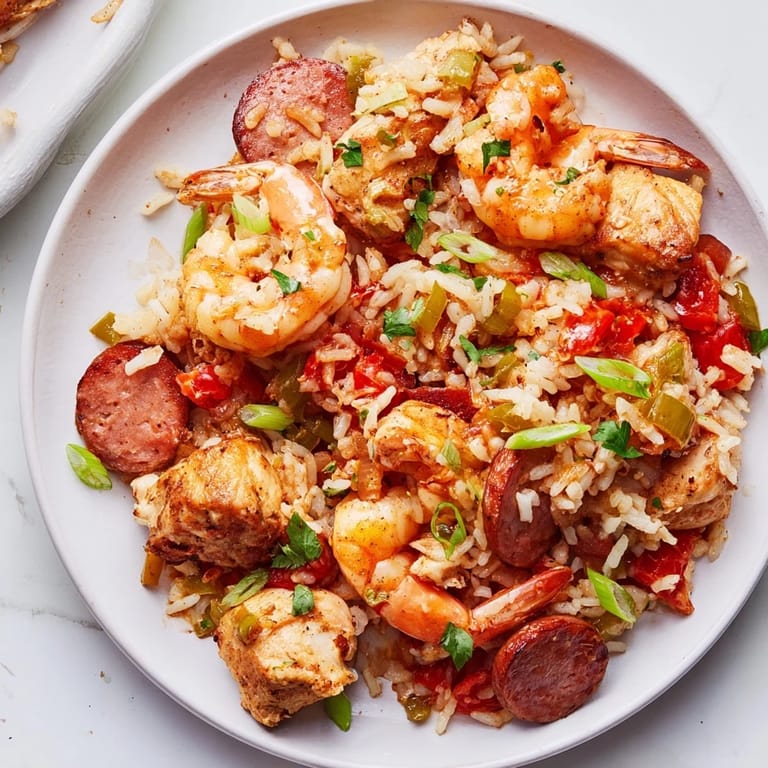
Save My kitchen was a mess of steam and spice the first time I attempted jambalaya without a recipe in front of me, just the hazy memory of a bowl I'd eaten years ago at a cousin's house in New Orleans. I was convinced I could wing it, throwing in whatever smelled right, and somehow it worked—the rice soaked up every bit of that bold, smoky flavor, and I realized then that jambalaya isn't fussy or precious. It's a one-pot celebration that tastes like it took hours but rewards you in under an hour.
I made this for a table of friends who were skeptical about Cajun food, convinced they wouldn't like spice or rice-forward dishes, and by the third bite everyone was reaching for more and asking if I'd share the recipe. That's when I knew this wasn't just comfort food; it was a bridge between people and flavors.
Ingredients
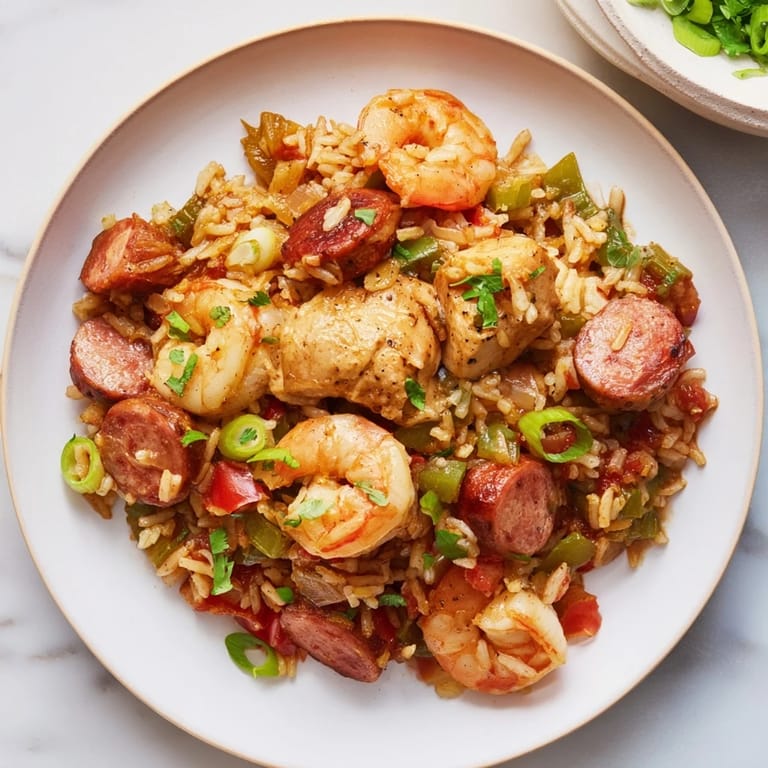
- Andouille sausage (225 g/8 oz, sliced): This is the backbone of authentic jambalaya—smoky, assertive, and worth seeking out at a specialty grocer or butcher if your regular store doesn't carry it, though kielbasa works in a pinch.
- Boneless, skinless chicken thighs (250 g/9 oz, cut into 2 cm pieces): Thighs stay juicier than breasts when simmered, which is the whole point here.
- Large raw shrimp (225 g/8 oz, peeled and deveined): Add these at the very end so they cook just enough to turn pink without becoming rubbery.
- Onion, green bell pepper, and celery (the holy trinity, diced): These three create the flavor foundation that everything else builds on.
- Garlic cloves (3, minced): Don't skip the garlic; it mellows into the broth and adds quiet depth.
- Canned diced tomatoes with juices (400 g/14 oz): The acidity cuts through the richness and keeps the dish from feeling heavy.
- Long-grain white rice (300 g/1½ cups, rinsed): Rinsing removes excess starch so each grain separates and doesn't clump.
- Chicken broth (720 ml/3 cups): Use the best quality you can find; it's one of the few ingredients that's impossible to hide.
- Smoked paprika, dried thyme, dried oregano, cayenne pepper, black pepper, salt, and bay leaves: This spice blend is bold but not mean—adjust cayenne to your comfort level.
- Vegetable oil (2 tbsp): A neutral oil lets the other flavors shine.
- Spring onions and fresh parsley (for garnish): These bright, fresh finishes wake up the dish just before eating.
Tired of Takeout? 🥡
Get 10 meals you can make faster than delivery arrives. Seriously.
One email. No spam. Unsubscribe anytime.
Instructions
- Brown the sausage first:
- Heat a tablespoon of oil in your pot over medium-high heat and let the sausage release its fat and color, about 3–4 minutes. You want that caramel crust, not just warm slices, because it's where the flavor lives.
- Sear the chicken:
- Add the remaining oil and nestle chicken pieces into the hot pot until they're golden on all sides, around 4–5 minutes. This step takes patience, but it's building layers of flavor that simmer into the rice.
- Build the base with vegetables:
- Once meat is out of the pot, toss in onion, bell pepper, and celery, stirring until they soften and become fragrant, roughly 5 minutes. Add garlic and let it toast for another minute.
- Toast the spices:
- Stir in the rice along with paprika, thyme, oregano, cayenne, pepper, and salt, cooking for just 1 minute. This wakes up the spices and coats each grain with oil.
- Add liquid and aromatics:
- Pour in tomatoes with their juices, chicken broth, and bay leaves, stirring to scrape up any browned bits stuck to the bottom. This is called deglazing, and it's where hidden flavor comes from.
- Simmer the rice:
- Return sausage and chicken to the pot, bring to a boil, then drop heat to low, cover, and let it bubble gently for 20 minutes. Stir halfway through so nothing sticks to the bottom.
- Finish with shrimp:
- Nestle shrimp into the rice without stirring too much, cover again, and cook for 5–7 minutes until they're pink and the rice is tender. Overcooked shrimp turns tough, so watch carefully.
- Rest and fluff:
- Remove from heat, discard bay leaves, and use a fork to fluff the rice gently, letting steam escape.
- Plate with personality:
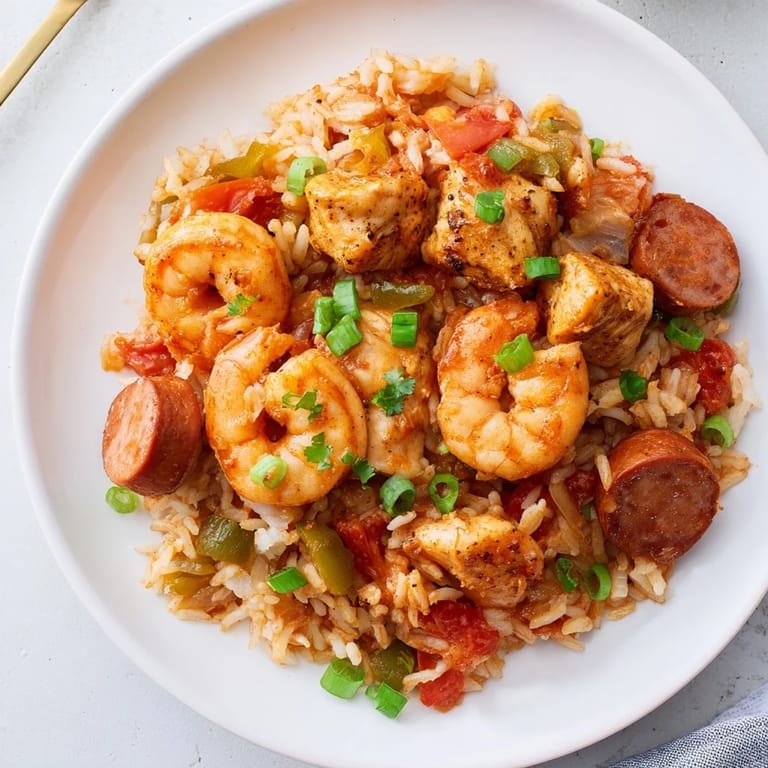
- Garnish generously with spring onions and parsley, and serve with hot sauce on the side for people who want to turn up the heat.
 Save
Save I learned the real magic of jambalaya one night when I served it to my grandmother, who'd grown up eating her mother's version every Sunday, and instead of critiquing it she just smiled and asked for seconds. That's when I understood that food this good isn't about perfection—it's about generosity, about filling bellies and making people feel seen.
When to Make This
Jambalaya is perfect on cool evenings when you want your kitchen to feel warm and alive, or when you're cooking for a crowd and need something that tastes impressive but isn't fussy. It's casual enough for a weeknight but festive enough to celebrate with, and it reheats beautifully the next day—some say the flavors actually deepen overnight.
Adjusting Heat and Flavor
The cayenne pepper is your heat dial, so start with less than you think you need and add more if you like fire. If you want to amp up complexity instead of spice, consider adding a dash of Worcestershire sauce or a squeeze of lemon juice at the end. Some cooks swear by a touch of hot sauce stirred right into the pot, while others believe it belongs only at the table where people can control their own adventure.
Make It Your Own
Jambalaya is forgiving in the way traditional comfort food usually is—you can swap proteins, skip what you don't like, or double down on what you love. The structure stays the same, but the soul changes based on who's cooking and who's eating it, and that's exactly how it should be.
- Omit shrimp entirely and extend the sausage and chicken simmer time for a heartier version, or add extra vegetables like diced zucchini or okra if you have them on hand.
- For vegetarians, skip the meat entirely and use vegetable broth instead of chicken broth, then let the spices and vegetables carry the whole dish—it's different but still delicious.
- Hot sauce is never required, but it's always welcome for anyone who wants to personalize their bowl.
 Save
Save Jambalaya teaches you that some of the best meals come from restraint and respect for a few bold ingredients rather than complexity for its own sake. Make it once and you'll understand why it's endured for generations.
Recipe Questions & Answers
- → What is the best type of sausage to use?
Andouille sausage is preferred for its smoky flavor, but smoked kielbasa or chorizo can be used as a substitute.
- → How can I adjust the spiciness?
Increase cayenne pepper or add diced jalapeños to boost the heat level according to your preference.
- → Can I omit the shrimp?
Yes, you can make this dish with just chicken and sausage for a simpler version.
- → What sides complement this dish?
Cornbread or a fresh green salad pairs well, balancing the dish's bold flavors.
- → How do I know when the rice is perfectly cooked?
Cook until the rice is tender and has absorbed most of the broth, usually about 20 minutes simmering plus 5-7 minutes with shrimp.