 Save
Save There's something about the sound of a biscuit cutter hitting the countertop that still takes me back to my grandmother's kitchen on lazy Sunday mornings. She'd have buttermilk in a glass jar, cold butter waiting on the counter, and this quiet confidence that made baking look effortless. The first time I tried making them alone, I was nervous—biscuits have a reputation for being fussy. But then the dough came together under my fingers, warm and tender, and I understood why she made them so often.
I made these for a potluck once, stacked them warm in a basket with a kitchen towel, and watched people's faces light up when they bit into one. That's when I realized it wasn't just nostalgia talking—there's something genuinely special about a biscuit that's still warm from the oven, buttery enough to melt on your tongue, and sturdy enough to hold up to gravy or jam.
Ingredients
- All-purpose flour (2 cups/250 g): This is your foundation—measure it right and everything else falls into place. I learned to spoon it into the measuring cup and level it rather than scooping directly, which prevents packing flour and throwing off the whole balance.
- Baking powder (1 tablespoon): This is what gives your biscuits that tall, airy rise. Check the date on the tin; stale baking powder is a silent recipe killer.
- Baking soda (½ teaspoon): Works alongside the baking powder to neutralize the buttermilk's acidity and deepen the flavor slightly.
- Fine sea salt (1 teaspoon): Enhances everything without making the biscuits taste salty. I use fine sea salt because it dissolves and distributes more evenly than kosher salt.
- Granulated sugar (1 tablespoon): Just enough to balance the savory notes and help with browning—not sweet, just balanced.
- Cold unsalted butter (½ cup/115 g), cubed: This is non-negotiable: the butter must be cold, even slightly frozen. Those butter pieces steam apart during baking and create the flaky layers. Room temperature butter makes dense, cakey biscuits.
- Cold buttermilk (¾ cup/180 ml), plus extra for brushing: The acidity tenderizes the crumb and adds tangy flavor. Keep it cold—warm buttermilk starts melting the butter before you want it to.
Tired of Takeout? 🥡
Get 10 meals you can make faster than delivery arrives. Seriously.
One email. No spam. Unsubscribe anytime.
Instructions
- Get Your Oven Ready:
- Preheat to 220°C (425°F) and line a baking sheet with parchment paper. A hot oven is essential for biscuits to rise quickly and bake through before the exterior browns too much.
- Mix the Dry Team:
- Whisk together flour, baking powder, baking soda, salt, and sugar in a large bowl. Whisking aerates the flour and distributes the leavening agents evenly, which gives you consistent rise.
- Cut in the Butter:
- Add cold, cubed butter and work it in quickly using a pastry cutter, two forks, or your fingertips until the mixture looks like coarse crumbs with some pea-sized pieces of butter still visible. Those visible butter pieces are your secret to flakiness—they'll steam and separate the layers as the biscuits bake. Don't overmix or let the butter warm up.
- Bring It Together:
- Make a well in the center, pour in cold buttermilk, and stir gently with a fork just until the dough comes together. The dough will look shaggy and rough—that's exactly right. Overmixing develops gluten and makes biscuits tough.
- Build the Layers:
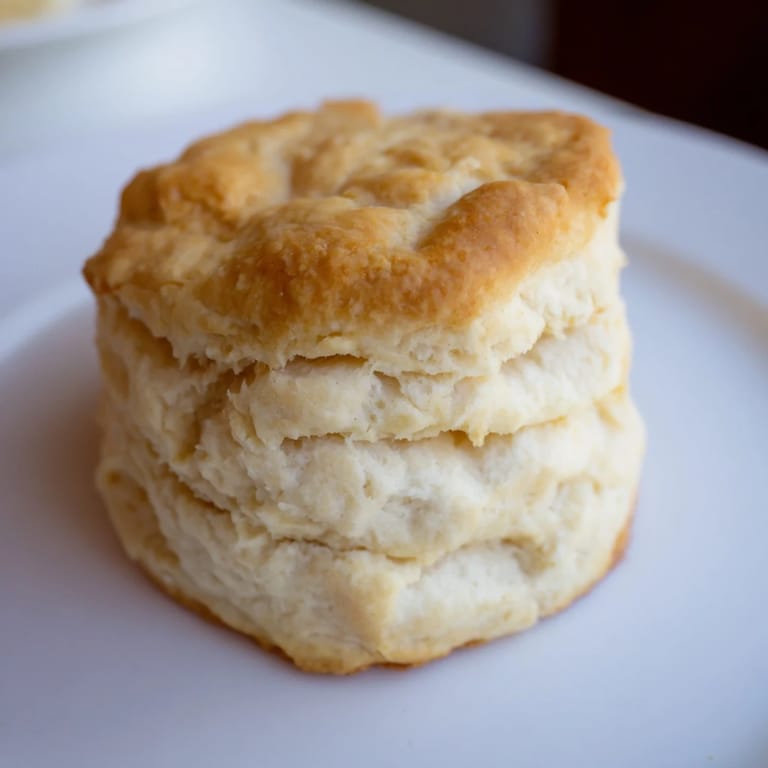
- Turn the dough onto a lightly floured surface and gently pat it into a rectangle about 1.5 cm (½ inch) thick. Fold it in half, press it out again, and repeat this fold-and-pat process 2 more times. Each fold traps butter and creates those beautiful, distinct layers that shatter when you bite into them.
- Cut Your Biscuits:
- Pat the dough to a final thickness of 2.5 cm (1 inch) and cut with a 6 cm (2½ inch) round cutter, pressing straight down without twisting. Twisting seals the edges and prevents the biscuits from rising evenly. Gather scraps gently and repeat until all dough is used.
- Final Touch and Bake:
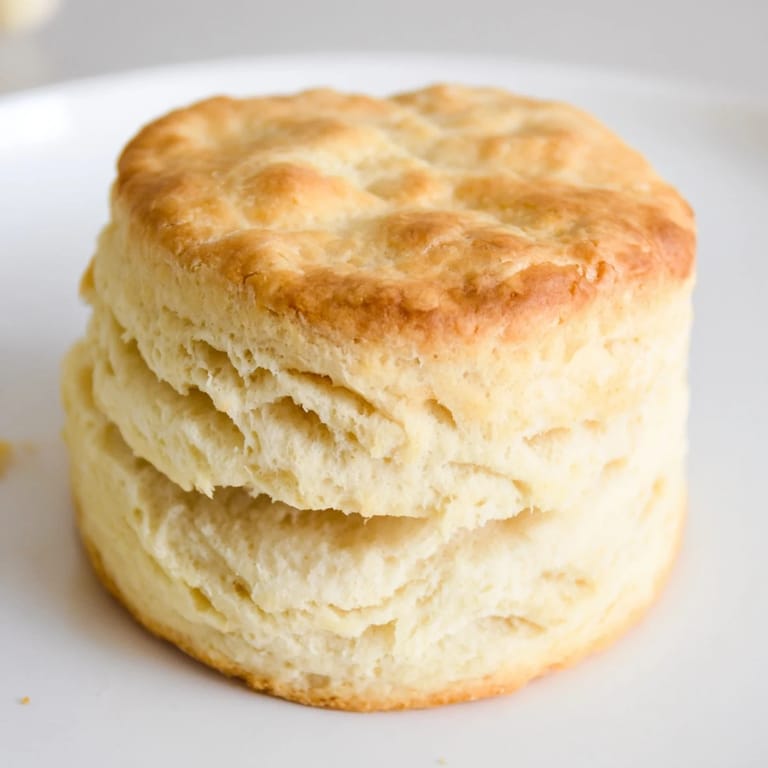
- Place biscuits close together on the prepared baking sheet and brush the tops lightly with buttermilk. Bake for 13–15 minutes until they're tall, risen, and golden brown on top. You'll know they're done when the tops are a rich golden color and they've doubled in height.
- Rest and Serve:
- Let them cool for a few minutes before serving warm. They'll continue firming up slightly as they cool, and the steam will escape, keeping the interiors tender.
 Save
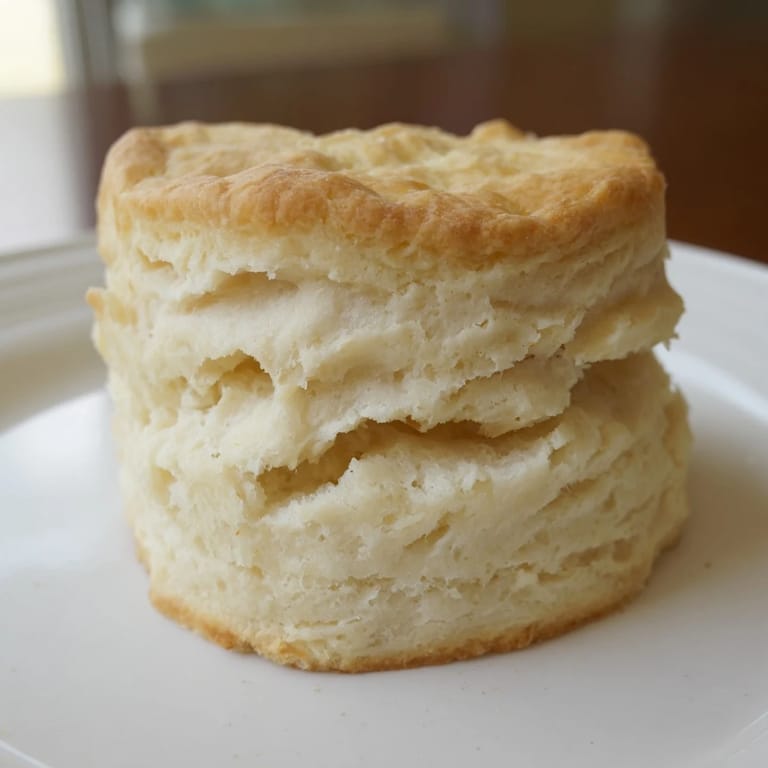
Save The best part came when I brought these to a friend's place on a rainy afternoon, and we split one open to find it still steaming inside, with those distinct, shattered layers falling apart at the gentlest touch. That's when biscuits stop being just bread and become a small moment of comfort.
Variations to Make Them Your Own
Once you've made the basic version a few times and feel confident with the technique, these biscuits become a canvas. I've added sharp cheddar and cracked pepper for savory depth, fresh chives for brightness, or even a pinch of cayenne when I'm feeling adventurous. Each addition should be just ½ cup total—too much filling disrupts the texture. Add flavoring ingredients right after cutting in the butter, before the buttermilk, so they're evenly distributed throughout.
Troubleshooting What Went Wrong
Flat, dense biscuits usually mean the butter warmed up during mixing or you overworked the dough. Biscuits that spread instead of rising might have too much buttermilk or not enough baking powder—check that your leavening agents are fresh. If the tops brown too quickly but the insides aren't done, lower your oven temperature by 13°C and bake a minute or two longer. These small adjustments have saved more than one batch in my kitchen.
How to Serve and Store Them
Warm biscuits are best with good butter, jam, or honey, but they're equally at home alongside fried chicken and gravy for a proper comfort meal. Leftover biscuits keep in an airtight container for a day or two and can be gently reheated wrapped in foil. If you want to bake them later, you can freeze the unbaked biscuits on a tray, then bake from frozen—just add a minute or two to the baking time.
- Serve them warm and fresh from the oven whenever possible, because that's when they're at their most glorious.
- A smidge of fleur de sel sprinkled on top right after brushing with buttermilk adds a sophisticated finish.
- If you don't have buttermilk, mix ¾ cup milk with 2 teaspoons lemon juice or vinegar, let it sit for 5 minutes, and use it as a substitute—it works beautifully.
 Save
Save These biscuits remind me that some of the best things in life don't require complicated techniques or fancy ingredients—just respect for the fundamentals and a little patience. Once you master them, you'll find yourself making them over and over, for breakfast, for company, for no reason at all except that you can.
Recipe Questions & Answers
- → What makes biscuits flaky and tender?
Using cold butter and gently folding the dough creates layered textures that bake into flaky, soft biscuits.
- → Can I substitute buttermilk if unavailable?
Yes, mix ¾ cup milk with 2 teaspoons lemon juice or vinegar, let it sit 5 minutes, and use as a buttermilk substitute.
- → Why is it important not to overmix the dough?
Overmixing develops gluten which can make biscuits tough rather than tender and flaky.
- → How do I achieve a golden crust on the biscuits?
Brushing the tops lightly with buttermilk before baking promotes a rich, golden color.
- → What variations can enhance flavor?
Add grated cheddar, fresh herbs, or black pepper to the dough for added taste and aroma.