 Save
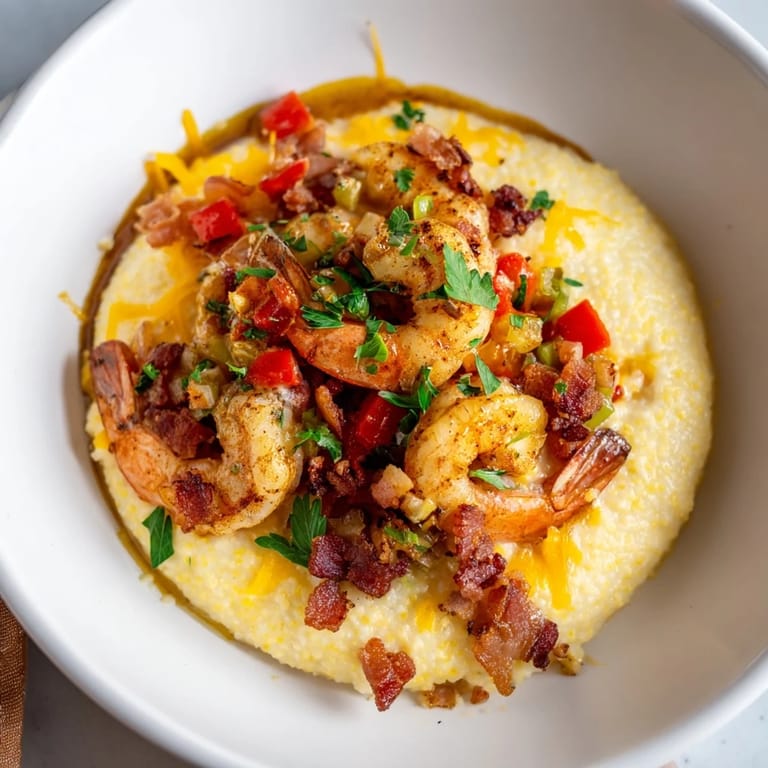
Save There's something about shrimp and grits that stops a conversation mid-bite. I discovered this dish at a cramped Charleston restaurant on a humid afternoon, watching the chef plate it like it was the most natural thing in the world—creamy gold topped with glistening pink. That first spoonful changed how I thought about breakfast, lunch, or dinner. Now when I make it at home, that same magic happens: the kitchen fills with the smell of butter and garlic, and suddenly everyone's gathered around the stove asking when it'll be ready.
My brother came home from a tough week at work and barely said hello before asking what that smell was. I'd started the grits on instinct, not planning for company, but twenty minutes later we were eating bowls of this together in comfortable silence. He asked for seconds, then thirds, and by the end he stopped asking questions and just kept eating. That's when I knew this recipe wasn't just food—it was the kind of dish that does the talking for you.
Ingredients
- Stone-ground grits (1 cup): Real stone-ground grits matter here—they have texture and flavor that instant grits can't touch, creating that creamy-but-not-mushy foundation.
- Low-sodium chicken broth (4 cups): You'll simmer the grits in this, so quality broth makes a difference; water works if that's what you have, but broth adds a subtle depth.
- Whole milk (1 cup): This is what makes the grits silky; don't skip it or substitute too aggressively.
- Unsalted butter (2 tbsp for grits, 2 tbsp for sauce): Butter appears twice in this recipe, and each time it's doing heavy lifting—use good butter.
- Sharp cheddar cheese, shredded (1 cup): Sharp matters because mild cheddar disappears in the heat; shred it fresh if you can.
- Large shrimp, peeled and deveined (1 lb): Size makes a difference—large shrimp stay tender and don't overcook in the minute it takes to cook them.
- Cajun seasoning (1 tbsp): This is your spice shortcut; if you don't have it, you can skip it and season with salt, pepper, and a pinch of paprika instead.
- Bacon (4 slices, chopped): Bacon fat is flavor, so choose bacon you actually like eating because you'll taste it throughout the dish.
- Fresh parsley (2 tbsp, chopped): This isn't decoration—it's the bright finish that makes your mouth wake up at the end.
- Lemon juice (1/2 lemon): Squeeze it fresh; bottled lemon juice tastes flat compared to the real thing.
Tired of Takeout? 🥡
Get 10 meals you can make faster than delivery arrives. Seriously.
One email. No spam. Unsubscribe anytime.
Instructions
- Start the grits:
- Bring chicken broth and milk to a gentle simmer in a medium saucepan—you're not boiling here, just enough heat to see small bubbles. Slowly whisk in the grits, stirring constantly to avoid lumps, then reduce the heat to low, cover, and let it cook for 20 to 25 minutes, stirring every few minutes so nothing sticks to the bottom.
- Season the shrimp:
- Toss your peeled and deveined shrimp with the Cajun seasoning and set them aside—this only takes a minute but makes sure every piece gets seasoned evenly.
- Crisp the bacon:
- In a large skillet over medium heat, cook the chopped bacon until it's as crispy as you like it, then remove it with a slotted spoon. Leave about a tablespoon of bacon fat in the pan because that's your flavor base.
- Build the aromatic base:
- Add the diced onion and bell pepper to the bacon fat, sauté for 3 to 4 minutes until they start to soften and smell sweet, then add the minced garlic and cook for one more minute. You're not looking for anything fancy here—just fragrant and tender.
- Cook the shrimp:
- Add a splash of olive oil to the pan, then lay the seasoned shrimp out in a single layer and let them cook about a minute per side until they turn pink and firm. Don't fuss with them or move them around; that quick, undisturbed sear makes them tender instead of rubbery.
- Make the sauce:
- Pour in the chicken broth, scraping the bottom of the skillet with a wooden spoon to grab all those browned bits—that's where the flavor lives. Let it simmer for a couple minutes, then stir in the butter and fresh lemon juice.
- Bring it all together:
- Return the bacon and cooked shrimp to the skillet, toss everything to coat in that gorgeous sauce, and taste it—add a pinch more salt and pepper if it needs it. Finish the grits by stirring in butter, cheddar, salt, and pepper if you haven't already.
- Plate and serve:
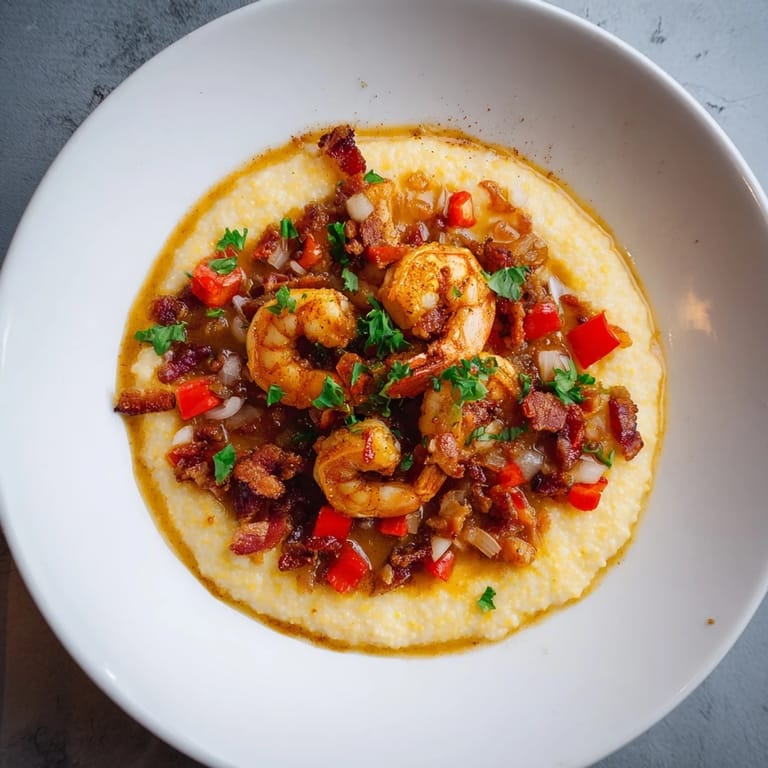
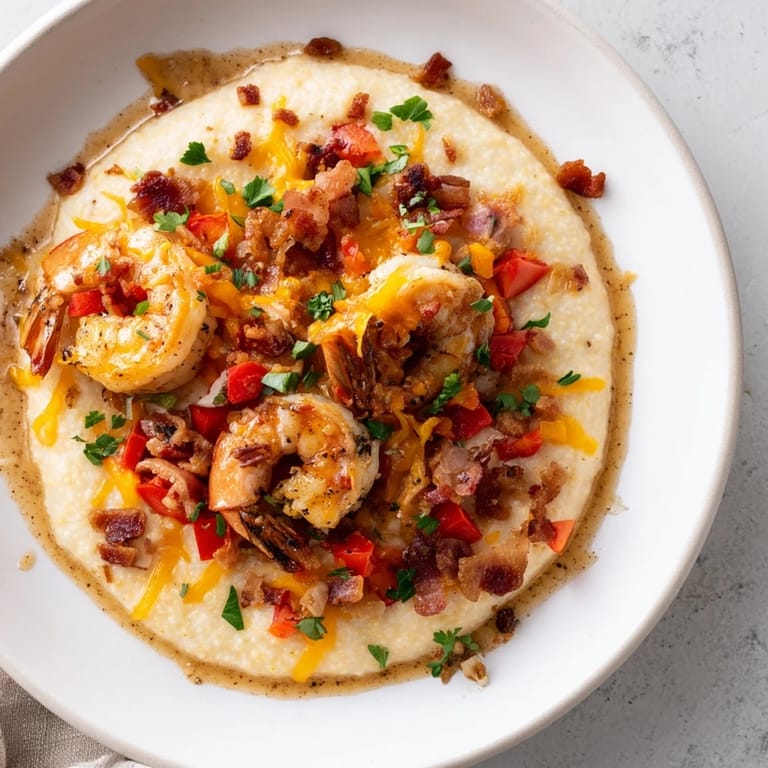
- Spoon a generous portion of creamy grits into each bowl, top with the shrimp, sauce, and sautéed vegetables, then scatter the chopped parsley over everything. Serve immediately while the grits are hot and the shrimp are still tender.
 Save
Save The first time my neighbor tasted this, she closed her eyes for a second before opening them and asking how long I'd been cooking. I said forty-five minutes, and she said it tasted like I'd been working on it all day. That's the moment I understood that some dishes carry weight beyond their ingredients—they feel like care on a plate.
Getting Your Grits Creamy Without the Stress
The fear of lumpy grits keeps people from making this dish, but it's honestly not as tricky as it sounds. The secret is patience and slow whisking—add the grits gradually while stirring constantly, and you'll never hit that wall of lumpiness. The other secret is keeping the heat low; high heat causes grits to sputter and stick. By the time they're done, they should be thick enough to scoop but still move slightly when you shake the pan. If you end up with something that looks too thick, just stir in a little more warm milk or broth—grits are very forgiving that way.
The Magic of Building Layers
What makes this dish taste better than the sum of its parts is how you build it step by step instead of dumping everything together. The bacon fat seasons the vegetables, the vegetables perfume the broth, the broth picks up those browned bits from the skillet, and by the time everything comes back together, you've created something that tastes like it simmered for hours. This layering is also why it's worth taking those few extra minutes to let each component do its job—don't rush it, because the timing is what creates the depth.
Playing with Flavors and Variations
This is a dish that welcomes improvisation, and some of my favorite versions came from deciding to try something different. If you want more heat, add a pinch of cayenne or a dash of hot sauce to that final sauce—you'll feel it right away. For a different cheese personality, smoked gouda brings a depth that sharp cheddar doesn't have, or pepper jack adds a creeping warmth. If you're cooking for someone who doesn't eat pork, skip the bacon entirely and let the butter and lemon carry more of the load, or use smoked paprika to fill that savory gap. The frame stays the same; the filling is up to you.
- Substitute smoked gouda or pepper jack for the cheddar if you want a different flavor profile.
- Add cayenne or hot sauce if you're in the mood for heat without changing the dish.
- Use vegetable broth instead of chicken broth to keep it fully vegetarian.
 Save
Save This dish has become my answer to "what should I make?" when I want to feel like I'm doing something special without stressing about it. Once you understand how it works, you stop thinking about the recipe and start thinking about who you're feeding.