 Save
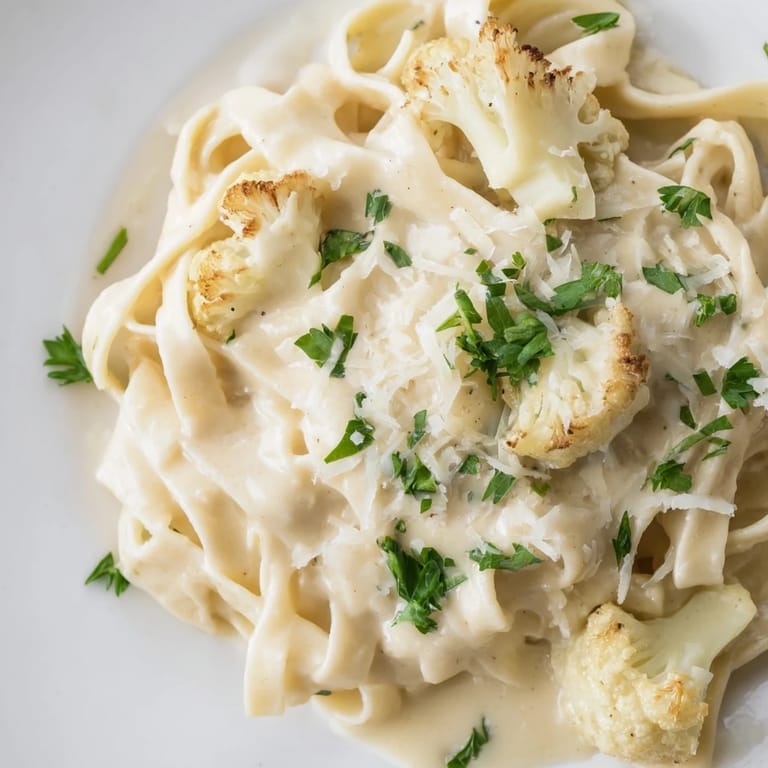
Save My sister texted me a photo of her dinner one Thursday night, just a bowl of pasta with what looked like regular Alfredo. When I asked for the recipe, she laughed and said it was mostly cauliflower. I didn't believe her until I made it myself the next evening, standing over the blender as it whirred into the creamiest sauce I'd tasted in months. No heavy cream, no food coma afterward, just this silky, golden sauce that clung to every strand of fettuccine. I called her back and admitted she was right, and we both agreed this was going into permanent rotation.
The first time I served this to friends, I didn't mention the cauliflower until plates were nearly empty. One of them paused mid-bite, looked up, and said it reminded her of the Alfredo her nonna used to make, just lighter somehow. When I finally confessed the secret, she laughed so hard she almost knocked over her wine. That moment made this dish feel less like a trick and more like proof that good food doesn't need to be heavy to feel like home.
Ingredients
- Cauliflower: Choose a firm head with tightly packed florets, the roasting transforms it into something sweet and nutty that makes the whole sauce sing.
- Garlic: Roasting the cloves whole mellows their sharpness into a creamy, almost buttery flavor that blends invisibly into the sauce.
- Whole milk: This gives the sauce body without overwhelming the cauliflower, though you can swap it for unsweetened almond or oat milk if you prefer.
- Parmesan cheese: Use the real stuff, freshly grated, because pre-shredded versions have coatings that can make the sauce gritty.
- Unsalted butter: A little goes on the vegetables before roasting, the rest goes into the blender to add richness and help everything emulsify.
- Fettuccine: The flat ribbons hold the sauce beautifully, but any pasta shape you love will work just as well.
- Nutmeg: Just a whisper of it adds warmth and a subtle complexity that people notice but can't quite name.
- Salt and black pepper: Season in layers, tasting as you go, because the Parmesan adds its own saltiness.
- Parsley and extra Parmesan: A handful of fresh herbs and a final shower of cheese make it look as good as it tastes.
Tired of Takeout? 🥡
Get 10 meals you can make faster than delivery arrives. Seriously.
One email. No spam. Unsubscribe anytime.
Instructions
- Get the oven ready:
- Preheat to 425°F and line a baking sheet with parchment to keep cleanup easy. The high heat is what gives the cauliflower those sweet, caramelized edges.
- Prep the vegetables:
- Toss the cauliflower florets and peeled garlic cloves with a tablespoon of butter, making sure everything is lightly coated. Spread them in a single layer so they roast evenly instead of steaming.
- Roast until golden:
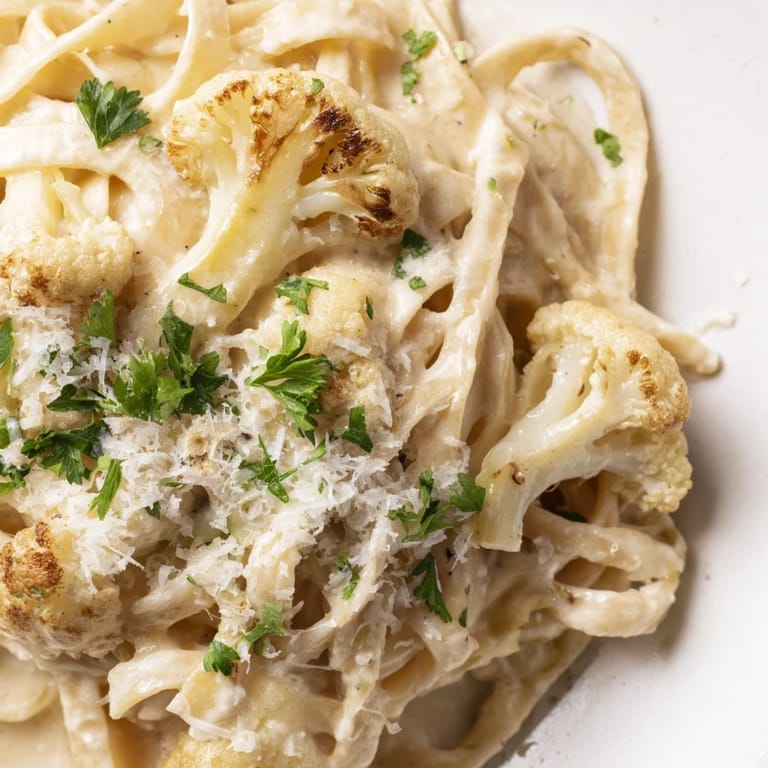
- Let them go for 25 to 30 minutes, stirring halfway through, until the cauliflower is tender and deeply browned in spots. The smell will fill your kitchen and make everyone wander in asking what's for dinner.
- Cook the pasta:
- While the vegetables roast, boil your pasta in generously salted water, following the package timing. Before draining, scoop out a cup of that starchy pasta water, it's the secret to a sauce that clings.
- Blend the sauce:
- Add the roasted cauliflower and garlic to a blender along with the remaining butter, milk, Parmesan, nutmeg, salt, and pepper. Blend until completely smooth, adding splashes of reserved pasta water until it reaches a pourable, creamy consistency.
- Combine everything:
- Pour the sauce into a large skillet over medium heat and let it warm through, then toss in the drained pasta. Stir gently until every strand is coated and glossy.
- Serve it up:
- Divide among bowls and finish with a sprinkle of parsley and extra Parmesan. Serve immediately while it's hot and silky.
 Save
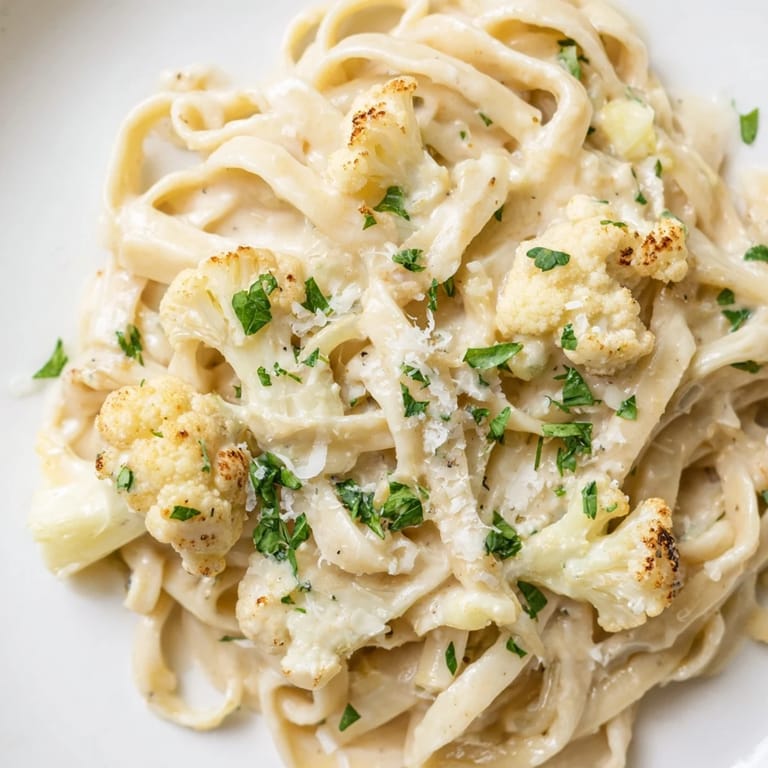
Save One cold Sunday in March, I made this for my mom after she'd spent the day helping me organize my kitchen. She sat at the table with a bowl of it, twirling her fork slowly, and said it reminded her of something simple and comforting without being heavy. We ended up talking for hours over seconds and thirds, the kind of conversation that only happens when the food is good enough to keep you at the table. That's when I realized this recipe wasn't just about cauliflower or pasta, it was about creating space for the people you love.
How to Get the Creamiest Sauce
The trick is roasting the cauliflower until it's really golden, almost caramelized in places, because that's where the sweetness comes from. If you pull it out too early, the sauce will taste flat and vegetal instead of rich and round. I learned this the hard way the first time I made it in a hurry, the difference between pale roasted and deeply browned is everything. Let your blender run longer than you think it needs to, a full minute or two, so the texture is as smooth as heavy cream. If it still feels grainy, add a splash more milk and blend again until it's completely velvety.
What to Serve Alongside
This pasta is rich enough to stand on its own, but a simple green salad with lemon vinaigrette balances it perfectly. I like to throw together arugula, shaved Parmesan, and a handful of toasted pine nuts for crunch. Garlic bread is always a good idea, especially if you have any extra Parmesan butter lying around to brush on top. A glass of crisp white wine, like Pinot Grigio or Sauvignon Blanc, cuts through the creaminess and makes the whole meal feel a little more special. Keep it simple and let the pasta be the star.
Making It Ahead and Storing Leftovers
You can roast the cauliflower and garlic a day ahead, then store them in the fridge until you're ready to blend the sauce. The sauce itself keeps well for up to three days in an airtight container, just reheat it gently on the stove with a splash of milk or pasta water to bring it back to life. Leftover pasta can be stored separately and tossed with the reheated sauce, though it's always best fresh. If you're meal prepping, keep the components separate so nothing gets soggy or dried out.
- Reheat the sauce over low heat, stirring often, to prevent it from breaking or getting grainy.
- Add a squeeze of lemon juice to leftovers for a bright, fresh lift that wakes everything up.
- If the sauce thickens too much in the fridge, thin it out with a little warm milk or vegetable broth before serving.
 Save
Save This is the kind of recipe that makes you feel good about dinner, both while you're eating it and after. I hope it finds a spot in your regular rotation the way it has in mine.
Recipe Questions & Answers
- → Can I make this sauce ahead of time?
Yes, you can prepare the roasted cauliflower and garlic up to 2 days ahead. Store in an airtight container in the refrigerator, then blend with remaining ingredients when ready to serve for best texture and flavor.
- → What pasta works best with this sauce?
Fettuccine is ideal for coating with this creamy sauce, but pappardelle, linguine, or even penne work wonderfully. Choose your favorite or whatever you have on hand.
- → How do I achieve the right sauce consistency?
Reserve pasta water while draining and add it gradually to your blended mixture. Start with small amounts—you can always add more, but you cannot remove it. The sauce should coat the back of a spoon smoothly.
- → Is this suitable for dairy-free diets?
Absolutely. Substitute whole milk with unsweetened plant-based milk, use dairy-free butter, and replace Parmesan with nutritional yeast or cashew-based alternatives for a creamy dairy-free version.
- → Why does my cauliflower need to be roasted?
Roasting develops deep, caramelized flavors that make the sauce rich and complex. It also removes excess moisture, allowing the cauliflower to blend into a naturally creamy consistency without watering down the sauce.
- → Can I use frozen cauliflower?
Yes, but thaw and dry it thoroughly before roasting to prevent excess moisture. You may need to reduce roasting time slightly since frozen florets are smaller.