 Save
Save There's something almost meditative about the slow cooker doing all the work for you—I discovered that eight years ago when a friend challenged me to bring something to a neighborhood cookout without spending the day in the kitchen. I threw a pork shoulder in my slow cooker that morning, added vinegar and spices, and by evening had the most tender, fall-apart-with-a-fork meat that had everyone asking for seconds. That day taught me that the best comfort food isn't always about technique; sometimes it's just about patience and a little smoke.
I remember my cousin's kids hovering around the kitchen counter, waiting for sandwiches like they were the most important thing happening that day—and honestly, in that moment, they were. There's real power in food that brings people together without pretension, and pulled pork has that magic.
Ingredients
- Pork shoulder (Boston butt), 1.5 kg (3.3 lbs): This cut has just the right amount of fat and connective tissue to become silky and tender after slow cooking; ask your butcher to trim it lightly for less waste.
- Kosher salt, 2 tsp: Coarser than table salt, it seasons evenly without making the meat taste bitter.
- Black pepper, 1 tsp: Freshly ground makes a real difference in depth of flavor.
- Smoked paprika, 1 tbsp: This is your smoky backbone; don't skip it or replace it with regular paprika.
- Garlic powder, 2 tsp and onion powder, 2 tsp: These dried aromatics distribute throughout the meat better than fresh, creating consistent flavor.
- Ground cumin, 1 tsp: A touch of earthiness that balances the sweetness of the sauce to come.
- Dried oregano, 1 tsp: Adds a subtle herbal note that makes people wonder what your secret is.
- Brown sugar, 1 tbsp: Just enough sweetness to caramelize slightly on the pork's surface.
- Apple cider vinegar, 120 ml (½ cup): The acidity tenderizes the meat and brightens the finished sandwich.
- Chicken broth, 240 ml (1 cup): Keeps the pork moist and prevents it from drying in the long, slow cook.
- Barbecue sauce, 240 ml (1 cup): Choose one you genuinely love; this is the final flavor statement.
- Soft sandwich buns, 6: Slightly sweet buns hold up better than plain bread without falling apart under the weight of juicy pork.
- Coleslaw and dill pickle slices (optional): The crunch and acidity cut through richness and refresh your palate between bites.
Tired of Takeout? 🥡
Get 10 meals you can make faster than delivery arrives. Seriously.
One email. No spam. Unsubscribe anytime.
Instructions
- Mix your spice rub:
- In a small bowl, combine salt, pepper, smoked paprika, garlic powder, onion powder, cumin, oregano, and brown sugar. Stir until no clumps remain—the brown sugar should break up into the mixture.
- Season the pork:
- Rub the spice mixture all over the pork shoulder, getting into every crevice and making sure you use all of it. This is where the magic starts: you're not just seasoning, you're building a flavorful crust that will infuse the meat as it cooks.
- Build your slow cooker base:
- Place the seasoned pork in your slow cooker, then pour the apple cider vinegar and chicken broth around it—not over it—so the seasonings stay on the surface. The liquid will rise up as the pork cooks and release moisture.
- Let time do the work:
- Cover and cook on low for 8 hours, until the pork is so tender it shreds with barely any pressure from a fork. You'll know it's done when the internal temperature reads 190°F, but honestly, patience is your better guide here.
- Shred and strain:
- Transfer the cooked pork to a large bowl and use two forks to shred it into bite-sized pieces, pulling the meat apart along its natural grain. Skim the excess fat from the cooking liquid in the slow cooker—you want the broth, not the grease.
- Finish and heat:
- Return the shredded pork to the slow cooker and toss it with the barbecue sauce, then heat on low for another 10–15 minutes so the flavors marry together. Taste and add more sauce if it feels dry; you want it glossy and clingy, not swimming in liquid.
- Assemble and serve:
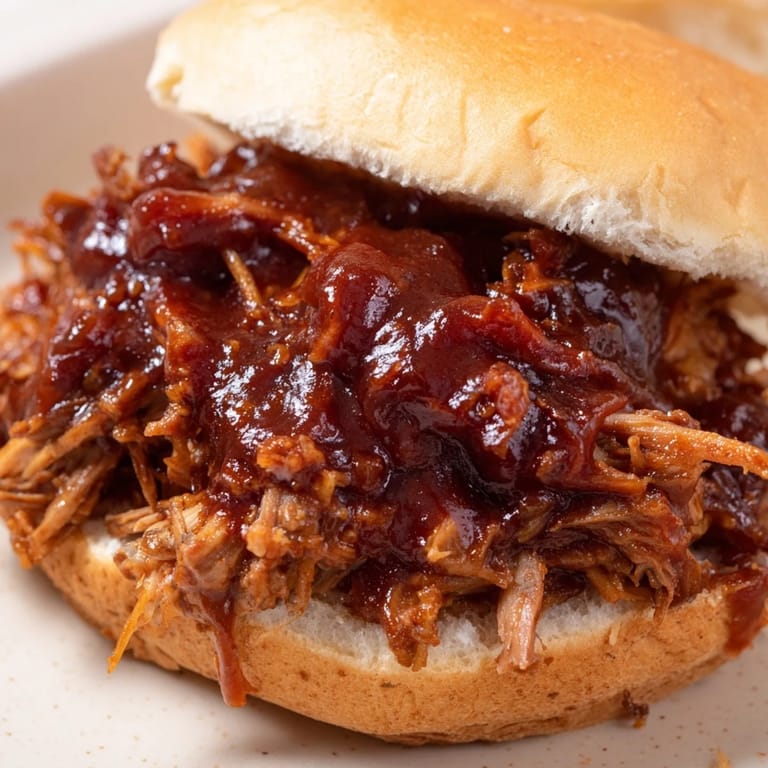
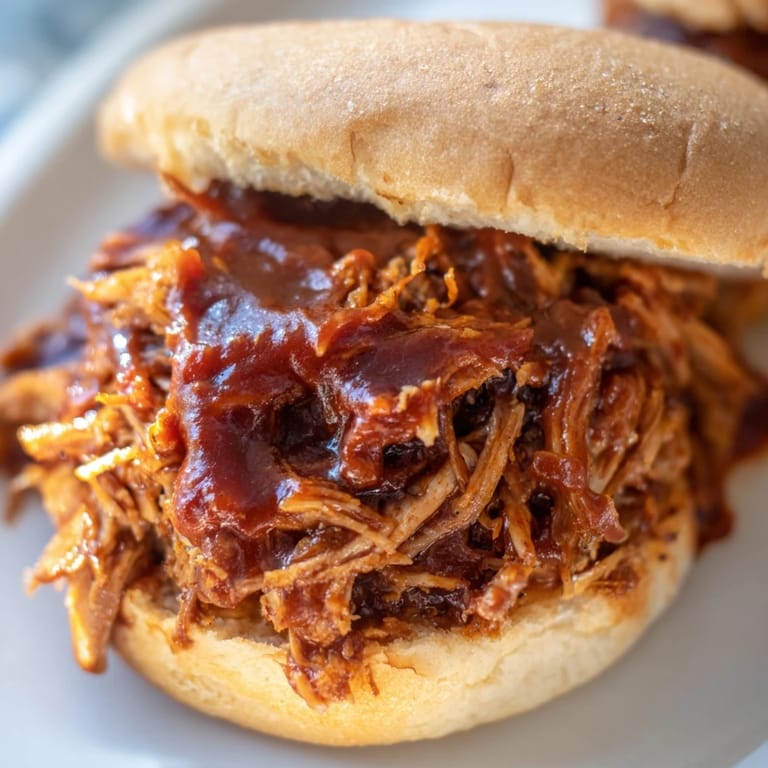
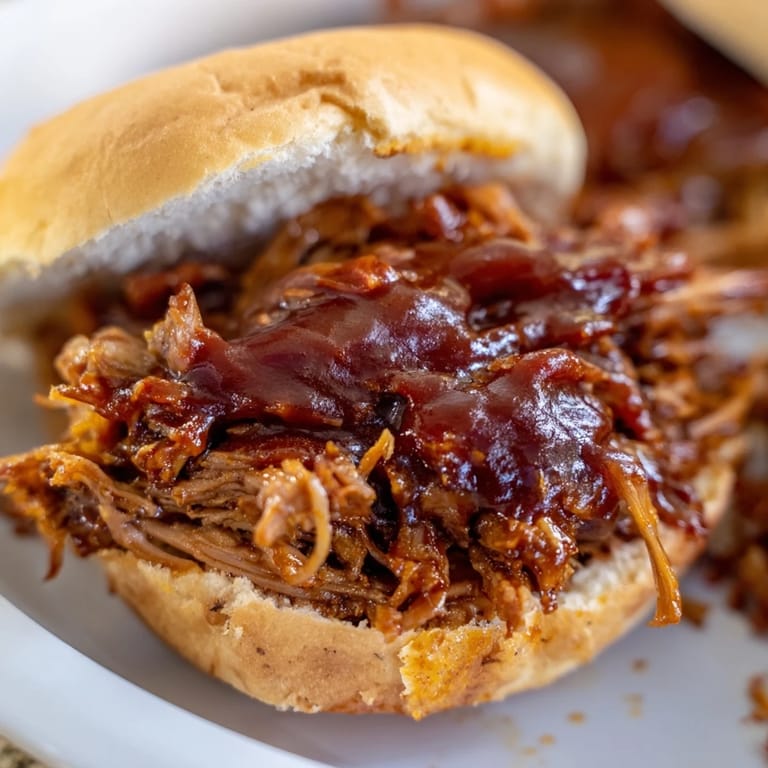
- Toast your buns lightly if you like, pile the warm pulled pork high, then top with extra barbecue sauce, coleslaw, and pickles if desired. Eat it while it's still warm, or let people build their own—it's much more fun that way.
 Save
Save I've watched this sandwich become the centerpiece of impromptu gatherings, the thing people request by name months later, the dish that proves you don't need fussiness to impress. There's something deeply satisfying about feeding people something this good with so little actual effort on your part.
The Art of Not Overthinking It
One of my biggest kitchen breakthroughs was realizing that pulled pork doesn't need constant attention or complicated technique—it just needs time and heat. The first time I made it, I kept peeking into the slow cooker, worried I'd done something wrong because it looked like the pork was just sitting there in murky liquid. By hour six, I finally stopped second-guessing myself, and that's when the transformation became obvious. The meat was already shredding easily, the kitchen smelled incredible, and I'd spent maybe five minutes on actual cooking.
Variations That Actually Work
I've learned that pulled pork is wonderfully forgiving and adaptable once you understand the core method. On weekends when I have more time, I've baked the pork in a Dutch oven at 150°C (300°F) for 3–4 hours, and the results are nearly identical—sometimes even better because you get a slightly deeper crust. I've added liquid smoke when I wanted more depth, kicked up the spice mix when I was feeling adventurous, and once even substituted cider vinegar with rice vinegar because that's what I had, and it worked beautifully.
Beyond the Sandwich
The best part of making a batch of pulled pork is what happens after the sandwiches are gone. I keep the leftovers in containers, ready for moments when I need dinner without planning, and they transform into something new each time. Pulled pork tacos on Tuesday with fresh cilantro and lime, nachos loaded with cheese and jalapeños on Thursday, shredded into a salad with crispy peppers on Saturday—it's like getting multiple meals from a single cook.
- Store leftovers in an airtight container for up to four days in the refrigerator, or freeze for up to three months for a head start on future meals.
- Reheat gently on low in the slow cooker or in a covered skillet on the stovetop with a splash of broth to restore moisture.
- The cooking liquid and any meat jelly at the bottom of the container is liquid gold for soups and stews.
 Save
Save This recipe has taught me that the best food often comes from showing up, being patient, and letting heat and time do most of the heavy lifting. Make it once, and you'll understand why it keeps showing up at gatherings and stays in people's memories.
Recipe Questions & Answers
- → What cut of pork is best for slow cooking?
A boneless pork shoulder, often called Boston butt, is ideal for slow cooking due to its marbling and connective tissue, which break down to create tender meat.
- → How long should the pork cook to become tender?
Cooking on low heat for about 8 hours allows the pork to become tender enough to shred easily with a fork.
- → Can I prepare this dish without a slow cooker?
Yes, a Dutch oven can be used to braise the pork at 150°C (300°F) for 3–4 hours until tender.
- → How can I add a smoky flavor to the pork?
Add a few drops of liquid smoke to the cooking broth before slow cooking to infuse a smoky aroma into the meat.
- → What are good serving options alongside the pork?
Serve with soft buns, coleslaw, dill pickles, and sides like potato chips, fries, or a fresh salad for a balanced meal.
- → Is it necessary to shred the pork before mixing with sauce?
Yes, shredding allows the meat to absorb the barbecue sauce evenly and enhances the texture for sandwiches.