 Save
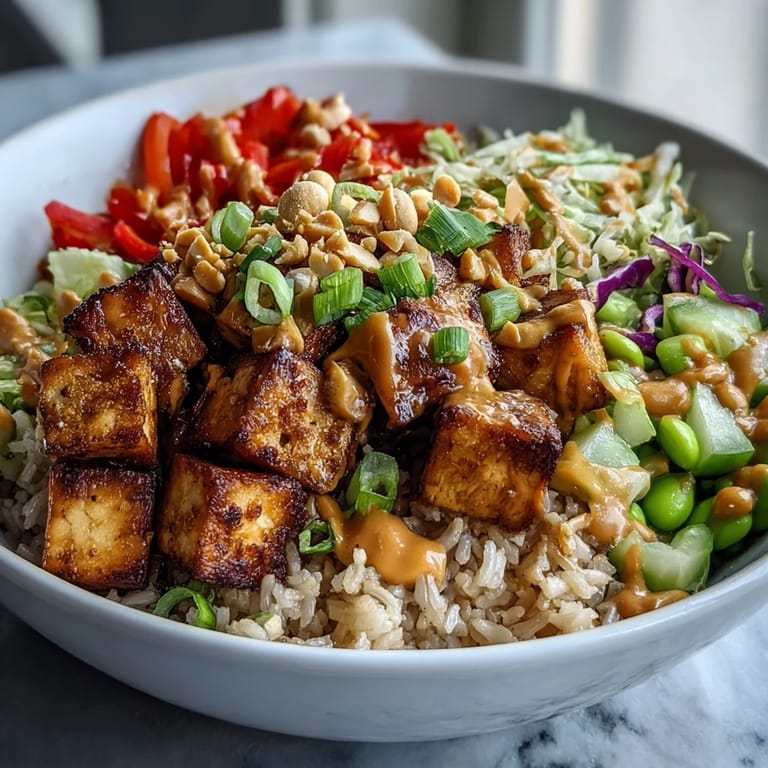
Save My roommate challenged me to cook something that could convert her skeptical partner to plant-based eating, and somehow this bowl became the unlikely hero of that evening. The magic wasn't in any single ingredient but in how the crispy tofu caught the light, how the vegetables sang with color, and most importantly, how that peanut sauce tied everything together like a warm hug. It was the kind of meal that proved vegetables and plant-based proteins didn't need to apologize for existing on the same plate as anything else.
I made this for a meal prep Sunday with a friend who was nervous about cooking for her new vegan girlfriend, and watching her face light up when her girlfriend went back for seconds was worth more than any recipe review. That moment taught me that food becomes memorable not because of technique but because of the intention and care that goes into it.
Ingredients
- Extra-firm tofu (400 g): Press it well before coating—moisture is the enemy of crispiness, and a good press makes the difference between chewy and genuinely crunchy.
- Cornstarch (2 tbsp): This is your secret weapon for achieving that golden, crispy exterior without needing deep frying.
- Olive oil (2 tbsp): Drizzle generously over the cornstarch-coated tofu to help it crisp up beautifully.
- Brown rice or quinoa (200 g uncooked): Choose based on your mood—rice is heartier and more forgiving, quinoa is nuttier and adds a different texture.
- Carrot (1 medium): Julienning by hand takes a few minutes longer but gives you an appreciation for what you're eating that a food processor can't replicate.
- Red bell pepper (1): The brightness here isn't just visual—it brings a natural sweetness that balances the savory sauce.
- Purple cabbage (1 cup shredded): Raw cabbage adds a satisfying crunch and mild peppery note that keeps every bite interesting.
- Edamame (1 cup steamed and shelled): If using frozen, thaw them gently under warm water rather than microwaving to preserve their delicate flavor.
- Cucumber (1 small): Slice right before assembling to keep it crisp and fresh-tasting throughout the meal.
- Spring onions (2): These add an onion brightness that lives somewhere between raw bite and subtle sweetness.
- Creamy peanut butter (60 g): Use natural peanut butter without added oils or sugar if you can—it tastes cleaner and mixes more smoothly into the sauce.
- Soy sauce or tamari (2 tbsp): Tamari is your gluten-free option and honestly tastes slightly richer than regular soy sauce.
- Maple syrup or agave (1 tbsp): This cuts through the saltiness and adds the subtle sweetness that makes the sauce craveable rather than one-dimensional.
- Rice vinegar or lime juice (1 tbsp): The acid here is essential—it brightens everything and prevents the sauce from feeling heavy.
- Toasted sesame oil (1 tsp): A little goes a long way; this is about aroma and flavor layering, not quantity.
- Warm water (2 tbsp, plus more as needed): Add it gradually to your sauce until it reaches that perfect drizzly consistency.
- Garlic clove (1 minced): Mince it fine and let it sit for a minute before mixing into the sauce—this lets the flavor develop more fully.
- Fresh ginger (1 tsp grated): Grate it from a piece you've kept in the freezer; frozen ginger releases moisture more easily and tastes cleaner.
- Chili flakes (optional pinch): Start conservative here—you can always add more, but you can't take heat back out.
- Roasted peanuts (2 tbsp chopped): Toast them yourself if you have time; the difference in flavor is noticeable and worth the five minutes.
- Sesame seeds (1 tbsp): Toast these lightly in a dry pan before sprinkling—it wakes up their flavor and adds another layer of texture.
- Fresh cilantro or mint (as desired): Add at the very end so the herbs stay bright rather than wilting into the warm bowl.
Tired of Takeout? 🥡
Get 10 meals you can make faster than delivery arrives. Seriously.
One email. No spam. Unsubscribe anytime.
Instructions
- Set your grains in motion:
- Start your brown rice or quinoa first since it takes the longest and you want everything finishing around the same time. Follow the package instructions and resist the urge to peek—let the steam do its work undisturbed.
- Press and season your tofu:
- Wrap your tofu block in a clean kitchen towel and place something heavy on top for 10-15 minutes to extract moisture. Pat it dry afterward and cut into cubes roughly the size of dice, then toss gently with cornstarch and a pinch of salt until every piece is evenly coated.
- Get that tofu golden:
- If baking, arrange your coated tofu on a parchment-lined baking sheet, drizzle with olive oil, and roast at 200°C for 20-25 minutes, flipping halfway through until the edges are deeply golden and the centers are tender inside. If pan-frying, heat your skillet over medium-high heat until it's almost smoking, then work in batches to give each cube room to develop that beautiful crust without steaming itself.
- Build your peanut sauce while tofu cooks:
- Whisk together peanut butter, soy sauce, maple syrup, rice vinegar, sesame oil, minced garlic, and grated ginger in a bowl. Add your warm water a little at a time, stirring between additions until you reach that perfect sauce consistency—thick enough to cling to the vegetables but loose enough to drizzle. Taste as you go and adjust the balance of salt, sweet, and acid to match your preferences.
- Prep your vegetables with intention:
- Julienne your carrot, slice your bell pepper into thin strips, shred your cabbage, and slice your cucumber all within the 15 minutes before serving. Steam any frozen edamame gently under warm water, then slice your spring onions at the last moment so they stay perky and fresh.
- Assemble your bowl like you're creating art:
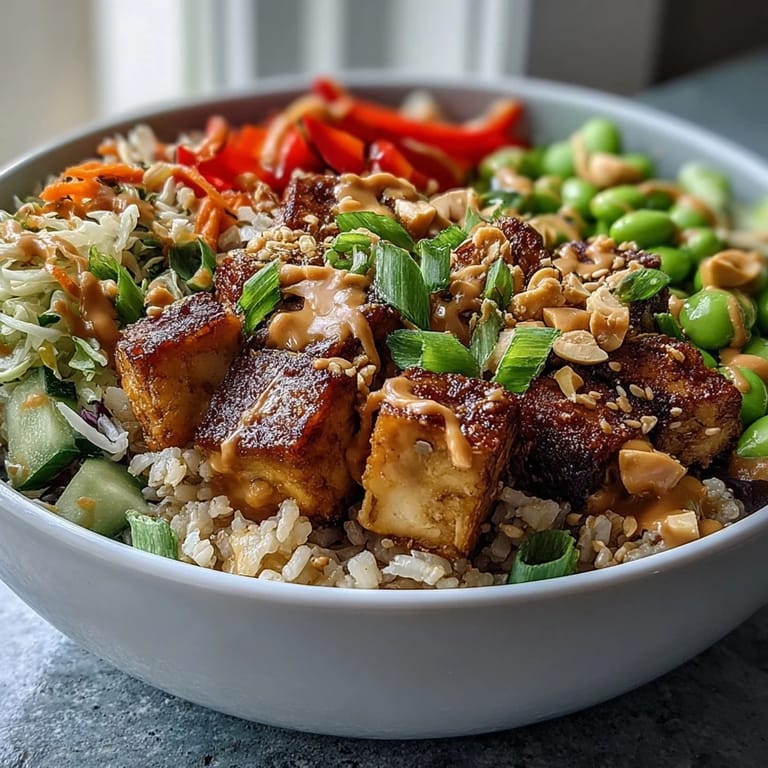
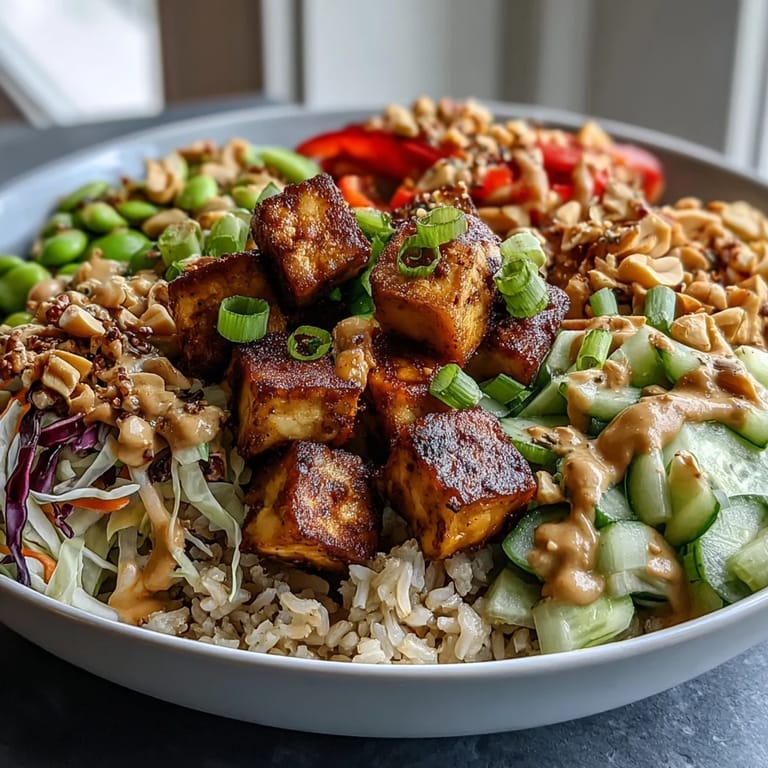
- Start with a generous scoop of warm grain as your foundation, then arrange your crispy tofu and vegetables in sections around the bowl—this isn't just prettier, it gives you the choice of flavors with each spoonful. Drizzle your peanut sauce generously across everything, then scatter your roasted peanuts, sesame seeds, and fresh herbs on top just before serving so they stay crunchy.
 Save
Save The moment I stopped thinking of this bowl as a vegetarian compromise and started seeing it as something delicious in its own right was the moment I actually started making it regularly. Now it's become one of those meals I crave on random Tuesday afternoons, the kind where you find yourself mentally planning it before lunch has even finished.
Why This Bowl Works as a Complete Meal
Every component here serves a purpose beyond just filling space on a plate. The grain provides sustained energy, the tofu brings complete protein with all nine amino acids, the raw vegetables deliver enzymes and fiber, and the peanut sauce makes everything taste so good you forget you're eating something that happens to be incredibly nutritious. When you build bowls this way, you stop counting macros and just enjoy how satisfied you feel afterward.
Making This Meal Work for Meal Prep
I've learned that this bowl lives beautifully in meal prep containers for up to four days if you keep one critical rule in mind: store the sauce separately and add it only when you're ready to eat. The grain, tofu, and vegetables stay fresh and crisp this way, and you get the same satisfaction as making it fresh without the stress of weeknight cooking. Toast your nuts and seeds fresh when you eat each bowl, and your crunch factor stays intact from day one to day four.
Flavor Balancing and Customization
This bowl is a canvas, and once you understand how the sauce works, you can build infinite variations without losing what makes it special. The interplay of salty, sweet, sour, and spicy in that peanut sauce is what ties everything together, so as long as you maintain that balance, you can swap vegetables based on what's in season or what you're craving. I've made versions with roasted sweet potato instead of grains, versions loaded with steamed broccoli, even a cold version in summer with cucumber as the base—the sauce makes every variation feel intentional and delicious.
- Add sriracha or extra chili flakes if you want heat that builds as you eat.
- Swap in tahini for half the peanut butter if you want earthier flavor and a different richness.
- Layer in avocado slices right before eating for creaminess that balances the crispy tofu.
 Save
Save This bowl became my answer to the question of what to cook when you want something that tastes indulgent but actually makes you feel energized afterward. Build it once and you'll understand why—it's the kind of meal that converts people without needing to convince them.
Recipe Questions & Answers
- → How do I get crispy tofu for this bowl?
Coat pressed cubed tofu lightly with cornstarch and either bake at 200°C for 20–25 minutes, flipping halfway, or pan-fry in olive oil until golden and crisp on all sides.
- → Can I substitute the grains used?
Yes, brown rice or quinoa work well, and for a lower-carb option, cauliflower rice can be used as a substitute.
- → What gives the peanut sauce its creamy texture?
Creamy peanut butter combined with soy sauce, maple syrup, rice vinegar, sesame oil, garlic, ginger, and water creates a smooth and rich sauce.
- → Are there options to make the bowl spicier?
Adding chili flakes directly to the peanut sauce or incorporating sriracha can provide a pleasant spicy kick.
- → What toppings enhance the bowl’s flavor and texture?
Roasted peanuts, sesame seeds, and fresh herbs like cilantro or mint add crunch and aromatic brightness to the bowl.
- → Can this dish accommodate gluten-free diets?
Yes, using tamari in place of soy sauce ensures the bowl remains gluten-free.