 Save
Save There's something about the moment when roasted chickpeas start crackling in the oven that makes you feel like you've stumbled onto a kitchen secret. I discovered this bowl on a Tuesday afternoon when I had three vegetables wilting in the crisper drawer and a sudden craving for something that felt both indulgent and wholesome. The peanut sauce came together so easily that I wondered why I'd ever bought bottled versions, and by the time everything was assembled, I had a meal that looked like it belonged in a magazine but tasted even better than it photographed.
I made this for my roommate who claimed she didn't like chickpeas, and watching her scrape the last of the peanut sauce from her bowl was its own kind of victory. She came back three days later asking if I could make it again, and that's when I knew this recipe had staying power.
Ingredients
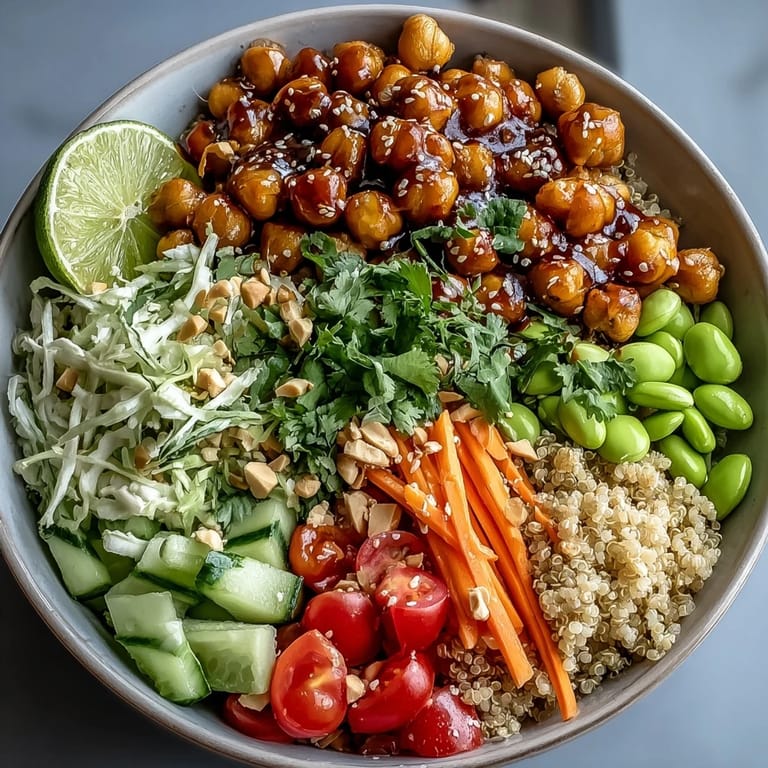
- Chickpeas: Two cans already cooked is a lifesaver, and the smoked paprika, cumin, and garlic powder transform them into something crispy and addictively savory when roasted.
- Brown rice or quinoa: The sturdy base that holds everything together; quinoa adds extra protein if you want to lean into it.
- Red cabbage: Its natural crunch stays crisp even when dressed, and the color brightens the whole bowl.
- Carrots: Julienned thin means they're delicate and sweet, cutting through the richness of the peanut sauce.
- Cucumber: Cool and refreshing, it's the palate cleanser you don't realize you need until you bite into it.
- Cherry tomatoes: Halved so the juice mingles with the sauce, adding a pop of acidity and brightness.
- Edamame: A protein boost that adds texture and a subtle nuttiness.
- Fresh cilantro: This is where the freshness lives; don't skip it even if you're skeptical.
- Peanut butter: Use a creamy, natural kind if you can find it; the flavor is cleaner and the sauce comes together more smoothly.
- Soy sauce: The umami backbone that ties all the flavors together; tamari works beautifully if you're avoiding gluten.
- Maple syrup: A touch of sweetness that balances the salt and heat, though honey works just as well.
- Rice vinegar: Mild and slightly sweet, it softens the peanut butter without overpowering anything.
- Sriracha: Optional but recommended if you like a gentle heat that builds slowly as you eat.
- Roasted peanuts: The scattered topping that adds a final textural moment and reminds you why peanuts and vegetables are meant to be together.
Tired of Takeout? 🥡
Get 10 meals you can make faster than delivery arrives. Seriously.
One email. No spam. Unsubscribe anytime.
Instructions
- Heat your oven and prepare:
- Set the oven to 425°F and line a baking sheet with parchment paper so your chickpeas won't stick and cleanup will be effortless. This is a small step that saves frustration later.
- Season and roast the chickpeas:
- Toss the drained chickpeas with olive oil and all the spices, then spread them in a single layer and roast for 20 to 25 minutes, shaking the pan halfway through. You'll know they're ready when they're golden and making a faint crackling sound—they continue crisping as they cool.
- Make the peanut sauce:
- While the chickpeas roast, whisk together peanut butter, soy sauce, maple syrup, rice vinegar, sriracha if using, minced garlic, and 2 tablespoons of warm water. Keep whisking until it's smooth and pourable, adding more water a tablespoon at a time if it feels too thick.
- Prepare the components:
- Cook your rice or quinoa if you haven't already, then slice and arrange all your vegetables on a cutting board in the order you'll need them. This takes maybe five minutes and makes assembly feel calm instead of chaotic.
- Assemble your bowls:
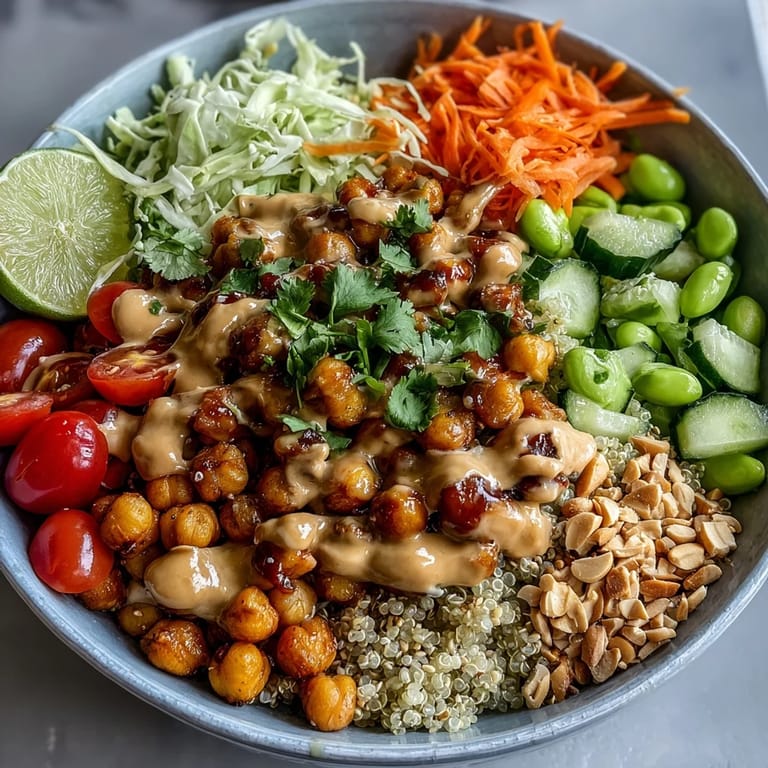
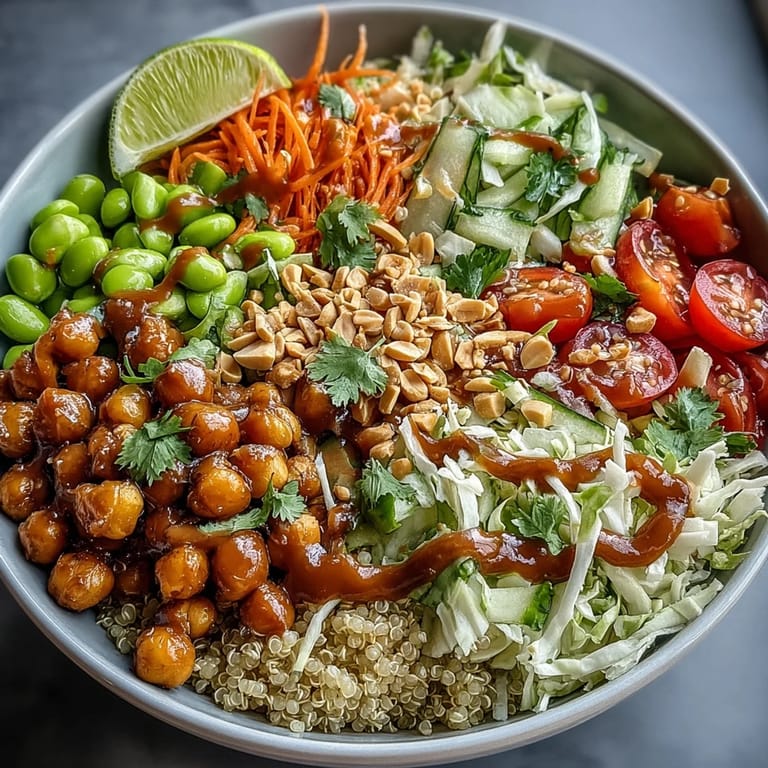
- Divide the grain among four bowls, then layer the chickpeas, cabbage, carrots, cucumber, tomatoes, edamame, and a scatter of cilantro on top of each. The order matters less than the fact that you're building layers of texture and color.
- Finish and serve:
- Drizzle each bowl generously with peanut sauce, then sprinkle with chopped peanuts and sesame seeds if using, and serve with lime wedges on the side. Squeeze the lime over everything just before eating for brightness that ties it all together.
 Save
Save There was an evening when I made this bowl for a friend who was going through a rough time, and she told me later that it was the first meal in days that made her feel taken care of. It sounds like a lot to place on a bowl of vegetables and chickpeas, but somehow food carries that kind of weight when it's made with intention.
Why the Peanut Sauce Changes Everything
A good peanut sauce is the difference between eating a salad and experiencing a meal. The one in this recipe walks a careful line between creamy and balanced, letting the nuttiness of the peanut butter shine while soy sauce adds depth and vinegar keeps it from feeling heavy. I've made versions with too much garlic and versions that were too sweet, and what I've learned is that this formula is forgiving enough to adjust to your taste but solid enough to trust right from the start.
Building a Bowl That Doesn't Get Boring
The secret to making this bowl a regular part of your rotation is understanding that every component serves a purpose. The grains anchor you, the vegetables keep things bright and crunchy, the chickpeas add substance, and the sauce ties it all into something greater than the sum of its parts. I've found that once you understand this structure, you can swap out vegetables based on the season or what's in your kitchen without losing the magic.
Variations That Feel Like New Meals
The beauty of this bowl is how infinitely adaptable it is without losing its identity. I've made it with kale massaged in lemon juice instead of cabbage, with roasted sweet potato instead of rice, with extra greens tucked underneath everything. The framework stays the same but the experience shifts, which means you can make this regularly without ever feeling repetitive. Here are a few directions worth exploring when you're ready to improvise:
- Swap the grains for cauliflower rice or even finely shredded jicama if you want to keep things light.
- Add a fried egg on top for extra richness or roasted tofu cubes if you want additional protein.
- Try mixing the peanut sauce with a spoonful of tahini for a deeper, earthier flavor profile.
 Save
Save This bowl has become the meal I return to when I want something nourishing without any fussing, something that tastes like you've put in effort but hasn't actually demanded much of your time. Make it once and you'll understand why it's so easy to make it again and again.
Recipe Questions & Answers
- → How can I make the chickpeas extra crispy?
Roast the chickpeas at a high temperature (425°F) for 20–25 minutes, shaking the pan halfway through to ensure even crisping. Patting them dry before tossing with oil helps achieve extra crunch.
- → Can I substitute the peanut butter in the sauce?
Yes, almond butter or cashew butter can be used for a different nutty flavor while maintaining creaminess.
- → What grains work best as the base?
Brown rice or quinoa are ideal bases, providing hearty texture and complementing the flavors, but cauliflower rice can be used for a low-carb option.
- → How can I adjust the spice level in the peanut sauce?
Modify the amount of sriracha or chili sauce added, starting with less and increasing to taste for desired heat.
- → Are there good alternatives for freshness in the topping?
Fresh cilantro adds brightness, but substituting with fresh parsley or mint can provide a different fresh herb note.
- → What are good beverage pairings with this bowl?
A crisp Riesling or iced green tea pairs nicely, balancing the creamy peanut sauce and spices.