 Save
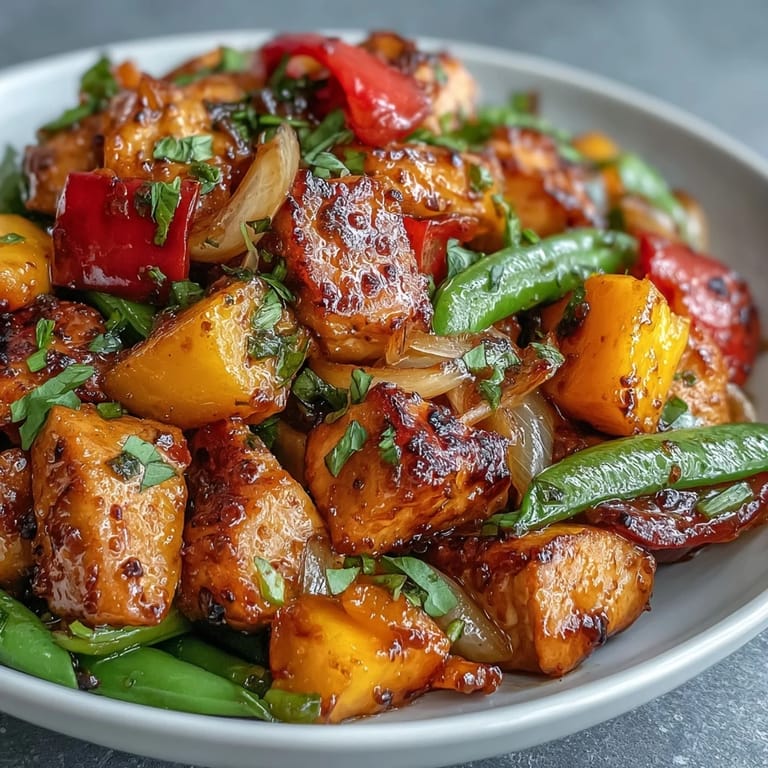
Save I discovered this recipe on a sweltering afternoon when my farmer's market haul included the most fragrant mango I'd ever held. The golden flesh practically glowed, and I found myself craving something warm but bright, something that wouldn't heat up the kitchen too much. That evening, as I sliced chicken and watched turmeric stain my cutting board that buttery yellow, I realized I was building something that felt both comforting and completely fresh.
I made this for my friend Marcus on a Tuesday night when he mentioned offhandedly that he was tired of his usual dinner rotation. Watching his face light up when that first bite hit was worth every minute of knife work. He asked for the recipe before he'd finished his plate, and now he claims it's the reason he finally bought a decent wok.
Ingredients
- Chicken breast: Use boneless, skinless for speed and lean protein, and slice it thin so it cooks through in minutes without drying out.
- Soy sauce: This is your umami anchor, the thing that makes every element sing together, and grab the gluten-free version if that matters to your table.
- Turmeric powder: Golden and earthy, it's less about flavor dominance and more about adding a warmth that ties the sweet and savory together.
- Mango: Ripe but still firm is the sweet spot; if it's mushy, it'll disappear into the pan, and if it's underripe, it'll taste like you're chewing a sponge.
- Snap peas and bell peppers: These keep their crunch if you don't overcrowd the pan and keep the heat high, which is honestly half the battle.
- Lime juice: Bright and necessary, it cuts through the richness and keeps everything from feeling heavy.
- Garlic and red onion: They're your flavor base, and letting them get fragrant for just a minute makes all the difference in depth.
- Neutral oil: Canola or sunflower oil won't interfere with the delicate turmeric and mango notes like a stronger oil might.
- Fish sauce: Optional but revelatory; it's the whispered secret that makes people ask what you did differently.
- Cilantro and sesame seeds: These are your final flourish, adding texture and a fresh brightness that makes it feel intentional and complete.
Tired of Takeout? 🥡
Get 10 meals you can make faster than delivery arrives. Seriously.
One email. No spam. Unsubscribe anytime.
Instructions
- Marinate the chicken:
- Combine your sliced chicken with soy sauce, lime juice, turmeric, honey, and black pepper in a bowl and let it sit for 10 minutes. The turmeric will start coating each piece in that golden hue, and the lime will begin softening the chicken fibers ever so slightly.
- Prepare your sauce:
- Mix soy sauce, fish sauce if you're using it, lime juice, and honey in a separate small bowl and set it aside. This is your insurance policy; having it ready means you won't scramble halfway through cooking.
- Cook the chicken first:
- Heat a tablespoon of oil in your wok or large skillet over medium-high heat until it shimmers, then add the marinated chicken and stir-fry for 3 to 4 minutes until it's just cooked through. You're looking for that moment when the outside is touched with color but the inside is still tender; pull it out and set it aside on a clean plate.
- Build your aromatics:
- Add the remaining oil to the same pan, letting it heat for a few seconds, then add your minced garlic and sliced red onion. Stir constantly for about a minute until the kitchen smells absolutely incredible and the onion begins to soften at the edges.
- Stir-fry the vegetables:
- Toss in the bell peppers and snap peas, keeping the heat high and the pan moving with constant stirring. After 2 to 3 minutes, they should be tender-crisp, still with a bit of snap when you bite into them, not soft and slouchy.
- Bring it all together:
- Return the cooked chicken to the pan, scatter in your mango cubes, and pour over that reserved sauce. Toss everything together gently for about 2 more minutes until the chicken is hot again and everything is glossy and coated with sauce.
- Finish and serve:
- Remove from heat, scatter fresh cilantro and toasted sesame seeds over the top if you'd like, and serve immediately over steamed rice or quinoa while it's still steaming.
 Save
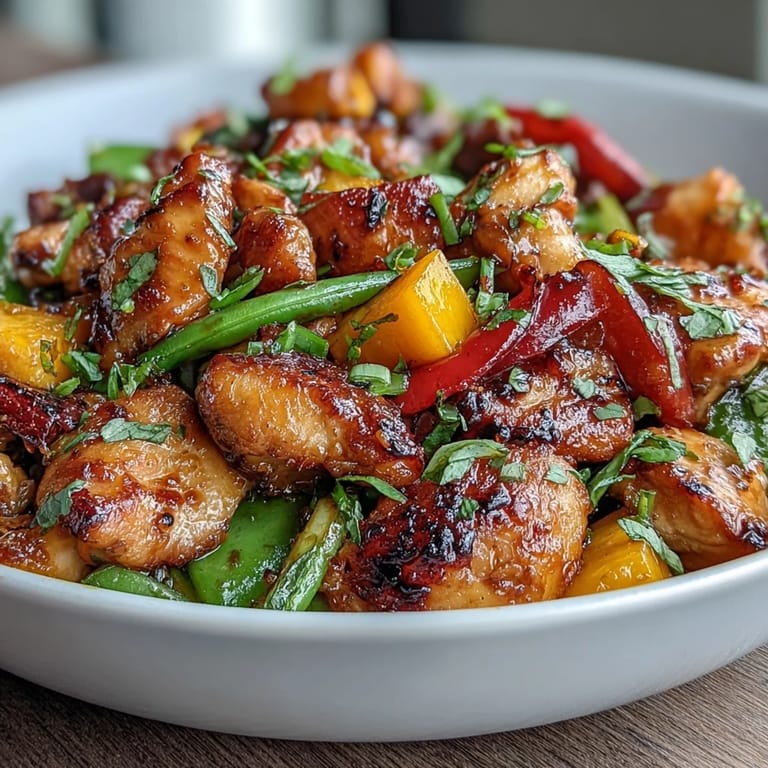
Save There's a moment in every stir-fry, usually right when you've added the sauce back to the pan, where everything stops being separate ingredients and becomes one cohesive, living dish. I always pause before serving, just to watch the steam rise and appreciate that this was on the cutting board scattered and raw just minutes before.
Why Turmeric Is Quietly Doing the Heavy Lifting
Turmeric in a stir-fry is like a good bass line in a song you don't consciously notice but would absolutely miss if it disappeared. It's not screaming for attention; it's just creating a warm, slightly earthy undertone that makes the mango feel more sophisticated and the savory elements feel more grounded. The key is using it in both the marinade and the initial coating so it has time to unfold and integrate rather than tasting raw or aggressive.
The Mango Sweet-Savory Balance
Using mango in a savory dish is a small risk that pays off beautifully when you understand that you're not trying to make dessert. The fruit should enhance and complement the umami from the soy sauce and fish sauce, not override it. Think of the mango as adding a gentle sweetness and a silky texture that makes the whole dish feel lighter and more refined than it might be with just vegetables.
Timing and Heat Make This a Weeknight Dinner Champion
This dish respects your time; at 35 minutes total from start to steaming bowl, it's genuinely faster than most delivery options. The secret is having everything prepped and ready before you turn on any heat, a principle that applies to every stir-fry you'll ever make. Once you've got that down, you're not actually cooking for more than 10 or 11 minutes.
- Prep all your vegetables and proteins before you touch the stove; stir-fry cooking waits for no one.
- If you're feeding a crowd, double the recipe and work in batches rather than overcrowding the pan, which drops the temperature and steams instead of sears.
- Serve immediately over rice or quinoa because this dish is best enjoyed when the vegetables still have their crunch and the sauce is warm and flowing.
 Save
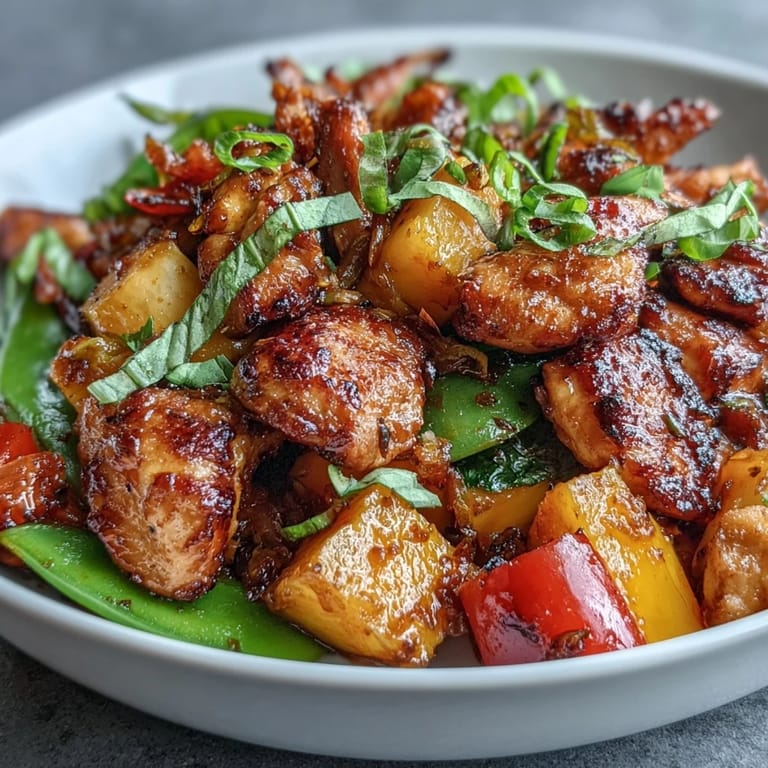
Save This stir-fry has become my go-to when I want to feel like I've cooked something restaurant-worthy but still have the evening ahead of me. It's proof that simple ingredients, respect for technique, and a little turmeric can turn a random Tuesday into something genuinely memorable.
Recipe Questions & Answers
- → How can I make this dish vegetarian?
Replace the chicken with firm tofu or tempeh, and marinate similarly to retain flavor and texture.
- → What can I substitute if I don't have snap peas?
Snow peas or green beans work well as alternatives, providing similar crunch and freshness.
- → Is it possible to adjust the heat level?
Yes, add sliced fresh chili or sprinkle chili flakes during cooking to introduce more heat.
- → Can I prepare the sauce in advance?
Absolutely, mix the soy sauce, fish sauce, lime juice, and honey ahead of time for convenience.
- → What rice pairs best with this dish?
Steamed jasmine rice complements the flavors well, but quinoa or brown rice are great alternatives.