 Save
Save Last summer, my neighbor brought over a pitcher of something golden and fragrant that tasted like an entire farmers market in liquid form. She'd spent the morning chasing ripe mangoes and peaches at the market, and watching her blend them with tea felt like witnessing some kind of kitchen magic. That first sip—cold, bright, naturally sweet—made me stop mid-conversation and ask for the recipe. Now whenever the heat peaks in late June, this is the first thing I make.
I made this for a porch gathering with friends who'd driven hours through traffic on a sweltering afternoon. The moment they arrived sweating and exhausted, I handed everyone a cold glass garnished with peach slices and mint sprigs. Someone actually closed their eyes after the first sip—no exaggeration. That's when I realized this wasn't just a drink; it was small act of kindness in beverage form.
Ingredients
- Water for brewing: Use filtered water if your tap water tastes heavily chlorinated, since you'll really taste it in something this simple.
- Black tea bags: Four bags steep for exactly five minutes—any longer and bitterness sneaks in to ruin the delicate fruit balance.
- Ripe mango: This is non-negotiable; an unripe mango tastes starchy and sad, so squeeze gently and wait for that slight give.
- Ripe peaches: Choose ones that smell fragrant at the stem, a trick that separates grocery store peaches from actual flavor.
- Honey or agave syrup: Start with two tablespoons and taste as you blend; the fruit itself brings sweetness, so restraint is your friend here.
- Fresh lemon juice: One tablespoon cuts through richness and keeps everything tasting bright instead of flat.
- Cold water for serving: This dilutes the concentrate to drinkable strength; adjust based on how intensely fruity you want it.
- Ice cubes: Make them fresh if possible since old freezer ice absorbs flavors and occasionally smells like fish.
- Fresh mint leaves: Crush them between your fingers first to check their smell; alive mint makes all the difference.
Tired of Takeout? 🥡
Get 10 meals you can make faster than delivery arrives. Seriously.
One email. No spam. Unsubscribe anytime.
Instructions
- Heat water and steep the tea:
- Watch the water come to a rolling boil, then remove from heat immediately and add your tea bags. The five-minute timer is genuine; I learned this the hard way when impatience created a bitter cup that couldn't be salvaged.
- Prepare your fruit base:
- Peel the mango by standing it upright and slicing down both sides of the pit, then scoop flesh into your blender with the diced peaches. The goal is getting to the blender while fruit is still at room temperature, which helps flavors bloom when you blend.
- Blend everything into silk:
- Add honey and lemon juice, then pulse until completely smooth. If your blender is loud, do this earlier in the day to spare your neighbors.
- Strain for smoothness:
- Pour the purée through a fine mesh sieve if you want an ultra-refined texture, though honestly, the fiber is good for you and I sometimes skip this step. Either way, you'll have a gorgeous, thick fruit concentrate ready to transform into tea.
- Combine tea and fruit:
- Pour your cooled tea into the pitcher with the fruit purée and stir until completely blended. The colors should swirl together into something that looks like sunset in a pitcher.
- Chill and dilute:
- Add two cups of cold water and one cup of ice cubes, then taste and adjust. If it's too strong, add more water; if it needs sweetness, drizzle in a touch more honey.
- Add fresh mint:
- Gently muddle about half the mint bunch in the pitcher—don't go crazy or you'll bruise the leaves into bitterness. This is a whisper of mint, not a shout.
- Final chill:
- Refrigerate for at least fifteen minutes so all the flavors get acquainted. I often make this in the morning and let it sit all day, which only improves things.
- Serve with style:
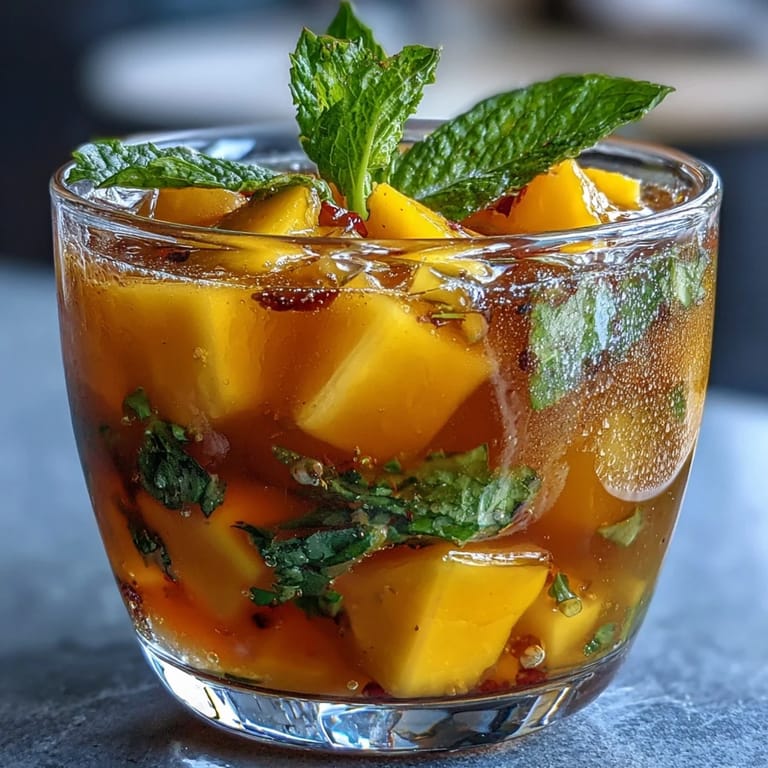
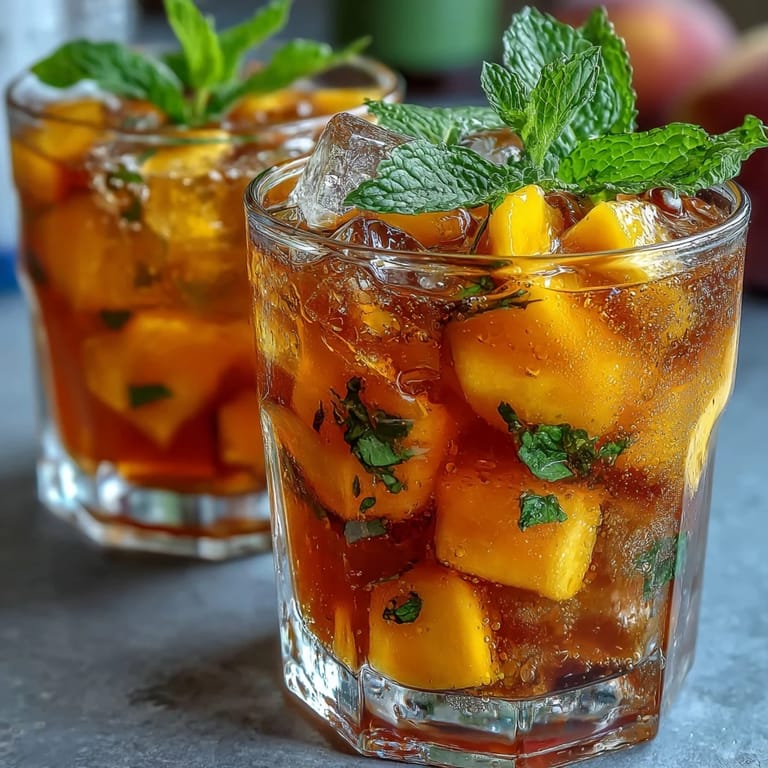
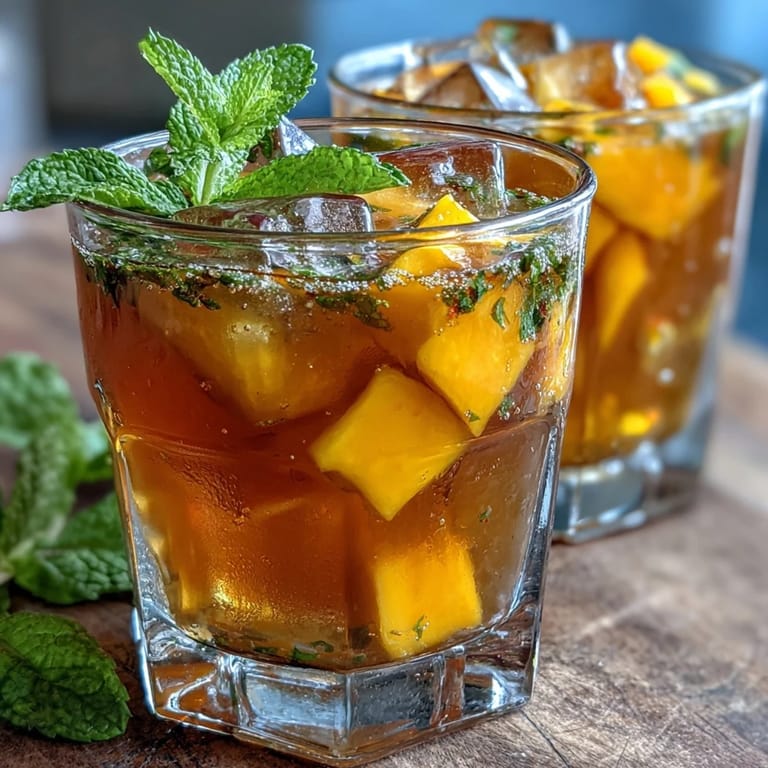
- Pour over fresh ice into glasses, float a thin peach or mango slice on top, and tuck a sprig of mint into each glass. It's a small gesture that makes people feel celebrated.
 Save
Save My sister brought her new partner to a family dinner and I served this tea in tall glasses with ice clinking softly. He took one sip and asked if I'd made it myself, which somehow felt like the nicest compliment. That's when I understood that feeding people something you've actually created connects you in a way store-bought beverages never will.
Why This Tea Works for Any Season
Summer feels obvious, but I've made this on warm spring evenings when the air finally turned soft, and on early fall days when the last good peaches hit the farmers market. The formula is flexible enough to work in different seasons; you just chase whatever ripe stone fruit looks alive that day. There's something satisfying about letting the season dictate your kitchen rather than fighting against it.
The Sparkling Water Secret
My friend who first made this for me mentioned that sparkling water transforms the drink into something almost champagne-like, which sounded fancy but turned out to be genuine. You don't replace all the cold water with sparkling—just pour some into each glass at serving time so the fizz stays alive. It changes the entire mouthfeel and makes people pause and say thank you, which is always nice.
Customizing Your Pitcher
The beauty of this base is how it welcomes small additions without demanding them. Lime juice adds a sharper edge if you want brightness; a splash of vanilla extract brings warmth that nobody expects but everyone notices. I've even added a few fresh raspberries one desperate afternoon when I ran out of fresh peaches, and it was genuinely wonderful in an entirely different way.
- Taste your concentrate before serving; sweetness varies wildly between fruits and between individual preference.
- Make extra fruit purée and freeze it in ice cube trays for smoothies or cocktails later in the week.
- Cold tea is only as good as the tea you started with, so use a quality black tea you actually enjoy drinking.
 Save
Save This tea reminds me that the best kitchen moments aren't about complexity; they're about choosing good ingredients and taking care with them. Pour generously and watch people's faces change.
Recipe Questions & Answers
- → What type of tea works best for this drink?
Black tea provides a robust base, while green tea offers a lighter, fresher flavor depending on preference.
- → Can I substitute sweeteners in the purée?
Yes, honey can be replaced with agave syrup or stevia for different dietary needs or sweetness levels.
- → How do I ensure the purée is smooth?
Blending the fruit thoroughly and straining through a fine mesh sieve removes fibers for a silky texture.
- → Is it possible to make a sparkling version?
Certainly, simply replace part of the cold water with sparkling water just before serving for a fizzy twist.
- → How can I enhance the mint flavor?
Muddling half the mint leaves gently releases more aroma and flavor into the mixture before chilling.