 Save
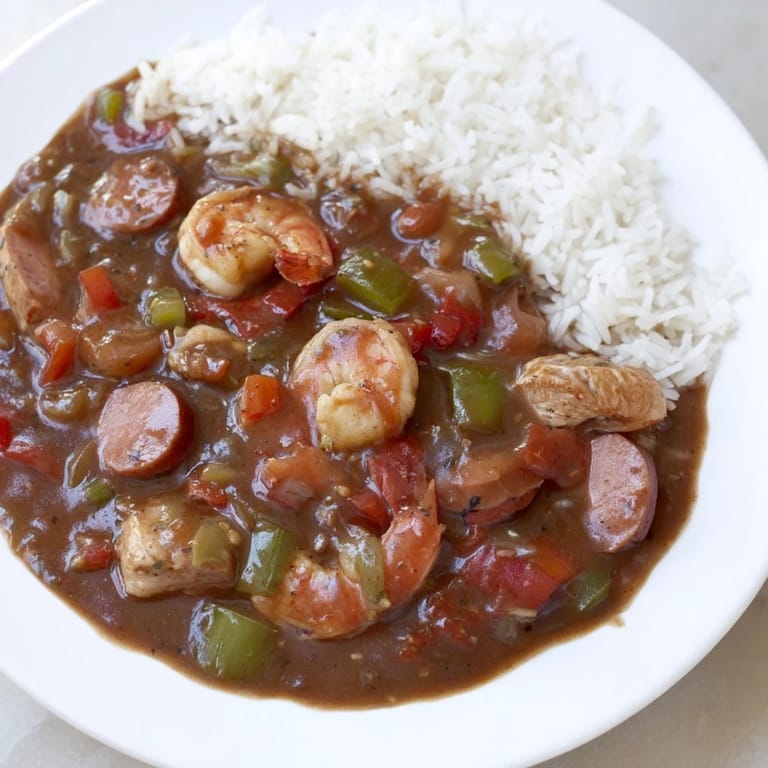
Save The first time I smelled a proper roux turning that deep mahogany color, I was standing in a cramped kitchen in New Orleans, watching my friend's grandmother work a wooden spoon like she was conducting an orchestra. She never looked away from the pot, not once, and I understood why when mine seized up weeks later because I got distracted by a text. Gumbo taught me patience before it taught me anything else. That smoky, nutty aroma that fills the room when flour and oil become something greater is still one of my favorite signals that dinner is going to be worth the wait. I've made this dozens of times since, and every bowl takes me back to that lesson in focus and the magic of not rushing good food.
I made this for a group of friends during a rainy weekend, and we ended up eating it straight from the pot with crusty bread because no one wanted to wait for bowls. Someone said it tasted like a hug, which made me laugh, but I got it. There's something about the way the sausage fat mingles with the tomatoes and stock, how the chicken falls apart if you let it simmer long enough, that feels generous and whole. We sat around the stove, refilling our bowls and talking until the rain stopped. That night, gumbo stopped being just a recipe and became the thing I make when I want people to stay a little longer.
Ingredients
- Andouille sausage: This smoky, spicy sausage is the backbone of the dish, and I learned the hard way that substituting with mild sausage leaves you chasing flavor you'll never quite catch.
- Chicken thighs: Dark meat stays tender through the long simmer and doesn't dry out like breasts do, plus it adds richness to the broth.
- Shrimp: Add these at the very end so they stay plump and sweet instead of turning rubbery, and always keep a few extra on hand in case you want seconds.
- Onion, bell pepper, celery: The holy trinity of Cajun cooking, and once you dice them together, you'll start seeing this trio everywhere in Southern recipes.
- Garlic: Fresh cloves are non-negotiable here, the jarred stuff just doesn't bloom the same way when it hits that hot roux.
- Tomatoes: Fresh or canned both work, but if you use canned, drain them well or your gumbo will get too watery.
- Vegetable oil and flour: These two ingredients become a roux, the soul of gumbo, and you'll stir them longer than feels reasonable until they turn the color of dark chocolate.
- Chicken or seafood stock: Homemade is a dream, but a good quality store-bought stock works beautifully if you're short on time.
- Bay leaves, thyme, paprika, cayenne: This quartet builds the warm, earthy heat that makes every spoonful interesting without overwhelming your palate.
- Worcestershire sauce: Just a couple teaspoons add a subtle umami depth that ties everything together.
- Filé powder: Ground sassafras leaves thicken the gumbo and add a unique, slightly herbal note, stir it in after you turn off the heat to avoid gumminess.
- Cooked white rice: This is your neutral, fluffy base that soaks up all that incredible broth and makes the bowl complete.
Tired of Takeout? 🥡
Get 10 meals you can make faster than delivery arrives. Seriously.
One email. No spam. Unsubscribe anytime.
Instructions
- Prep everything first:
- Dice your vegetables, slice your sausage, and measure your spices before you start the roux. Once that oil and flour hit the heat, you won't have time to hunt for ingredients.
- Make the roux:
- Heat the oil in a heavy pot over medium heat, then whisk in the flour gradually. Stir constantly for 15 to 20 minutes, scraping the bottom and edges, until it turns a deep, dark brown like melted chocolate. If it smells burnt or turns black, toss it and start over.
- Add the holy trinity:
- Toss in the onion, bell pepper, and celery, stirring frequently for about 5 minutes until they soften and start to smell sweet. The vegetables will cool down the roux a bit and stop it from darkening further.
- Stir in garlic and proteins:
- Add the minced garlic and cook for a minute until fragrant, then add the sausage and chicken. Sauté everything together for 5 minutes so the meat picks up color and flavor from the roux.
- Build the base:
- Stir in the tomatoes and all your dried spices, the bay leaves, thyme, paprika, cayenne, salt, and pepper. Let everything mingle for a minute before adding liquid.
- Add stock and simmer:
- Pour in the stock slowly while stirring to avoid lumps, then bring the pot to a boil. Reduce the heat to low and let it simmer uncovered for 45 minutes, stirring occasionally and skimming any foam that rises.
- Add shrimp if using:
- About 10 minutes before you're ready to serve, drop in the shrimp. They'll cook fast, turning pink and opaque, so watch them closely.
- Finish and season:
- Stir in Worcestershire sauce and hot sauce, then taste and adjust the salt, pepper, or cayenne. Remove from heat and stir in filé powder if you want extra thickness and that classic gumbo flavor.
- Serve over rice:
- Ladle the gumbo over a scoop of cooked rice in each bowl. Garnish with sliced scallions and fresh parsley, and pass hot sauce at the table for anyone who wants more heat.
 Save
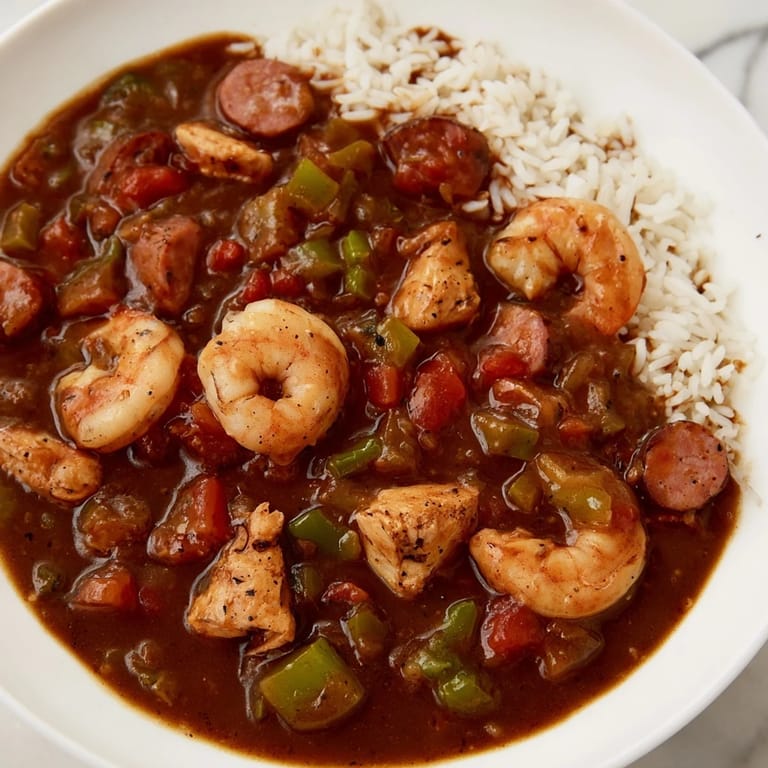
Save One Sunday, I made a huge pot of this and brought it to a potluck where everyone else had brought casseroles and salads. By the end of the night, my pot was empty and people were asking for the recipe, some even took photos of the ingredient list on their phones. I realized then that gumbo has this way of standing out, not because it's fancy, but because it's alive with flavor and effort. It's the kind of dish that makes people curious, that starts conversations and gets people leaning in for seconds. Now I make it whenever I want to remind myself that cooking with intention always shows up in the bowl.
Choosing Your Proteins
You can go all chicken, all seafood, or mix them like I do here. I've made versions with crab, oysters, and even leftover rotisserie chicken when I was too tired to cook meat from scratch. The key is balancing flavors, if you skip the sausage, you lose that smoky backbone, so consider adding a little liquid smoke or smoked paprika to compensate. Seafood gumbo is lighter and brighter, while chicken and sausage versions feel heartier and more rustic. Both are traditional, both are delicious, and both deserve a place in your rotation.
Getting the Roux Right
This is where most people panic, but once you do it a few times, it becomes meditative. Use a heavy pot so the heat distributes evenly, and keep the flame at medium, not high, so you have control. Stir in long, steady sweeps across the bottom and around the edges where flour likes to stick and burn. The color will creep from blonde to peanut butter to deep brown, and you'll smell it shift from raw flour to toasted nuts to something almost chocolatey. If you see black flecks or smell anything acrid, start over, there's no saving a burnt roux and it will ruin the whole pot.
Storing and Reheating
Gumbo keeps beautifully in the fridge for up to four days and actually tastes better the next day when the flavors have had time to settle and deepen. I store mine in a big glass container and reheat individual portions on the stove with a splash of stock to loosen it up. You can also freeze it for up to three months, though I leave out the shrimp if I'm planning to freeze, since seafood can get mushy when thawed. When you reheat, bring it up slowly over medium heat, stirring often, and add a pinch of fresh herbs or a squeeze of lemon to wake it back up.
- Always store rice separately so it doesn't soak up all the liquid and turn mushy.
- If reheating from frozen, thaw it overnight in the fridge first for the most even texture.
- Add any garnishes fresh when you serve, not before storing, so they stay bright and crisp.
 Save
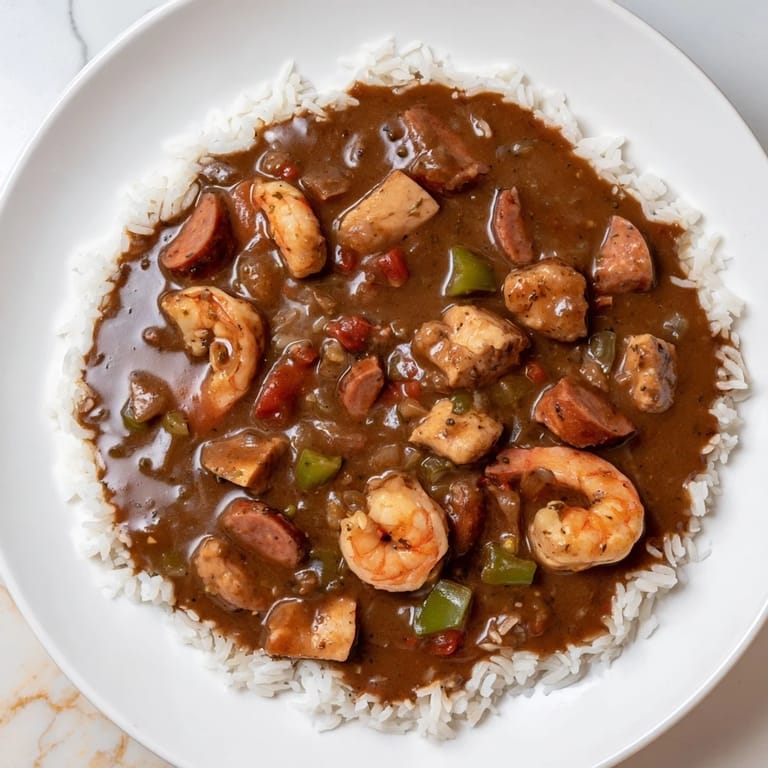
Save Every time I make gumbo, I'm reminded that the best meals aren't rushed, they're built slowly, with attention and a little bit of faith that the work will pay off. This one always does.
Recipe Questions & Answers
- → What is the base for the stew’s rich flavor?
A deeply browned roux made by slowly cooking flour and oil to a chocolate color forms the stew’s foundation, creating a nutty, layered flavor.
- → Which vegetables form the flavor foundation?
The classic 'holy trinity' of finely chopped onion, green bell pepper, and celery adds aromatic depth and sweetness.
- → Can seafood be used in this stew?
Yes, shrimp is often added in the final simmer, but crab, oysters, or fish can also be included for a seafood variation.
- → How is the stew thickened and flavored at the end?
Optionally, filé powder (ground sassafras leaves) is stirred in at the end to thicken and enhance the flavor without over-thickening.
- → What are common seasonings used in this dish?
Bay leaves, dried thyme, smoked paprika, cayenne pepper, salt, black pepper, Worcestershire sauce, and optional hot sauce contribute to its complex spice profile.