 Save
Save A few winters ago, I found myself standing in a cramped Paris kitchen with a friend who insisted cassoulet was the only dish worth making when the weather turned cold. We didn't have a ham bone, just what we could grab from the local market, and somehow that constraint made the whole thing feel more real—less about following rules and more about understanding why this rustic French dish has survived centuries of home cooks tinkering with it. That afternoon taught me that cassoulet is less about precision and more about patience, letting time and heat do what no hurry ever could.
I made this for a small dinner party on a November evening, and what struck me most wasn't the compliments (though there were plenty)—it was how everyone slowed down while eating. People put their phones away without being asked, conversations lingered, and someone asked for the recipe with the kind of sincerity you rarely hear. That's when I realized cassoulet isn't really about being French or fancy; it's about giving people permission to sit still for a while.
Ingredients
- Smoked ham, diced (400 g): The backbone of this dish—get the real smoked stuff, not the honey-glazed version, because those aromatics need to stand their ground against the beans and herbs.
- Pork sausage, thickly sliced (200 g): Don't crumble this; keep the slices whole so they stay juicy and create little pockets of richness throughout.
- Bacon or pancetta, diced (100 g): The first thing that hits the pot, and those rendered fat becomes your flavor foundation—don't skimp or use the thin, papery stuff.
- Dried white beans, soaked overnight (500 g): Cannellini or Great Northern both work beautifully; the overnight soak isn't just tradition, it genuinely changes how the beans absorb all those savory flavors.
- Carrots, peeled and diced (2 medium): They soften into almost nothing, which means they're there for their sweetness and to build that savory base.
- Celery stalks, diced (2): Along with the carrots and onion, this is your aromatic trinity—it matters more than you think.
- Onion, finely chopped (1 large): The bridge between your meats and your beans; cook it long enough and it becomes invisible but essential.
- Garlic cloves, minced (4): Added after the softer vegetables so it stays bright and doesn't burn into bitterness.
- Diced tomatoes, drained (1 can, 400 g): Draining them is the secret—you want the flavor without the extra liquid competing with your stock.
- Chicken stock (1.2 L): The medium that carries all those flavors; use something you'd actually taste on its own, not the tin-tasting stuff.
- Tomato paste (2 tbsp): A small amount concentrates umami and adds depth that feels almost mysterious.
- Olive oil (2 tbsp): Just enough to build your base without making things greasy.
- Bay leaf and fresh thyme (1 bay leaf, 4 sprigs): These two herbs are patient—they unfold slowly as everything cooks together.
- Smoked paprika (1 tsp): The one spice that makes this feel authentically cassoulet, with a warm, almost whispered smokiness.
- Salt and black pepper: Season at the end when you can actually taste how everything comes together.
- Fresh breadcrumbs for topping (1 cup, optional): If you use them, toast them lightly in a pan with a bit of olive oil first—they stay golden instead of turning dark.
- Fresh parsley for garnish (2 tbsp chopped): The last green thing you add, a tiny spark of brightness before serving.
Tired of Takeout? 🥡
Get 10 meals you can make faster than delivery arrives. Seriously.
One email. No spam. Unsubscribe anytime.
Instructions
- Get your oven ready and start with the bacon:
- Preheat to 160°C (325°F)—this low, steady heat is what turns those beans tender without falling apart. In a large Dutch oven or heavy casserole over medium heat, let the bacon or pancetta render slowly; you're listening for the sizzle to settle, watching the fat turn golden and the edges turn crisp and dark.
- Build your aromatic base:
- Once the bacon is done, pull it out and set aside, then add the onion, carrots, and celery to that warm fat. Stir for 5 to 7 minutes while they soften and start to caramelize at the edges—your kitchen will smell so good it's almost distracting.
- Wake up the garlic and bring in the meat:
- Add the minced garlic and let it cook for about a minute, until fragrant. Then add your diced ham and sausage slices, stirring as they brown just slightly—you're not trying to crisp them, just to let them warm through and show themselves.
- Deepen the flavors with tomato and spice:
- Stir in the tomato paste, smoked paprika, and those drained tomatoes. Cook for 2 minutes, letting everything marry and darken slightly at the edges.
- Bring the beans and stock together:
- Add your soaked and drained beans along with the chicken stock, bay leaf, and thyme. Season with salt and pepper, then bring everything to a gentle simmer on the stovetop—you should see small, lazy bubbles breaking the surface.
- Move to the oven and be patient:
- Cover the pot and transfer it to your preheated oven. Bake for 1 hour 30 minutes, stirring it once or twice so the top doesn't feel lonely. The beans should be completely tender and the mixture thick, with no loose liquid sloshing around.
- Optional golden crust (the finishing touch):
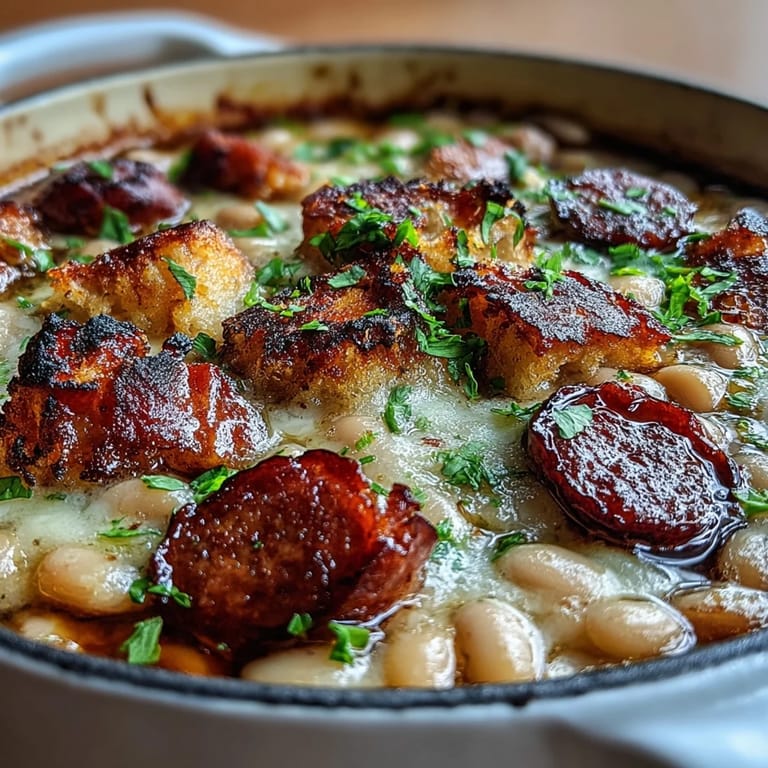
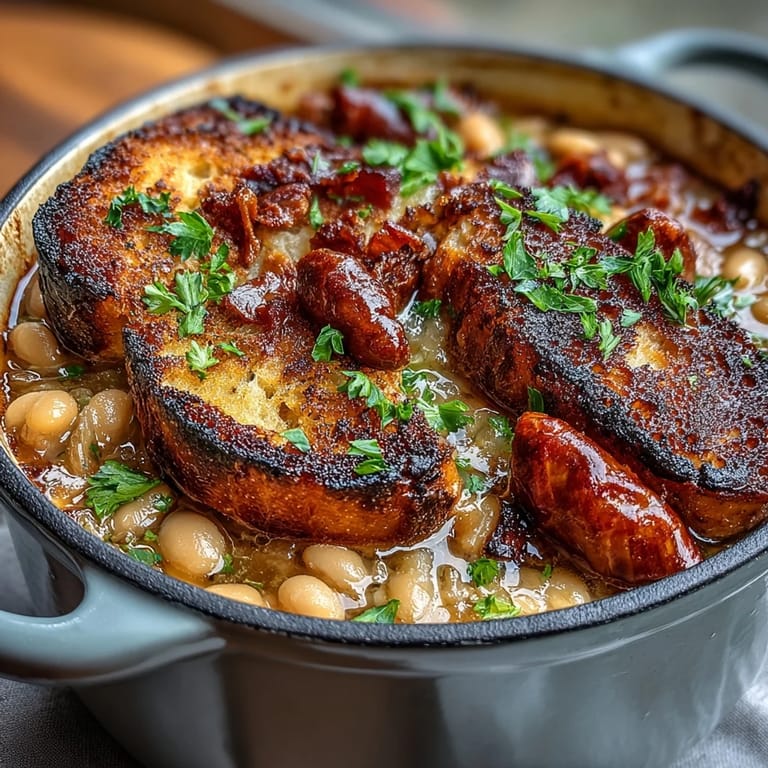
- If you're using breadcrumbs, sprinkle them over the top in the last 15 minutes and bake uncovered, until they turn golden and crispy. If you skip this step, the cassoulet is still perfect—the breadcrumb crust is there for texture, not necessity.
- Taste and finish:
- Remove the bay leaf and thyme sprigs, then taste. Cassoulet is honest, so if it needs more salt or a whisper more paprika, this is your moment to add it. Garnish with the fresh parsley and bring it to the table while everything is still warm.
 Save
Save There was a moment last winter, about halfway through the cooking time, when I lifted the lid just to peek. The steam rose up and hit my face with this wave of thyme and smoke and salt, and I understood why this dish has been made the same way for centuries—not because it's fancy or complicated, but because it works, because it tastes like home the moment you smell it.
The Meat Matters (But Not Rigidly)
That original note about using a ham bone instead of diced ham isn't just a suggestion—it's an invitation to make this dish your own. I've made it with leftover roasted chicken when I didn't have ham, I've used thick smoked sausage instead of the combination, and once I had only bacon and pancetta and made it work anyway. The principle is the same: enough smoked, cured, or salty meat to anchor the beans and make them sing. Some people add duck confit if they're feeling extravagant, and honestly, that changes everything in the best way.
What to Serve It With (And Why)
Crusty bread is non-negotiable here—you need something to wipe your bowl with, something to soak up the broth that gathers at the bottom. A robust red wine like Cahors or Côtes du Rhône cuts through the richness in a way that light wines simply don't; I've tried to serve this with crisp whites and people always look faintly disappointed. The cassoulet asks for something with tannins, something that holds its own.
Making It Your Own (And Keeping It Vegetarian)
The vegetarian version isn't just removing the meat and hoping for the best—it's building layers of umami from other places. More smoked paprika becomes your anchor, maybe some smoked salt if you have it, and honestly, a little soy sauce stirred in at the end adds a depth that feels surprising until you taste it. Mushrooms, especially dried porcini soaked and added to the stock, can give you that savory weight that the meat usually provides. This is where cassoulet becomes less about tradition and more about understanding what each ingredient actually does.
- Use vegetable stock instead of chicken stock and let it simmer just a touch longer.
- A small spoon of miso paste added at the end builds richness without anyone knowing what it is.
- Keep the herbs exactly the same—they don't care if the rest is vegetarian, and they're still what makes this feel authentically cassoulet.
 Save
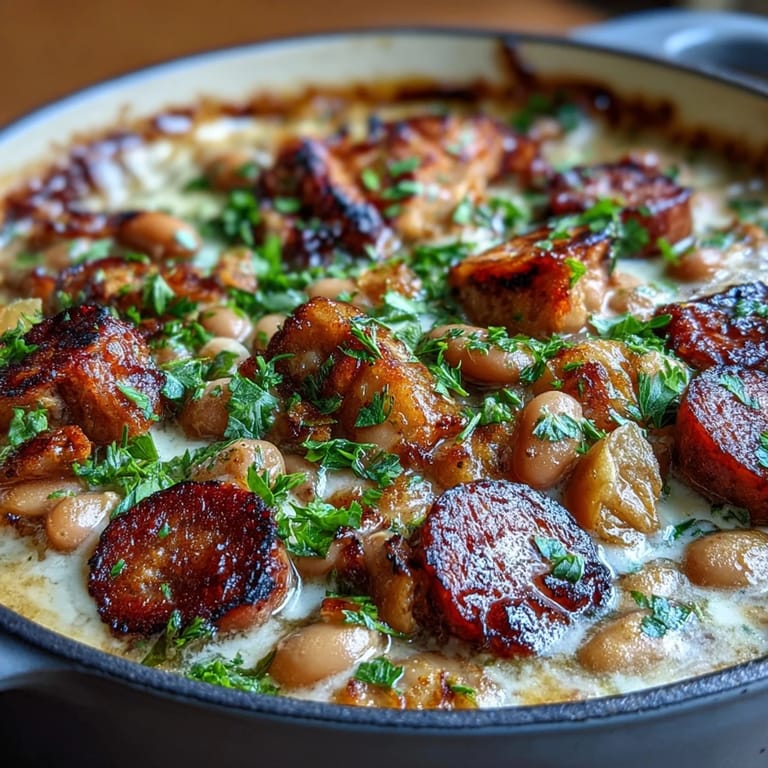
Save Every time I make this, I'm struck by how something so straightforward—beans, meat, stock, time—becomes something so satisfying and real. It's the kind of dish that makes you believe again in cooking, in waiting for food to become what it's meant to be.
Recipe Questions & Answers
- → What types of beans are best for this dish?
Cannellini or Great Northern beans work well due to their creamy texture and ability to absorb flavors during slow cooking.
- → Can I prepare the dish ahead of time?
Yes, making it a day ahead allows flavors to meld and intensify, making the meal even more satisfying.
- → What is the purpose of smoked paprika in this dish?
Smoked paprika adds a subtle smoky warmth that enhances the flavor profile, especially if meats are reduced or substituted.
- → How can I achieve a crispy topping?
Sprinkle fresh breadcrumbs over the casserole during the last 15 minutes of baking to create a golden, crunchy crust.
- → Are there gluten-free considerations?
Yes, ensure sausages and optional breadcrumbs are gluten-free to keep the dish suitable for gluten-sensitive diners.
- → What wine pairs well with this hearty dish?
Robust red wines like Cahors or Côtes du Rhône complement the smoky, savory flavors and rich texture.