 Save
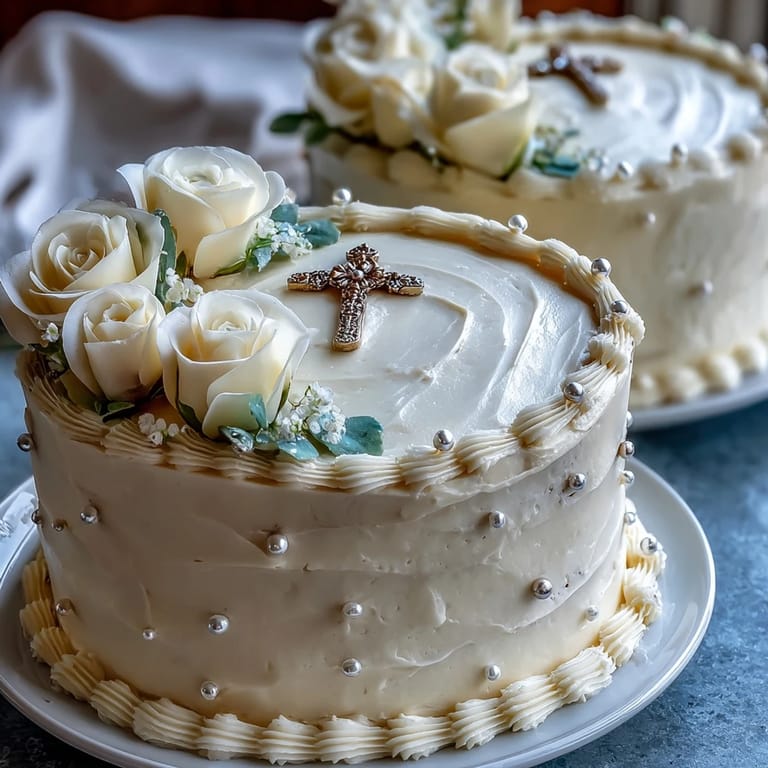
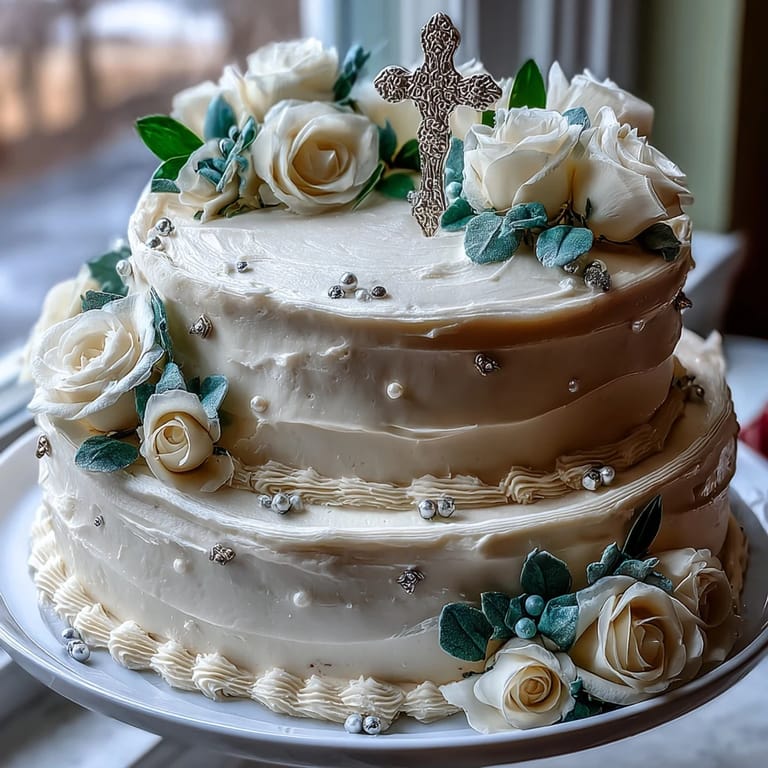
Save My hands were shaking the first time I made a cake worthy of such a meaningful day. A young cousin's First Communion was approaching, and her mother asked if I'd create something special—not just any dessert, but a cake that felt like a prayer in buttercream and fondant. That's when I discovered that baking for sacred moments changes everything about how you measure, mix, and decorate. This vanilla sponge with its cloud-soft layers and silky frosting became my meditation that week, each rose I shaped a small act of devotion.
I'll never forget watching my cousin's face when she saw the cake at the reception—the way the afternoon light caught those white roses and made the whole thing glow. Her mother squeezed my hand and whispered that it was almost too beautiful to cut, but of course we did, and the cake tasted as good as it looked. That's the magic of this recipe: it doesn't just look ceremonial, it actually delivers on the promise with tender crumb and genuine flavor.
Ingredients
- All-purpose flour: Two and a half cups gives you structure without making the cake dense—this amount is calibrated so the crumb stays tender and fine.
- Baking powder: Two and a half teaspoons ensures a gentle, even rise; too little and the layers sink slightly, too much and you get a peaked top.
- Unsalted butter: One cup in the sponge plus one and a half cups for frosting—always softened before you begin, because cold butter won't cream properly and your cake will be tough.
- Granulated sugar: Two cups in the sponge creates that fluffy crumb because it aerates as you cream it with butter.
- Large eggs: Four eggs, and they must be room temperature or they'll break the emulsion and you'll end up with a grainy, separated batter.
- Pure vanilla extract: One tablespoon in the sponge, two teaspoons in the frosting—pure, not imitation, because this is a celebration and it deserves the real thing.
- Whole milk: One cup room temperature for the sponge, three to four tablespoons for the frosting to adjust consistency—the temperature matters because cold milk can cause seizing.
- Powdered sugar: Five cups sifted before measuring, because lumps in frosting show up as graininess that no amount of beating will fix.
- White fondant: Sixteen ounces is enough to create a dozen delicate roses with leaves; buy quality fondant or make your own if you're confident, but store-bought saves time and heartache.
- Cross topper: Whether edible or decorative, this becomes the focal point that ties the whole cake's meaning together.
Tired of Takeout? 🥡
Get 10 meals you can make faster than delivery arrives. Seriously.
One email. No spam. Unsubscribe anytime.
Instructions
- Prepare your stage:
- Preheat the oven to 350°F and line two 8-inch round pans with parchment, then grease them—this double protection means your cakes won't stick no matter what. Bring your eggs and milk out of the fridge now so they reach room temperature while you're gathering everything else.
- Dry ingredients are non-negotiable:
- Whisk together the flour, baking powder, and salt in a medium bowl, making sure you break up any lumps in the flour. This isn't just mixing; you're aerating the flour and distributing the leavening evenly, which guarantees an even rise.
- Cream like you mean it:
- Beat the softened butter and sugar together for a full three minutes until it's pale, fluffy, and doubled in volume—this is where most of your cake's lift comes from. Listen for the mixer to slow down slightly; that's your signal that air has been beaten in.
- Add eggs with patience:
- Drop in one egg at a time and beat well after each addition before adding the next—rushing this step creates a broken, curdled batter that bakes into a denser cake. After all four eggs are in, beat in the vanilla extract until the mixture looks smooth and glossy again.
- The alternate method is sacred:
- Lower the mixer speed and alternate between adding the flour mixture and the milk, starting and ending with flour, mixing only until just combined. Over-mixing at this stage develops gluten and creates a tough cake, so stop as soon as you don't see any white streaks of flour.
- Divide and smooth:
- Pour the batter evenly between the two prepared pans and smooth the tops with an offset spatula. This creates flat, level layers that will stack beautifully.
- Bake with patience:
- Slide them into the oven and bake for thirty to thirty-five minutes, until a toothpick inserted in the center comes out clean with maybe one or two crumb clings. Your kitchen will smell like vanilla heaven—that's how you know you're close.
- Cool without rushing:
- Let the cakes rest in their pans for ten minutes, then turn them out onto wire racks to cool completely, which takes about an hour. Rushing this leads to cakes that crumble when you layer them.
- Make frosting like it's the final touch:
- Beat the softened butter until it's creamy and pale, then add the powdered sugar gradually—if you dump it all at once, it clouds everywhere and takes forever to incorporate. Add vanilla and salt, then milk or heavy cream one tablespoon at a time until you have a spreadable consistency that's not too thin.
- Level and crumb coat:
- If your cake layers peaked in the oven, slice them level with a serrated knife and a steady hand or a cake leveler if you have one. Place the first layer on your cake board, spread frosting on top, add the second layer, then coat the entire cake thinly with frosting—this crumb coat catches all the loose crumbs so your final layer is pristine.
- Chill the crumb coat:
- Pop the cake into the fridge for twenty minutes while you catch your breath and prepare for the final frosting layer.
- Final frosting layer:
- Apply a smooth, generous layer of buttercream, using an offset spatula dipped in warm water for a professional finish. This is where patience becomes visible.
- Shape fondant roses like a quiet meditation:
- Roll out the white fondant to one-eighth inch thickness and cut small circles—about the size of a quarter to start. Roll each circle between your palms into a ball, then flatten it gently and shape it into a petal by curving your thumb around the edge and pulling slightly to thin it.
- Assemble each rose with intention:
- Roll the first petal tightly around a tiny center ball, then wrap additional petals around it, overlapping slightly and curving each one outward for a natural bloom. Don't stress about perfection; slightly imperfect roses look more elegant than mechanical ones.
- Create green accents if you wish:
- Tint a small ball of fondant with green gel coloring by kneading it in thoroughly, then roll out thin leaves. Score veins into them with a knife if you want.
- Arrange with purpose:
- Place your fondant roses and leaves on the frosted cake in clusters or scattered patterns, pressing gently so they adhere. Add edible pearls or silver dragees between the roses for shimmer and elegance.
- Crown it with meaning:
- Position your cross topper at the center or slightly off-center depending on your design vision—this becomes the cake's focal point and spiritual anchor.
- Chill before serving:
- Refrigerate the finished cake until it's time to serve, which also firms up the frosting and fondant and helps the cake slice cleanly.
 Save
Save There's a moment that happens at every celebration when someone cuts into a cake and suddenly the whole room goes quiet—that's when you know you've created something that matters. This cake doesn't just taste good; it carries the weight of a sacred moment and delivers on every expectation.
The Science of Tender Sponge
The magic in this vanilla cake lives in how the butter and sugar are creamed together—this aerates the mixture and creates tiny air pockets that expand in the oven and create that cloud-like crumb. The alternating method of adding flour and milk ensures you're never over-mixing, which would develop gluten and toughen the cake. Temperature matters more than you'd think: room temperature eggs and milk emulsify properly, while cold ingredients can cause the batter to curdle and break.
Why Fondant Roses Matter for This Cake
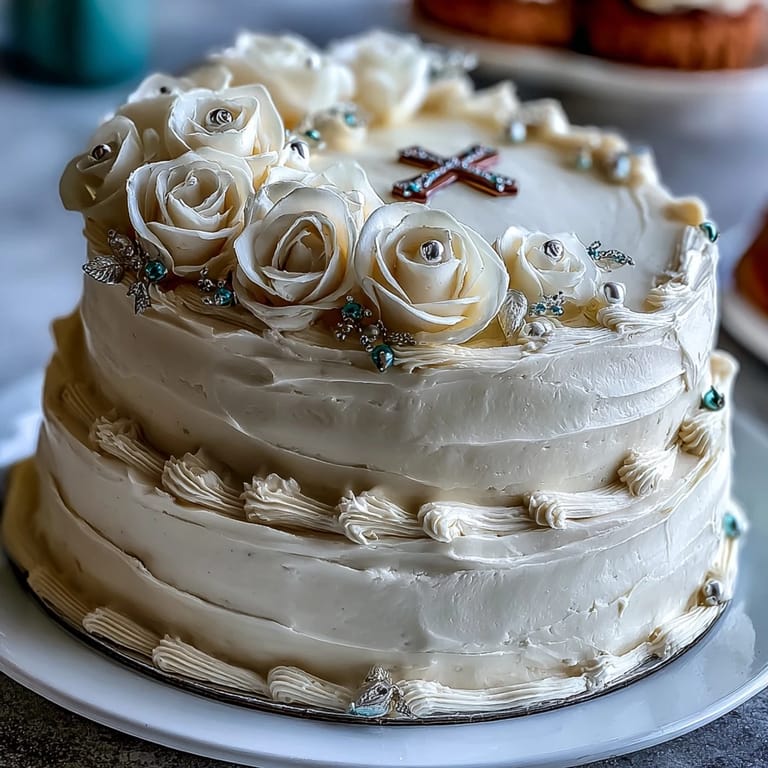
Fondant roses sit somewhere between edible art and practical decoration—they don't dry out the way royal icing flowers can, and they stay pliable enough to position right up until serving. For a First Communion cake, these roses become symbolic: each one is shaped by hand, each one slightly different, just like each attendee brings their own spirit to the celebration. White fondant against buttercream frosting creates that ethereal, elegant look that photographs beautifully and tastes like pure joy.
Storage and Serving Secrets
This cake stays moist and delicious for three days if you cover it loosely with a cake dome or plastic wrap and refrigerate it, though it tastes best served at room temperature on the day it's made. If you're making it a day ahead, frost it but decorate with fondant roses the morning of the event, as fondant doesn't need baking but does benefit from staying cool. You can freeze unfrosted cake layers for up to a month if you wrap them tightly, which is a secret weapon for spreading the work across multiple days.
- Always slice this cake with a hot, wet knife, wiping it clean between cuts for pristine presentation.
- Bring the cake out of the fridge about thirty minutes before serving so the frosting softens slightly and the vanilla flavor blooms.
- Store leftover cake in an airtight container, and it'll stay moist for three to four days.
 Save
Save This cake teaches you that celebration baking is less about technical perfection and more about showing up with intention and care. Every layer, every swirl of frosting, every fondant rose becomes a small prayer for the person you're honoring.
Recipe Questions & Answers
- → How do I make the vanilla sponge moist?
Ensure you cream the butter and sugar thoroughly until light and fluffy to incorporate air. Avoid overmixing once you add the flour and milk to keep the batter tender.
- → What is the best way to achieve smooth buttercream?
Beat softened butter until creamy before gradually adding powdered sugar. Add milk or cream one tablespoon at a time to reach a spreadable consistency.
- → How can I shape the fondant roses effectively?
Roll small balls of fondant, flatten and shape each into thin petals. Carefully assemble petals by overlapping to form realistic roses.
- → Can this cake be adapted for gluten-free diets?
Yes, substitute the all-purpose flour with a gluten-free blend in equal measure to accommodate gluten sensitivities.
- → What is the purpose of chilling the cake before decorating?
Chilling firms the crumb coat and buttercream layers, making it easier to apply fondant and delicate decorations without damaging the surface.