 Save
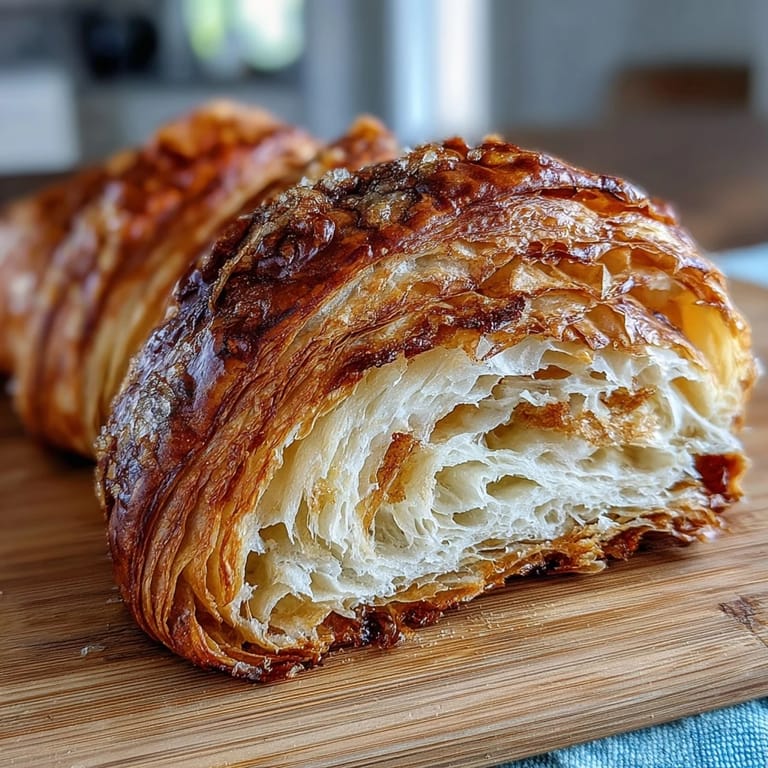
Save There's something truly magical about pulling a tray of golden, flaky croissants from your own oven. These sourdough croissants combine the buttery elegance of French pastry with the complex, tangy depth of a sourdough starter. While the process requires patience and a bit of skill, the result is absolutely worth it: layers upon layers of crisp, golden pastry that shatter at the first bite, revealing a soft, airy interior infused with subtle tang. Perfect for a weekend baking project, these croissants transform your kitchen into a Parisian bakery.
Save The secret to these exceptional croissants lies in the lamination process—folding cold butter into the dough multiple times to create hundreds of delicate layers. Combined with the slow fermentation of sourdough starter, you get a pastry that's both technically impressive and deeply flavorful. The overnight rest allows the dough to develop character while making the final shaping easier. Whether you're an experienced baker looking for a new challenge or someone ready to tackle their first laminated dough, this recipe guides you through each fold and turn with confidence.
Ingredients
Tired of Takeout? 🥡
Get 10 meals you can make faster than delivery arrives. Seriously.
One email. No spam. Unsubscribe anytime.
- Dough: 500 g bread flour, 60 g granulated sugar, 10 g fine sea salt, 240 ml whole milk (cold), 100 g active sourdough starter (100% hydration), 30 g unsalted butter (softened)
- Butter Block: 250 g unsalted butter (cold)
- Egg Wash: 1 large egg, 1 tbsp milk
Instructions
- Step 1
- In a large bowl, mix bread flour, sugar, and salt. Add cold milk, sourdough starter, and softened butter. Mix until just combined. Knead until a smooth, elastic dough forms (about 8 minutes).
- Step 2
- Shape dough into a rectangle, wrap in plastic, and refrigerate for at least 2 hours.
- Step 3
- Place 250 g cold butter between two sheets of parchment paper. Pound and roll into a 20 x 15 cm rectangle. Chill until firm but pliable.
- Step 4
- On a lightly floured surface, roll out dough to a 40 x 20 cm rectangle. Place butter block on one half, fold dough over, and seal edges.
- Step 5
- Turn dough 90 degrees and roll into a 60 x 20 cm rectangle. Fold into thirds (letter fold), wrap, and chill for 1 hour.
- Step 6
- Repeat rolling and folding process two more times, chilling 1 hour between each turn.
- Step 7
- After final fold, chill dough overnight (8-12 hours).
- Step 8
- The next morning, roll dough to a 60 x 30 cm rectangle, about 5 mm thick. Cut into 12 long triangles.
- Step 9
- Starting from the wide end, roll each triangle into a crescent, tucking tip underneath. Place on parchment-lined baking sheets.
- Step 10
- Cover loosely and proof at room temperature until doubled in size, about 2-3 hours.
- Step 11
- Preheat oven to 200°C (400°F).
- Step 12
- Whisk egg and milk for egg wash. Brush croissants lightly.
- Step 13
- Bake 18-22 minutes until golden brown and crisp. Cool slightly before serving.
Zusatztipps für die Zubereitung
Temperature control is crucial for successful croissants. Keep your butter cold but pliable—if it's too hard, it will break through the dough; too soft, and it will blend in rather than create layers. Work quickly during rolling and folding to prevent the butter from warming up. If at any point the dough becomes too soft or sticky, return it to the refrigerator for 15-20 minutes. Use a bench scraper to help lift and move the dough, and don't skip the chilling times between folds—they're essential for developing those beautiful layers. A cool kitchen (around 18-20°C) is ideal for working with laminated dough.
Varianten und Anpassungen
While these classic croissants are perfect on their own, you can customize them in countless ways. For chocolate croissants (pain au chocolat), place two pieces of dark chocolate at the wide end before rolling. Create almond croissants by filling with almond paste or adding sliced almonds on top after egg washing. For a savory version, add grated cheese and diced ham before rolling, or brush with garlic butter after baking. You can also add a teaspoon of vanilla extract to the dough for extra depth, or fold in dried fruit like raisins or cranberries for a sweet variation. Once baked, croissants freeze beautifully—just reheat in a 180°C oven for 5-7 minutes to restore their crisp texture.
Serviervorschläge
These sourdough croissants shine brightest when served warm from the oven, their buttery layers still crisp and fragrant. Pair them with a strong cup of coffee or rich hot chocolate for a classic French breakfast experience. Serve alongside fresh fruit preserves, honey, or salted butter for spreading. They're also elegant enough for brunch entertaining—arrange on a wooden board with fresh berries, yogurt, and a selection of jams. For a more substantial meal, slice horizontally and fill with scrambled eggs, smoked salmon, or prosciutto. The tangy sourdough flavor makes them particularly delicious with creamy cheeses or as an accompaniment to soup. Store leftovers in an airtight container for up to 2 days, or freeze for up to 3 months.
 Save
Save Mastering sourdough croissants is a badge of honor for any home baker. While the process spans two days and requires attention to detail, each step builds your confidence and skill. The first time you bite into a croissant you've made from scratch—hearing that satisfying crackle, tasting the buttery layers mingled with sourdough tang—you'll understand why bakers around the world dedicate themselves to this craft. These croissants represent the perfect marriage of patience, technique, and quality ingredients, transforming simple flour, butter, and starter into something truly extraordinary. Share them with loved ones, savor them with your morning coffee, and take pride in creating one of the world's most beloved pastries in your own kitchen.
Recipe Questions & Answers
- → How does the sourdough starter affect the flavor?
The sourdough starter adds a mild tanginess and depth, enhancing the overall flavor complexity of the croissants.
- → Why is overnight chilling important?
Overnight chilling allows the dough to ferment slowly, developing flavor and ensuring the butter layers stay firm for flaky texture.
- → What is the purpose of folding the dough multiple times?
Folding creates multiple layers of dough and butter, essential for achieving the croissants' characteristic flakiness and rise.
- → Can I substitute ingredients to make these vegan?
Substitutions are possible but challenging; plant-based butter and milk alternatives may alter texture and flavor significantly.
- → How should croissants be stored after baking?
Store cooled croissants in an airtight container. They freeze well and can be reheated gently to regain flakiness.