 Save
Save My coworker Maya brought a grain bowl to lunch one Tuesday and casually mentioned she'd made it in ten minutes that morning using leftovers from Sunday dinner. I watched her eat it with such obvious satisfaction, mixing each forkful through different sections of the bowl, that I realized this wasn't just another salad situation. Within a week I'd started building my own versions, and what started as a practical solution to "what's for lunch" became my favorite way to cook when I'm not sure what I'm hungry for but know I want something honest and colorful.
I made these for a picnic last summer and brought all the components in separate containers, then assembled them right there on a blanket while my friend's kid asked why everything was so colorful. That question stayed with me because it made me realize how this bowl is almost impossible to mess up visually, and somehow that matters more than we admit when we're feeding ourselves or others.
Ingredients
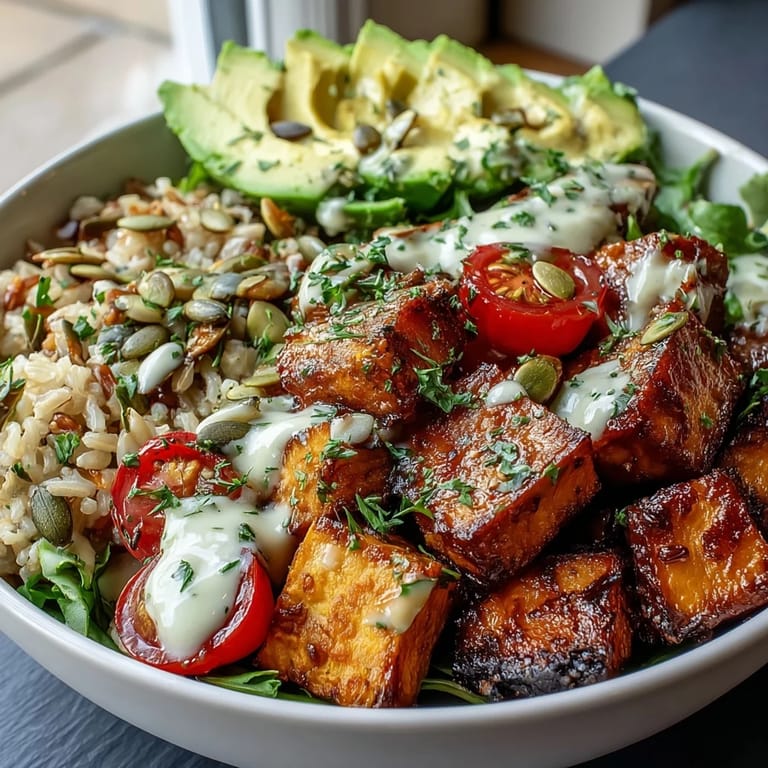
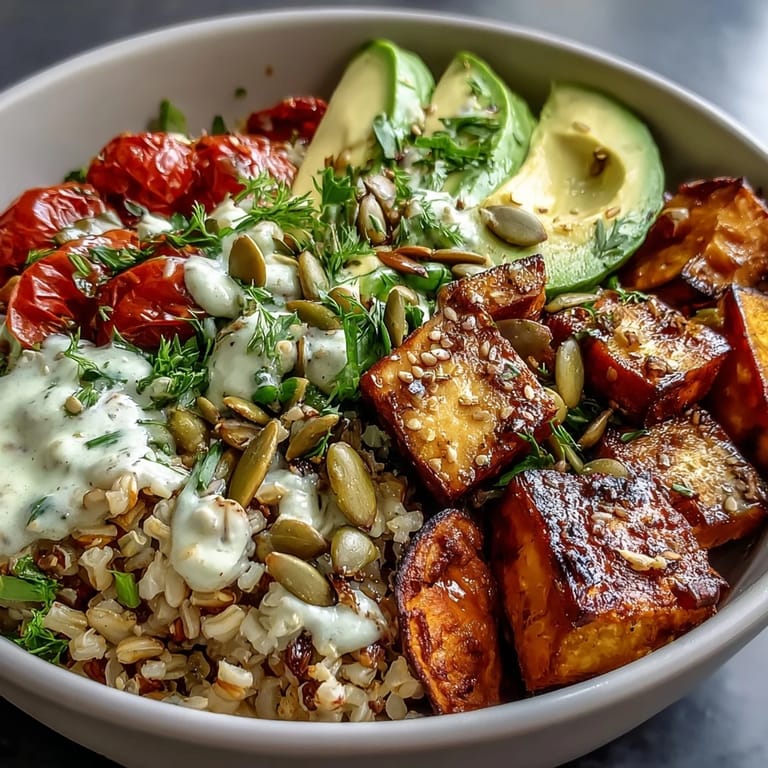
- Brown rice, quinoa, farro, or couscous: Pick your grain based on texture mood, not obligation—brown rice is forgiving and earthy, quinoa has a subtle nuttiness that works with anything, farro chews back at you in the best way, and couscous cooks in minutes when you're impatient.
- Chicken, tofu, chickpeas, or shrimp: These are your protein anchors and the part you can totally prep ahead or swap based on what's thawed, what's ethical to you that week, or what your body is asking for.
- Cherry tomatoes, cucumber, sweet potato, broccoli, carrots, and avocado: Build your vegetable section thinking about crunch, sweetness, earthiness, and creaminess so every bite feels intentional instead of accidental.
- Feta, toasted seeds, fresh herbs, and sesame: These toppings do the heavy lifting for flavor and texture, so don't skip them even if you're in a rush.
- Dressing options (tahini, balsamic, soy-ginger, or green goddess): Your dressing should feel like the thing that brings the whole bowl into focus, so choose based on what your mouth wants right now, not what's traditional.
Tired of Takeout? 🥡
Get 10 meals you can make faster than delivery arrives. Seriously.
One email. No spam. Unsubscribe anytime.
Instructions
- Cook your grain base:
- Follow package directions and let it cool slightly so it doesn't make your fresh vegetables wilt or your avocado turn sad. Fork it gently so the grains separate without turning to mush.
- Handle your protein:
- Use what you have—yesterday's roasted chicken, baked tofu from the weekend, or chickpeas straight from a can if that's your day. Season it lightly so it doesn't overshadow everything else.
- Prepare vegetables with intention:
- Raw vegetables stay crisp and snappy, roasted ones get sweeter and more forgiving, steamed ones become buttery soft. Mix raw and cooked textures so the bowl stays interesting in your mouth.
- Build your bowl like you're painting:
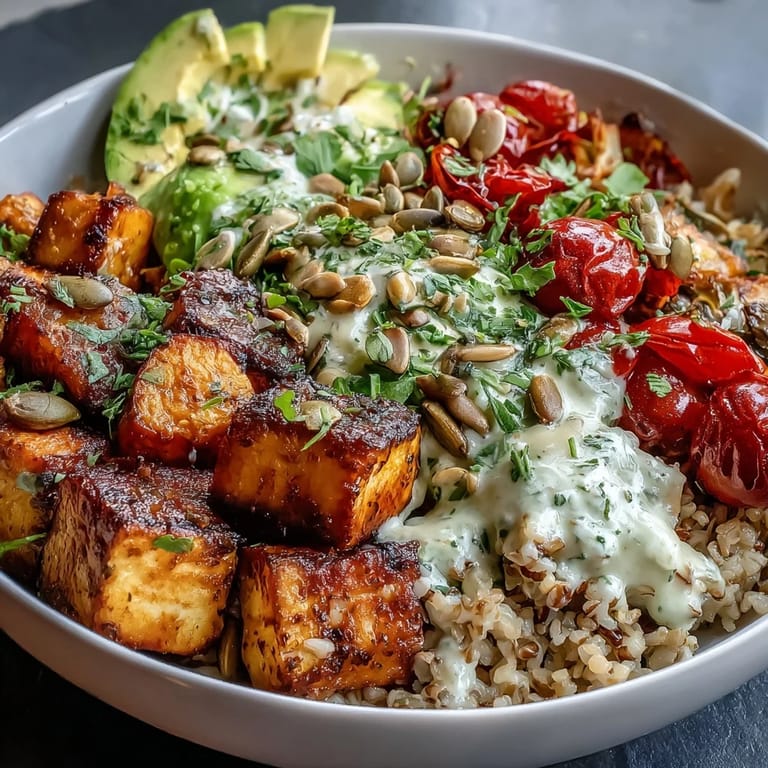
- Start with grain, distribute protein across the surface, then arrange vegetables so colors and textures balance instead of all the sweet stuff piling in one corner. You're feeding your eyes as much as your stomach.
- Top with intention:
- Sprinkle seeds, nuts, herbs, and cheese so there's a little bit of everything in each forkful, not a surprise crunch island separated from everything else.
- Dress it at the last second:
- If you're eating it now, drizzle dressing and toss gently so everything gets coated but nothing drowns. If you're eating it later, keep dressing in a separate container and add it when hunger hits.
 Save
Save 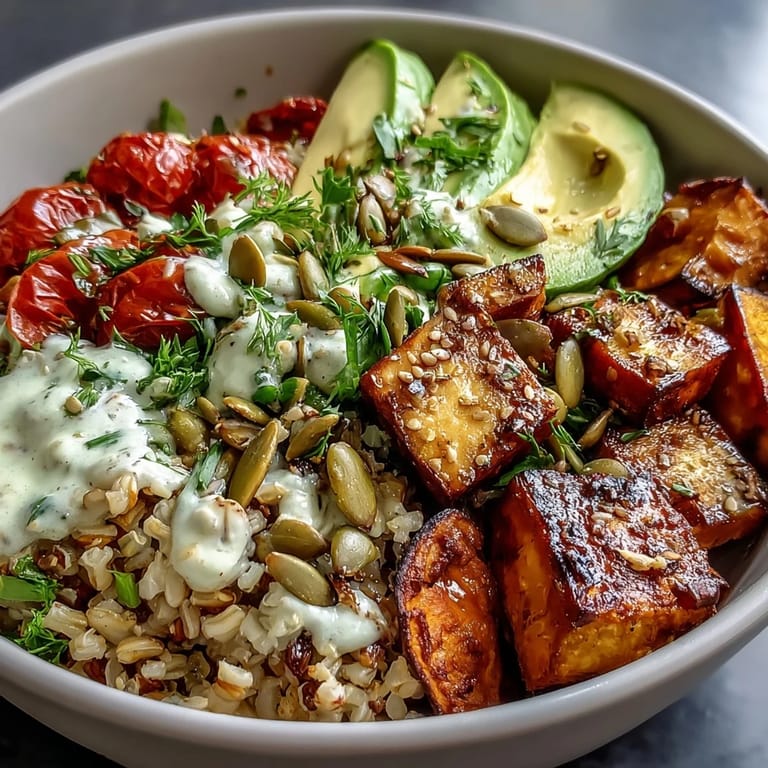 Save
Save My neighbor came over and found me assembling bowls at my counter with about eight tiny bowls of different components spread out like I was conducting some kind of delicious orchestra. She laughed and said it looked complicated, but then I handed her a bowl and watched her realize that combining things you already know how to cook is somehow less stressful than following a recipe that demands specific timing and precision.
The Grain Bowl As A Blank Canvas
The moment you stop thinking of grain bowls as a specific recipe and start thinking of them as a framework, everything changes. You're not following instructions anymore, you're having a conversation with your ingredients. One day you want earthiness and roasted vegetables, another day you want brightness and raw crunch. The bowl adapts without complaint, which is why I think it became so important to me on mornings when I couldn't decide what I wanted but knew I needed something nourishing.
Dressing As The Final Word
I used to make beautiful bowls and then drown them in too much dressing, wondering why everything tasted the same. Then I realized that dressing should coat everything lightly so you taste the grain and vegetables still, not a salad where the dressing is doing all the talking. A quarter cup seems stingy until you actually drizzle it across a bowl, and then it's suddenly the right amount of flavor without erasure.
Meal Prep Wisdom For The Busy Week
The real magic of these bowls is that you can make components on Sunday and assemble them in three minutes any day that week. Everything stays fresh in separate containers better than if you combined them optimistically and hoped for the best. The dressing stays zippy, the grain doesn't get soggy, and you're never faced with a sad bowl that didn't hold up overnight.
- Keep dressing completely separate so it doesn't soften your grains or turn your fresh vegetables into mush before you eat them.
- Store proteins and cooked vegetables in airtight containers where they'll last three to four days and actually taste good on day three.
- Slice avocado fresh the morning you eat it or brush it with lemon juice if you're being strategic about timing.
 Save
Save 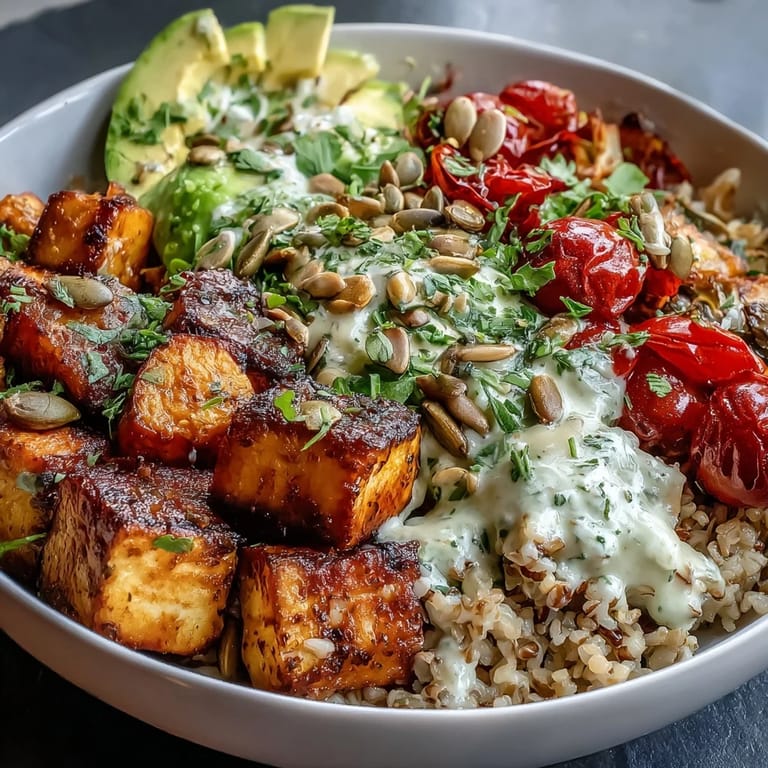 Save
Save These bowls taught me that eating well doesn't require complexity or restriction, just the willingness to mix colors and textures and trust that they'll be delicious. That's the kind of food knowledge that changes how you feed yourself.
Recipe Questions & Answers
- → What grains work best for grain bowls?
Brown rice, quinoa, farro, and couscous all provide excellent bases. Each offers unique textures and nutritional benefits. For lighter options, try cauliflower rice or mix fresh greens as your foundation.
- → How do I assemble a grain bowl properly?
Start with a generous layer of cooked grains at the bottom. Arrange proteins and vegetables in sections atop the base, then sprinkle with nuts, seeds, or cheese. Finish with dressing just before eating to maintain textures.
- → Can I prepare these bowls ahead for meal prep?
Absolutely. Store grains, proteins, and vegetables separately in airtight containers. Keep dressings on the side. Components stay fresh for 4-5 days, making assembly quick when you're ready to eat.
- → Which protein options provide the most flavor?
Marinated chicken adds savory depth, baked tofu absorbs seasonings beautifully, and chickpeas offer nutty satisfaction. Shrimp contributes delicate sweetness while keeping preparation simple.
- → What dressings complement grain bowls best?
Lemon-tahini brings creamy tanginess, balsamic vinaigrette offers bright acidity, soy-ginger adds umami richness, and green goddess provides herbal freshness. Each dressing transforms flavors differently.
- → How can I make my grain bowl more filling?
Increase portion sizes of proteins and grains, add avocado for healthy fats, include hearty roasted vegetables like sweet potato, and top with nuts or seeds for extra crunch and sustenance.