 Save
Save Sunday mornings at my apartment always smelled like possibility until I figured out French toast. I'd watched my mom make it as a kid—the way the bread soaked up that custardy mixture and hit the hot butter with this perfect sizzle—and for years I convinced myself it was some finicky technique I'd never master. Then one lazy weekend I stopped overthinking it and just whispered the eggs and milk together, and something clicked. Now it's my answer to everything: unexpected friends dropping by, a morning that needs brightening, that moment when you want breakfast to feel like a small celebration.
I made this for my roommate once after she'd had a rough week at work, and she sat at our kitchen counter watching the bread turn golden in the pan—just watching, not talking. When I slid the plate in front of her with too much maple syrup and a handful of berries, she got quiet in that way people do when something small hits different. That's when I understood French toast isn't breakfast; it's a conversation without words.
Ingredients
- 4 large eggs: The custard base—they're what transform plain bread into something luxurious, so use fresh ones if you notice any smell.
- 1 cup whole milk: Whole milk creates that silky richness; low-fat versions work but feel a little thin in comparison.
- 2 tbsp heavy cream (optional): If you have it, add it—your future self will thank you for that extra richness even though you'll swear you don't taste a difference.
- 1 tbsp granulated sugar: A small amount sweetens the custard without making it cloying; the bread will be plenty sweet with toppings.
- 1 tsp pure vanilla extract: The difference between plain and memorable, though I've made this in a pinch without it.
- 1/2 tsp ground cinnamon (optional): Cinnamon is the whisper that says this isn't just toast—it's intentional.
- Pinch of salt: Don't skip it; salt makes every other flavor sharper and warmer.
- 8 slices of day-old brioche, challah, or thick white bread: Day-old bread is non-negotiable—fresh bread will turn to mush before it turns golden, and thick slices hold the custard better than thin ones.
- 2 tbsp unsalted butter: For cooking and that crackling sound when the bread hits the pan—it's the best part of the process.
- Maple syrup, powdered sugar, fresh berries: Toppings are where you remind people why they love breakfast.
Tired of Takeout? 🥡
Get 10 meals you can make faster than delivery arrives. Seriously.
One email. No spam. Unsubscribe anytime.
Instructions
- Whisk the custard base:
- Crack your eggs into a mixing bowl, add the milk, cream if you're using it, sugar, vanilla, cinnamon, and salt, then whisk it all together until the mixture is uniform and pale. This is faster than you think and there's no such thing as over-whisking.
- Heat your pan:
- Set a non-stick skillet or griddle to medium heat and let it warm for a minute or so, then add a tablespoon of butter and let it melt and settle. You want the butter foaming but not browning—that's your signal the pan is ready.
- Dip with intention:
- Take one slice of bread and dunk it into the egg mixture for maybe two seconds per side—you're coating it, not drowning it. The bread should feel custard-soaked but still hold its structure when you pick it up.
- Cook until golden:
- Lay the dipped slices onto the hot buttery pan and let them sizzle for about two to three minutes until the underside turns golden and crispy. Flip carefully and cook the other side for the same time until it matches.
- Keep the momentum:
- Once cooked, transfer each slice to a serving plate and keep adding bread to the pan, adding a little more butter as needed so nothing sticks and everything stays crispy.
- Finish and serve:
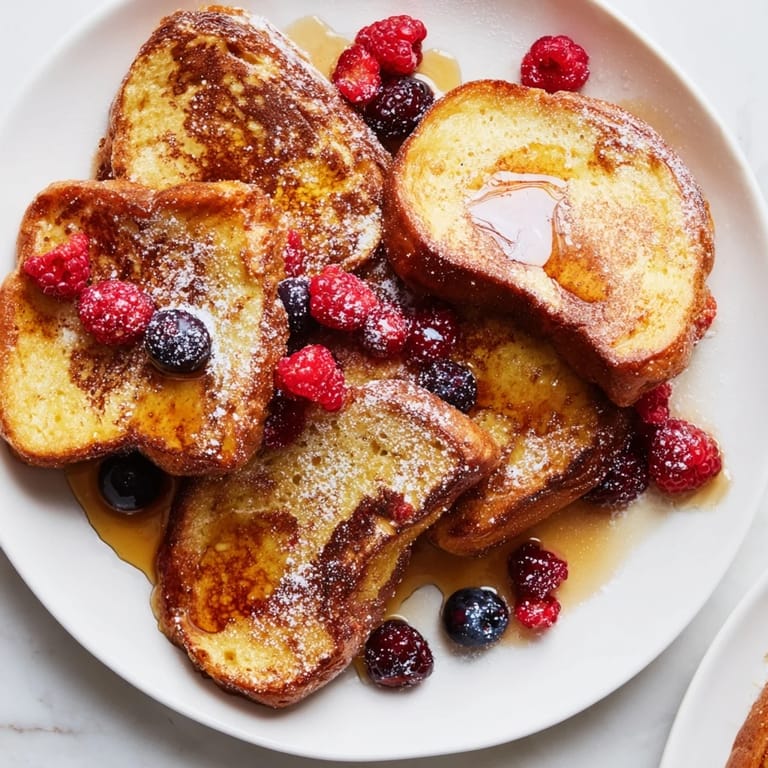
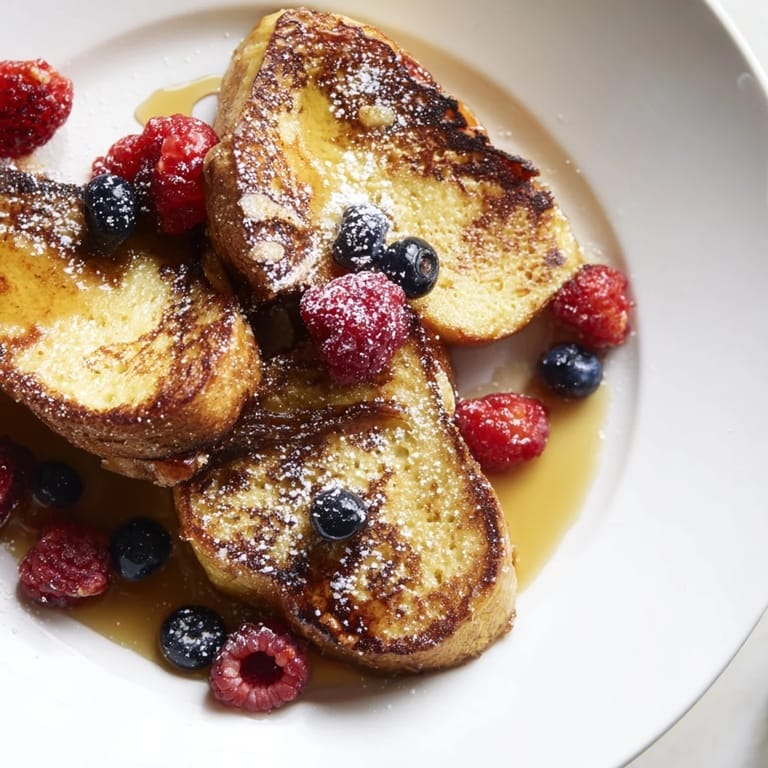
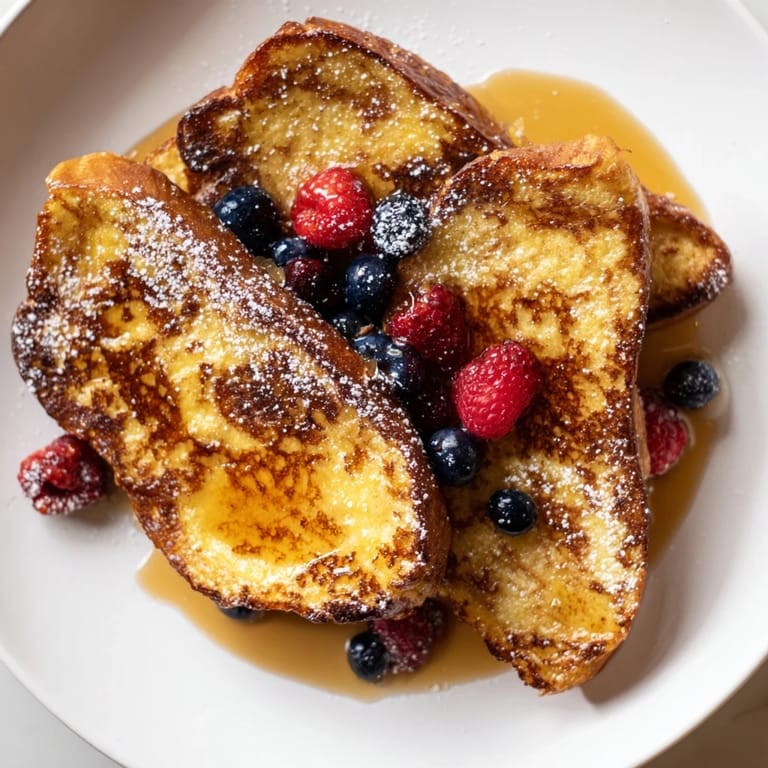
- Pour the maple syrup generously, dust with powdered sugar if you want elegance, scatter some berries if you have them, and serve while everything is still warm and the butter is still making its presence known.
 Save
Save There's something about feeding people French toast that feels like an act of quiet care. My neighbor came over once unexpectedly, and I made this without thinking twice, and the simplicity of it—just bread and eggs and heat transforming into something that made her smile—reminded me that the best dishes are often the ones we stop fussing over.
The Bread That Changes Everything
I learned the hard way that bread choice matters more than any fancy technique. Brioche is silky, challah is structured and slightly sweet, and thick-cut white bread is forgiving and reliable. Once I used thin slices of regular sandwich bread and spent ten minutes chasing soggy disappointment around a hot pan. The thickness means the center has time to stay custardy while the outside crisps, and day-old bread has already lost some moisture so it stops absorbing right at the perfect moment. It's almost like the bread that's been waiting in your cabinet is exactly what this recipe was designed for.
Timing Your Flip
The moment you flip French toast matters more than you'd think. If you flip too early, the bottom hasn't set into that golden crust yet and you'll end up with pale bread and a deflated feeling. Wait until the underside sounds crispy when you tap it with your spatula, and looks like burnished gold—that takes about two to three minutes depending on your heat level. I used to flip constantly out of anxiety, convinced I'd missed the window, but the pan tells you when it's ready if you just listen for the sizzle to settle into a quieter, steadier sound.
Making It Your Own
Once you master the basic technique, this dish becomes a canvas for whatever speaks to you that morning. Some days I add a whisper of orange zest to the custard, other times I whisk in a splash of liqueur if I'm feeling fancy, and occasionally I use brown sugar instead of white for a deeper molasses note that changes everything.
- Orange zest and a touch of Grand Marnier turn this into something that feels like a restaurant and someone is showing off for the right reasons.
- Dairy-free works beautifully with plant-based milk and butter if that's what your kitchen holds, and the result is just as silky.
- Toppings matter as much as the bread itself—maple syrup is classic, but fresh berries, whipped cream, or even a drizzle of chocolate sauce all belong here.
 Save
Save French toast is proof that the simplest recipes carry the most warmth. Make it for yourself on a quiet morning, or make it for someone who needs to remember that breakfast can feel like love.
Recipe Questions & Answers
- → What type of bread works best?
Day-old brioche, challah, or thick white bread absorb the custard well without becoming soggy.
- → Can I use plant-based milk alternatives?
Yes, substituting plant-based milk and butter works well for dairy-free versions.
- → How do I achieve a golden crust?
Cook the soaked bread in a medium-heat skillet with butter until each side is golden brown, about 2-3 minutes per side.
- → What flavorings enhance the custard?
Vanilla extract and a pinch of cinnamon complement the custard, with optional additions like orange zest or liqueurs for extra aroma.
- → How should this dish be served?
Serve warm with maple syrup drizzle, a dusting of powdered sugar, and fresh berries or fruit for added freshness.