 Save
Save My grandmother kept a tin of biscotti on her kitchen counter in Rome, and I'd sneak them during visits, dunking them into her espresso when she wasn't looking. Years later, I tried making my own and somehow burned the first batch into charcoal—but the second attempt, with candied orange peel and dark chocolate folded into the dough, turned into something I couldn't stop eating. There's something about twice-baked cookies that feels both indulgent and restrained, like you're eating something fancy but practical enough to keep around for weeks.
I made these for a neighbor who was going through a rough time, and she told me later that dunking them in tea became her quiet moment each afternoon. Something about having homemade biscotti in the house shifted her entire day, which taught me that baking isn't really about the cookies—it's about giving people permission to slow down.
Ingredients
- All-purpose flour (2 cups): The foundation of structure; don't sift it unless your flour is genuinely clumpy, as modern flour is already aerated and over-working it makes tough cookies.
- Baking powder (1 1/2 teaspoons): This helps them rise during the first bake so they're tender enough to slice cleanly before the second bake.
- Salt (1/4 teaspoon): A pinch that makes the orange and chocolate flavors louder without tasting salty.
- Eggs (2 large): Room temperature eggs blend smoother and create a lighter crumb; cold ones resist combining and can make the dough dense.
- Granulated sugar (2/3 cup): The sweetness, but don't use brown sugar here—it'll make them cake-like instead of crisp.
- Unsalted butter (1/4 cup, melted and cooled): Melted butter distributes evenly through the dough; cooling it prevents scrambling the eggs when mixed.
- Vanilla extract (1 teaspoon): Pure vanilla only—imitation has a harsh edge that competes with the delicate orange flavor.
- Orange zest (1/2 teaspoon fresh): Freshly grated, never dried; the oils in fresh zest brighten the entire cookie in ways pre-packaged zest can't.
- Candied orange peel (3/4 cup, finely chopped): Quality matters here—look for peel that's glossy, not hard and crystallized; finely chopping it prevents big chewy chunks that derail the texture.
- Dark chocolate (3/4 cup, 60-70%, roughly chopped): The percentage matters; below 60% and it's too sweet, above 70% and it can taste bitter against the candied fruit.
Tired of Takeout? 🥡
Get 10 meals you can make faster than delivery arrives. Seriously.
One email. No spam. Unsubscribe anytime.
Instructions
- Prepare your workspace:
- Preheat the oven to 350°F and line a baking sheet with parchment paper—this prevents sticking and gives you an even bake on both the bottom and sides. Having everything ready before you start mixing is what separates relaxed baking from panicked baking.
- Combine the dry team:
- Whisk flour, baking powder, and salt together in a medium bowl, making sure the baking powder has no lumps hiding in the flour. This distributes the leavening evenly so you don't get pockets of dense dough.
- Build the wet mixture:
- Beat eggs and sugar until the mixture is pale and creamy, which should take about two minutes—this incorporates air and creates lift. Whisk in the cooled melted butter, vanilla, and fresh orange zest, letting each ingredient combine before adding the next.
- Marry the mixtures:
- Fold the dry ingredients into the wet ingredients gently, stirring just until you don't see streaks of flour—overmixing develops gluten and toughens the cookies. Fold in the candied orange peel and chopped chocolate carefully so the pieces stay intact and distribute throughout.
- Shape the logs:
- Divide the dough in half and with lightly floured hands, press each portion into a 10-inch long, 2-inch wide log on the parchment, spacing them apart so heat circulates. Don't worry if they're not perfectly symmetrical; they'll look rustic and intentional.
- First bake—the foundation:
- Bake at 350°F for 25 minutes until the logs are golden brown and feel firm when gently pressed. This bake sets the structure so the logs hold together when you slice them.
- Cool before slicing:
- Let the logs rest for 15 minutes on the baking sheet—they're still fragile, and cooling lets them firm up just enough to slice without crumbling. This is the hardest part because your kitchen smells incredible.
- Reduce heat and prepare for round two:
- Lower the oven to 300°F; this gentler heat dries the biscotti without browning them too much. Using a serrated knife (not a regular knife, which will crush them), slice the logs diagonally into 3/4-inch thick pieces—the angle isn't decorative, it actually increases surface area for crisping.
- Second bake—the magic:
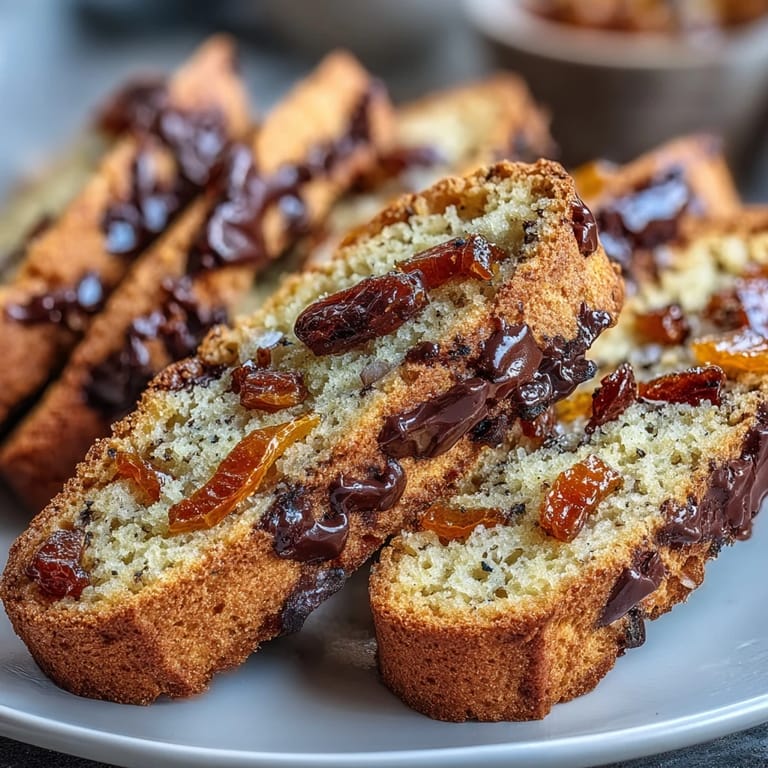
- Arrange slices cut-side down and bake for 12 minutes, then flip each one and bake another 10-12 minutes until they feel completely dry and hard to the touch. You'll know they're done when they're pale golden and sound hollow when tapped—don't underbake here or they'll soften as they cool.
- Final cooling:
- Cool them completely on a wire rack away from any humidity; this is when they become truly crisp. Resist eating them warm or you'll burn your mouth and lose the textural appreciation of what you've made.
 Save
Save I learned the value of these cookies during a quiet morning when I realized I'd been reaching for them instead of store-bought snacks, which made me understand that homemade food wins not through perfection but through becoming part of your rhythm. They're crisp enough to dunk without falling apart, sophisticated enough to serve to guests, and simple enough that you can make them on a Tuesday without it feeling like a project.
The Orange and Chocolate Balance
This combination works because candied orange peel has a gentle sweetness and slight bitterness that keeps dark chocolate from feeling heavy, while the chocolate adds depth that prevents the citrus from tasting one-dimensional. Think of them as a conversation rather than a duet—each element gets to speak, and you taste all of them separately before they blend into something unified. The ratio I use lets both flavors have equal voice without one drowning out the other.
Storage and Keeping
Store them in an airtight container—glass works better than plastic because plastic can trap condensation and soften them—and they'll stay crisp for up to two weeks, though honestly they rarely last that long. If they do absorb moisture and soften, pop them back in a 300°F oven for five minutes to re-crisp; this works if you catch them early. They're also one of the few homemade cookies that actually travel well, making them perfect for gifting or bringing to potlucks without worrying about them falling apart.
Ways to Elevate Them
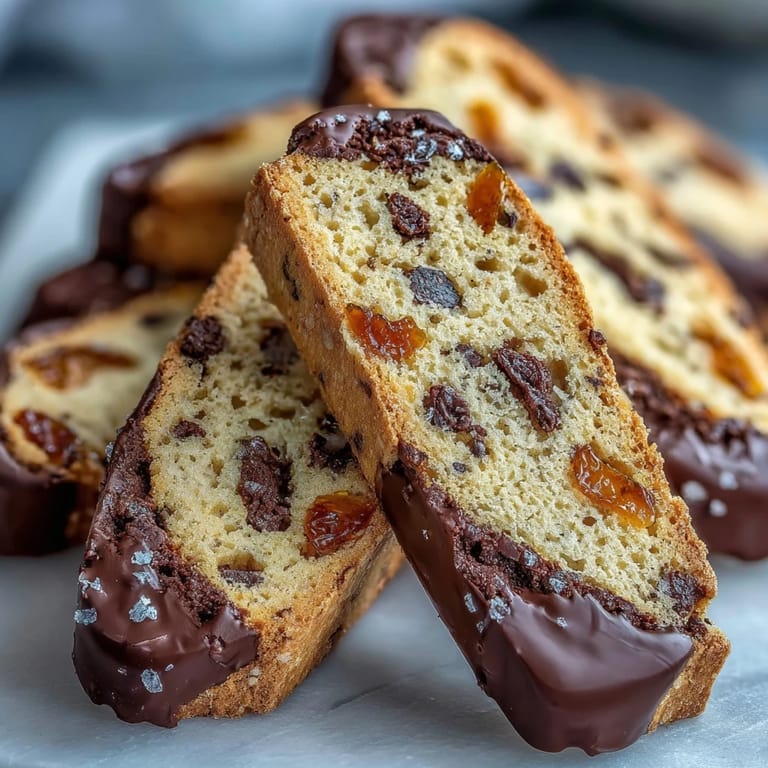
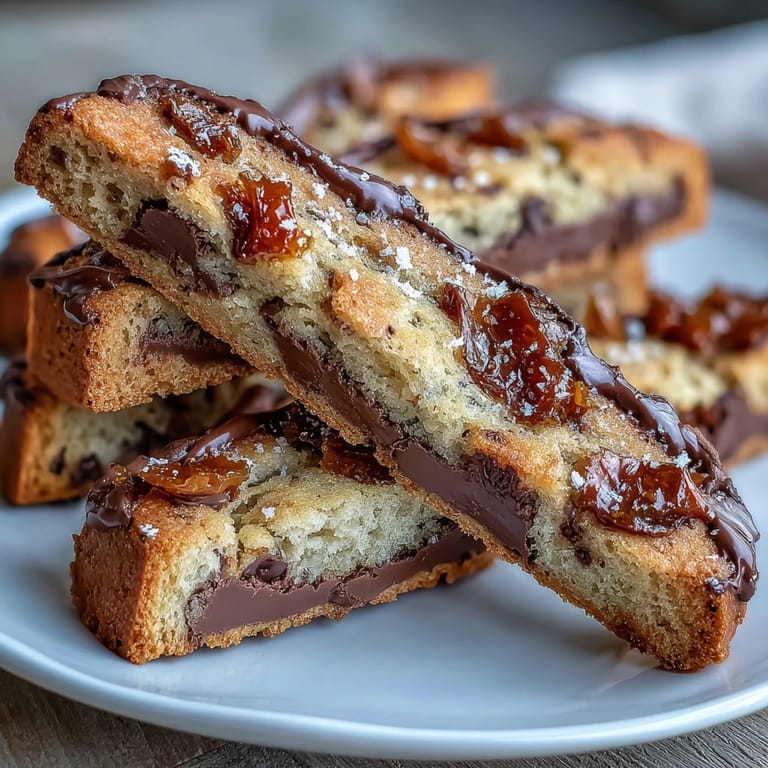
The simplest upgrade is dipping one end in melted dark chocolate and letting it set, which adds luxury without changing the core recipe. You can also experiment with different candied citrus—lemon peel gives sharper brightness, while grapefruit adds an almost savory quality that sophisticated palates appreciate. Some bakers toast the dough logs slightly longer before the second bake, which deepens the flavor profile and adds a subtle caramel note that chocolate lovers especially appreciate.
- A sprinkle of fleur de sel on the chocolate-dipped ends creates contrast that makes people stop mid-bite and notice.
- White chocolate chips mixed with the dark chocolate provides sweetness variation if you prefer less bitterness.
- A tiny pinch of espresso powder in the dough deepens the chocolate flavor without making them taste like coffee.
 Save
Save These biscotti remind me that the best recipes are ones you return to—not because they're fancy, but because they fit into your life and become something you reach for without thinking. Make them once and they become part of your kitchen vocabulary.
Recipe Questions & Answers
- → How is the biscotti texture achieved?
By baking the logs twice—first as a whole, then sliced—the biscotti develop their characteristic crispness and crunch.
- → Can I substitute candied orange peel?
Yes, candied lemon peel works well to provide a different citrus flavor while maintaining texture.
- → What type of chocolate is recommended?
Dark chocolate with 60-70% cocoa content offers a rich flavor that complements the citrus notes.
- → How should these biscotti be stored?
Keep them in an airtight container at room temperature to maintain freshness for up to two weeks.
- → Are there allergen concerns to consider?
The biscotti contain eggs, wheat gluten, butter, and chocolate, which may include traces of nuts or soy; check ingredient labels accordingly.