 Save
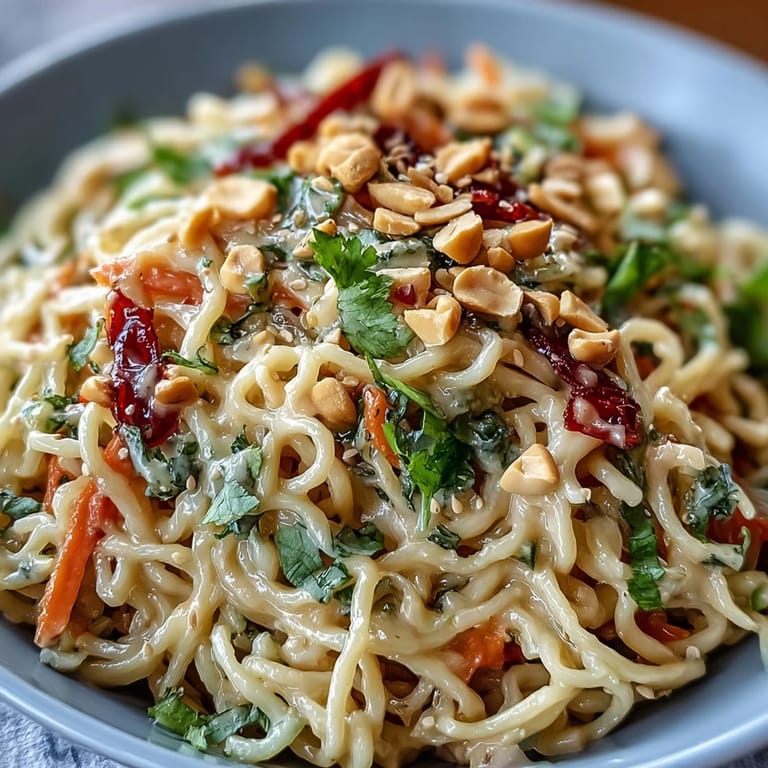
Save My neighbor brought this bowl over on a sweltering August evening when my kitchen felt too hot to even think about cooking, and I've been making it ever since. The first thing that struck me was how the peanut aroma mingled with fresh cilantro and lime—it smelled like a street vendor's cart had materialized right on my counter. What sealed the deal was realizing I could make it with whatever vegetables I had on hand, toss it together in under half an hour, and somehow feel like I'd traveled somewhere far more interesting than my backyard.
Years ago, I made this for a dinner party when a friend revealed she'd suddenly gone vegetarian, and I watched her face light up when she realized the bowl was just as satisfying without meat. That moment taught me something I hadn't expected: sometimes the best dishes aren't the complicated ones, but the ones that feel generous and adaptable to whoever's sitting across from you.
Ingredients
- Rice or wheat noodles (300 g): Rice noodles give a delicate, slightly chewy texture that absorbs the dressing beautifully, while wheat noodles hold their shape and provide more bite—choose based on what you're craving.
- Carrot, julienned: The natural sweetness and crisp texture provide a textural contrast that keeps every bite interesting and fresh.
- Red bell pepper: A raw pepper brings sweetness and a slight crunch that stands up to the rich peanut dressing without getting lost.
- Red cabbage, shredded: Its slight bitterness balances the savory-sweet dressing, and it stays crisp even if made ahead.
- Scallions: The bright onion note cuts through the richness and adds a gentle heat that builds as you eat.
- Fresh cilantro: This isn't optional if you want the bowl to taste authentic—the herbal quality is what makes the whole dish feel alive.
- Bean sprouts: They add an almost delicate crunch and absorb the dressing nicely without becoming soggy.
- Creamy peanut butter (80 g): Quality matters here more than anywhere else—a good peanut butter should taste like peanuts, not sugar and oil.
- Soy sauce: Use tamari if you need it gluten-free, and don't skip the umami depth it brings to the dressing.
- Sesame oil: Just a tablespoon is enough to add that toasted, nutty flavor that makes people ask what your secret ingredient is.
- Rice vinegar: It provides a gentle acidity that keeps the dressing from feeling heavy, even though it's creamy.
- Honey or maple syrup: This balances the salty and tangy notes—if you skip it, the dressing tastes one-dimensional.
- Fresh ginger and garlic: Freshly grated ginger gives a subtle warmth that tastes completely different from ground, and real garlic makes you wonder why you ever considered the jarred version.
- Warm water: Start with 2 tablespoons and add more gradually until the dressing reaches the consistency you want—this is how you stay in control.
- Roasted peanuts and sesame seeds: These add the final textural layer and a visual richness that makes the bowl feel intentional and thoughtful.
- Lime wedges: They're not just garnish—a squeeze of lime right before eating brightens everything and brings the whole bowl into focus.
Tired of Takeout? 🥡
Get 10 meals you can make faster than delivery arrives. Seriously.
One email. No spam. Unsubscribe anytime.
Instructions
- Start your noodles:
- Bring a large pot of water to a rolling boil—you'll know it's ready when the steam rises strong and steady. Drop in your noodles and cook exactly according to the package, then drain and rinse under cold water until they're cool to the touch and slightly slippery.
- Build your dressing:
- In a medium bowl, add your peanut butter, soy sauce, sesame oil, rice vinegar, honey, ginger, and garlic. Whisk slowly at first so the peanut butter loosens gradually, then keep whisking until you have a smooth base—the key is patience here, letting each ingredient integrate rather than forcing it.
- Add water carefully:
- Pour in 2 tablespoons of warm water and whisk it in, then taste and feel the consistency with your whisk. Keep adding water a tablespoon at a time until it reaches that pourable but still creamy consistency—this is where most people rush and end up with something either too thick or too thin.
- Assemble the bowl:
- In your largest mixing bowl, pile in the cooled noodles and all your prepared vegetables—carrot, pepper, cabbage, scallions, cilantro, and sprouts. It looks chaotic at this point, which is exactly right.
- Toss everything together:
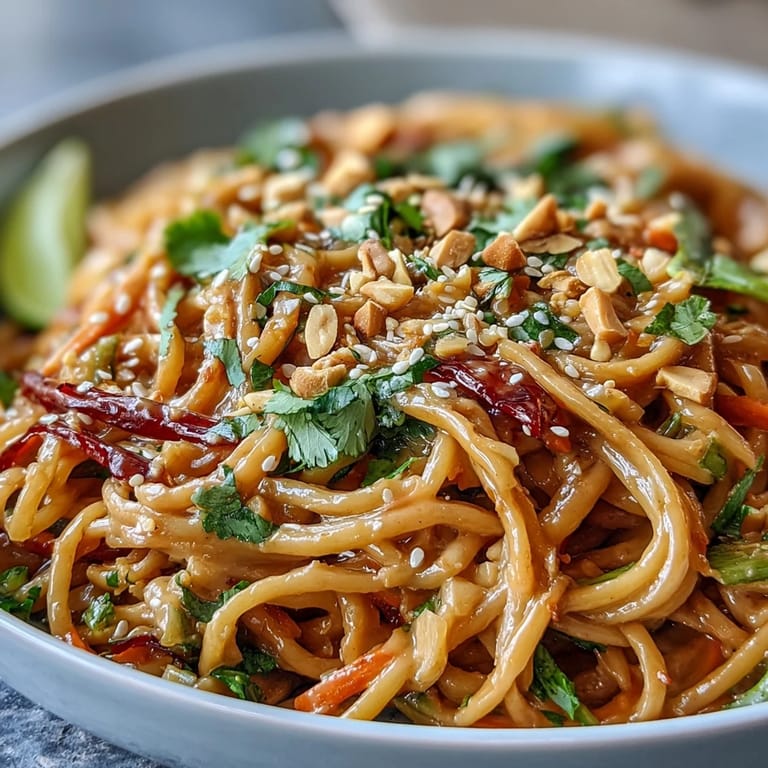
- Pour the peanut dressing over the noodle mixture and use two utensils or your hands to toss gently but thoroughly, making sure every strand of noodle and piece of vegetable gets coated. You'll feel the moment when everything comes together and starts to gleam with that peanut-brown sheen.
- Serve with intention:
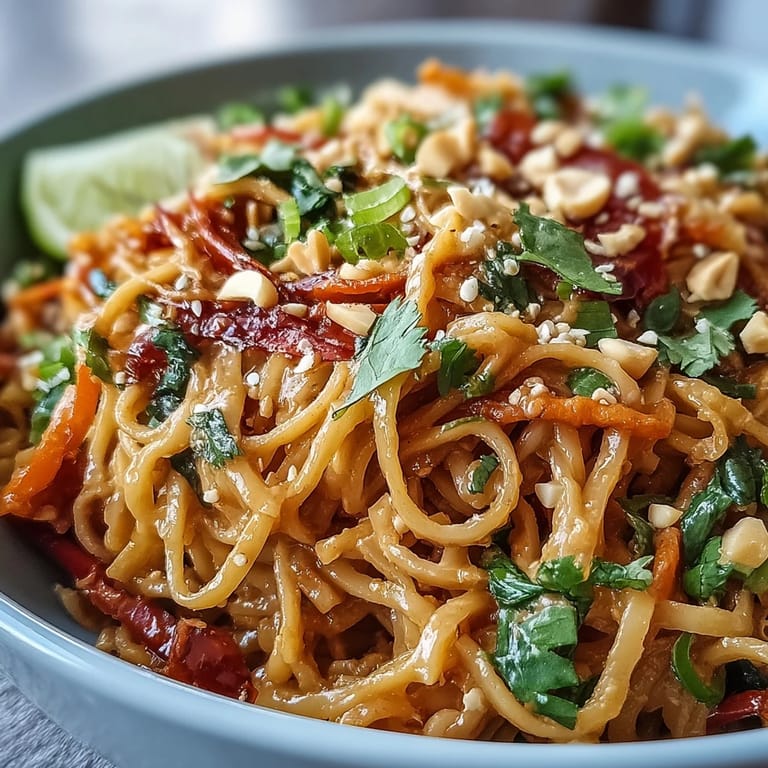
- Divide among plates or bowls, top with chopped peanuts and sesame seeds, and place a lime wedge on the side. Squeeze that lime right before you eat—it's the final touch that transforms good into unforgettable.
 Save
Save I remember bringing this to a potluck at my daughter's school and watching kids who normally wouldn't touch a vegetable come back for thirds. It wasn't fancy or complicated, but it proved something I'd been slowly learning: simplicity with care tastes better than complexity done hastily.
The Dressing is Everything
The magic of this bowl lives entirely in that peanut dressing, which is why I treat it like a separate recipe rather than an afterthought. I've learned to taste it as I build it—after the soy sauce, after the sesame oil, after the ginger—so I understand each layer and can adjust as I go. Some days I want it sweeter, some days more savory, and now I know exactly which ingredient to adjust to get there.
Make It Your Own
The beauty of this bowl is how it invites improvisation without falling apart. I've added crispy tofu on nights I wanted extra substance, grilled chicken when I needed protein, and even a poached egg once when I was feeling experimental. The dressing is sturdy enough to embrace whatever you add, but simple enough that you never feel like you're fighting its fundamental character.
Temperature and Timing
This bowl is equally stunning cold straight from the fridge on a summer day or gently warmed through on cooler evenings—you're never locked into one way of eating it. I've also discovered that letting all the components sit together for 15 minutes before serving deepens the flavors, though if you're hungry right now, it tastes wonderful immediately. There's also something lovely about making this on Sunday and having it available all week, though the vegetables will gradually soften and the dressing will thicken.
- If you're meal-prepping, keep the dressing separate and add it just before eating for the crispest vegetables.
- Squeeze fresh lime over the bowl right before you eat to brighten everything, even if you're reheating it.
- Add the cilantro fresh right before serving so it doesn't darken or wilt in the dressing.
 Save
Save This bowl has become my go-to when I want to feel like I've cooked something thoughtful without spending my whole afternoon in the kitchen. It reminds me that the best meals are often the simplest ones, prepared with care and served with generosity.
Recipe Questions & Answers
- → Can I make this bowl gluten-free?
Yes, use rice noodles and tamari instead of regular soy sauce to make this completely gluten-free while maintaining all the flavor.
- → How long do leftovers last?
Store in an airtight container for up to 4 days. The noodles absorb the dressing beautifully, making them even more flavorful over time.
- → Can I serve this warm?
Absolutely. Gently warm the tossed noodles in a skillet over medium-low heat for 2-3 minutes, or microwave individual portions until heated through.
- → What protein can I add?
Grilled tofu, baked chicken breast, or sautéed shrimp all complement the peanut flavors perfectly. Add your choice of protein when tossing with the vegetables.
- → How do I adjust the dressing consistency?
Simply add more warm water, one tablespoon at a time, to thin the dressing. If it becomes too thin, whisk in an additional tablespoon of peanut butter.